C.A.C.® Marine Nationale
(with corkscrew)


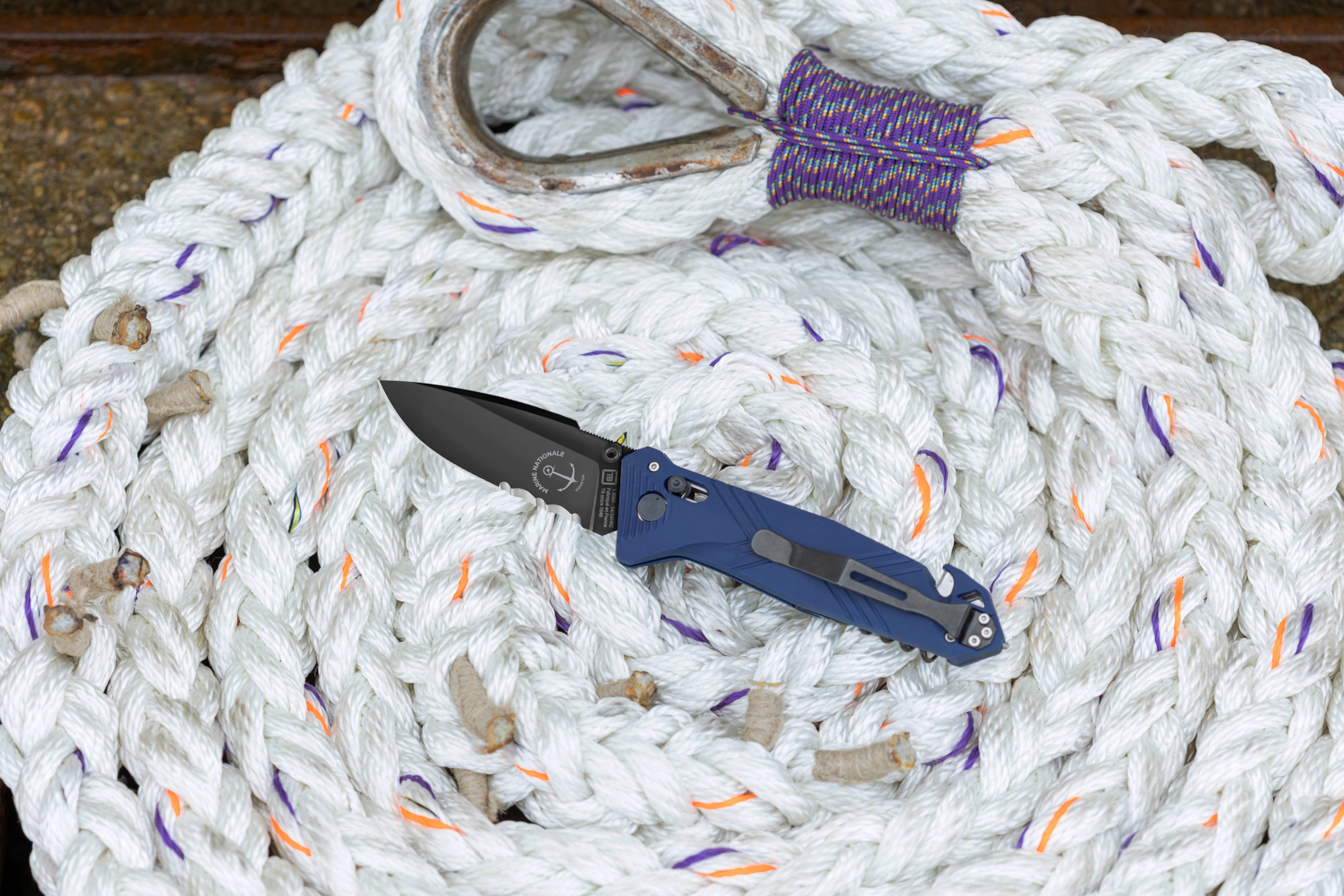
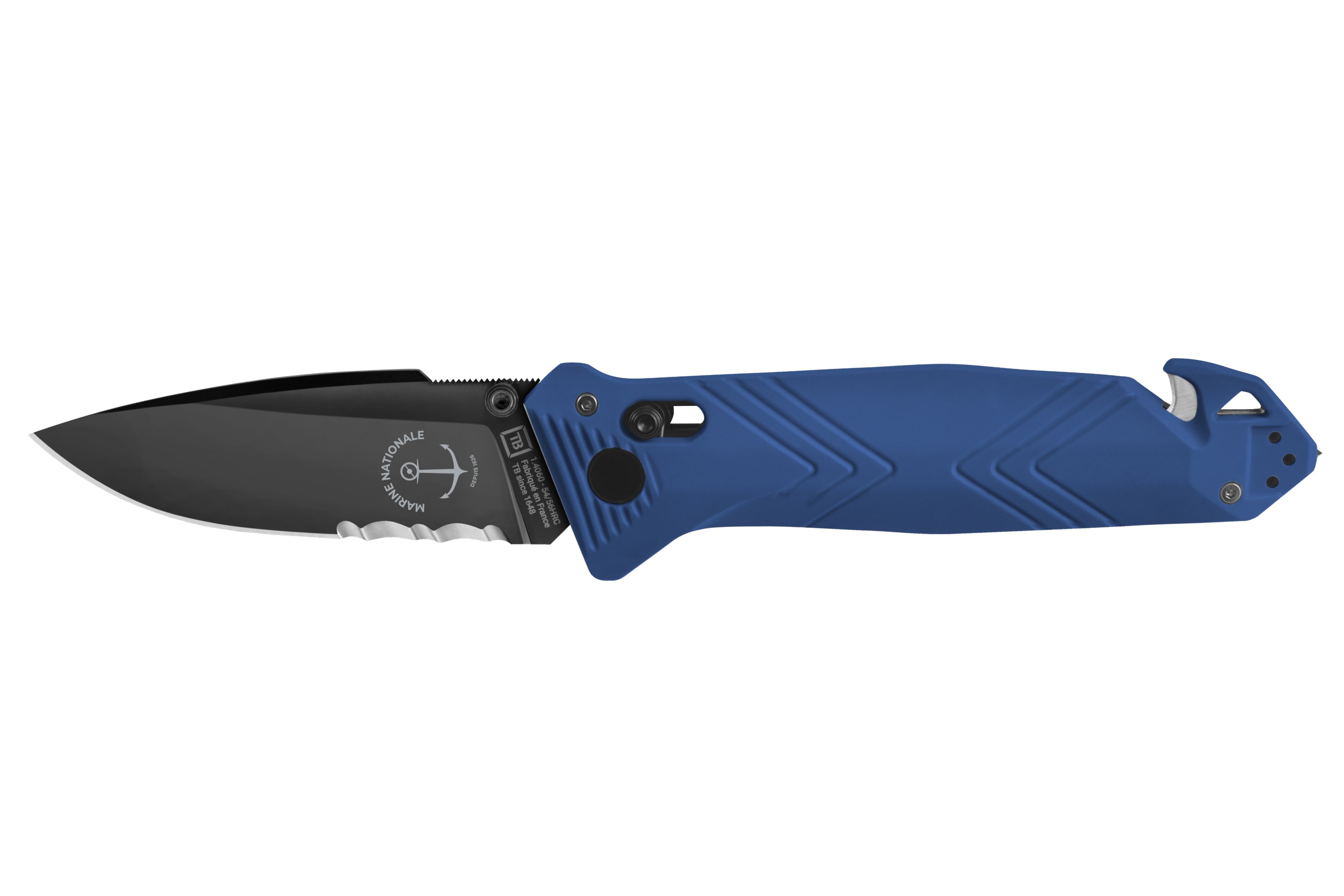
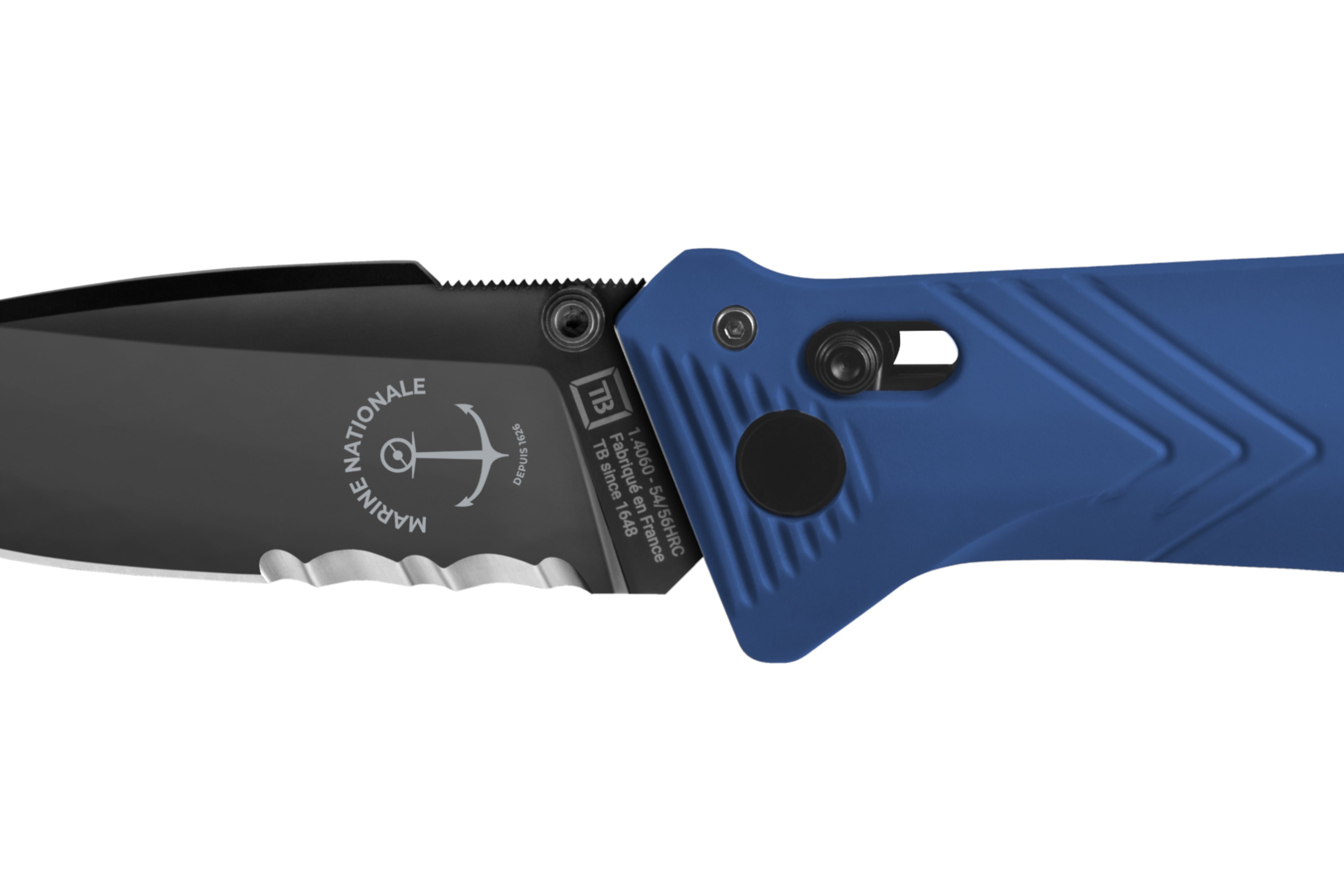
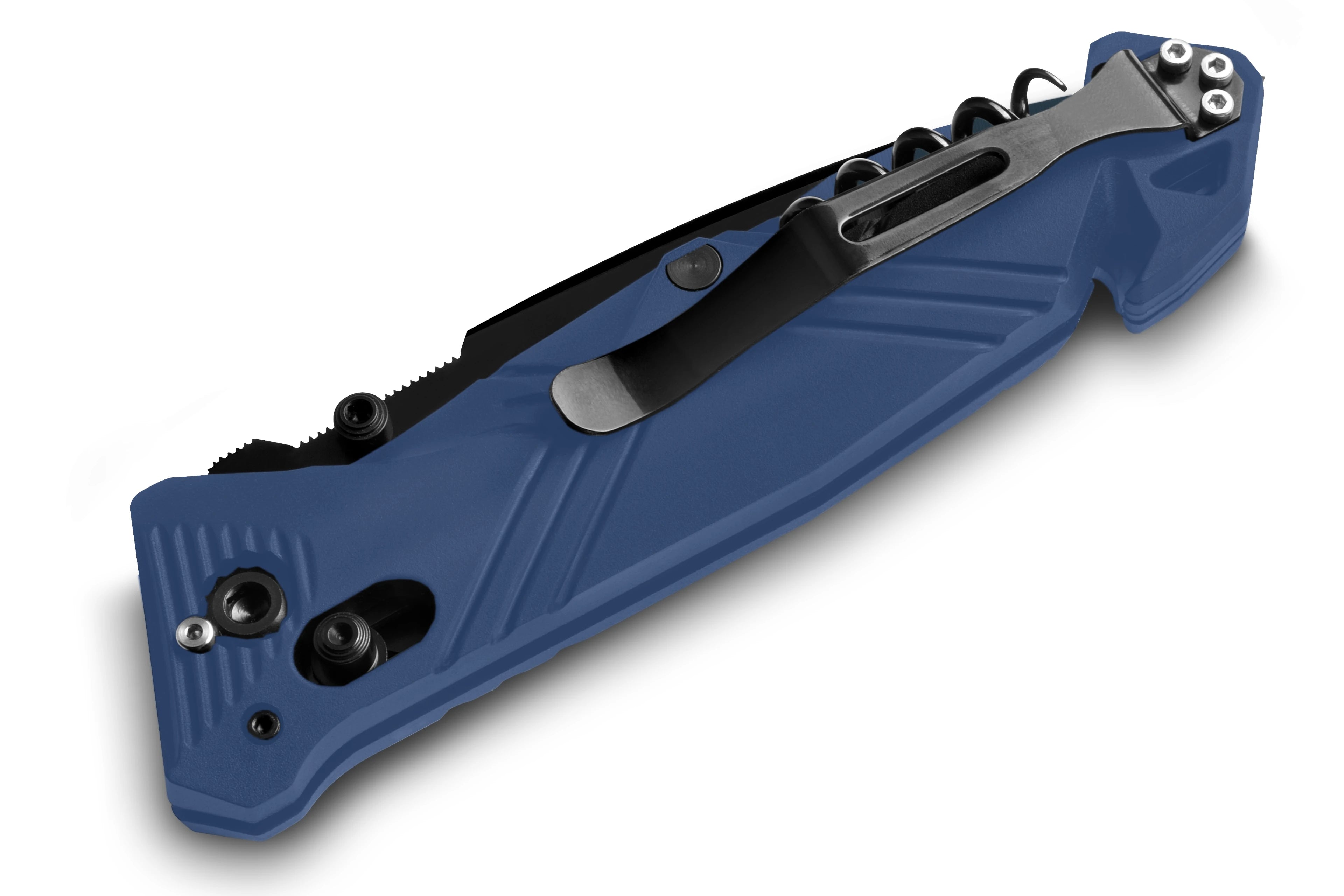
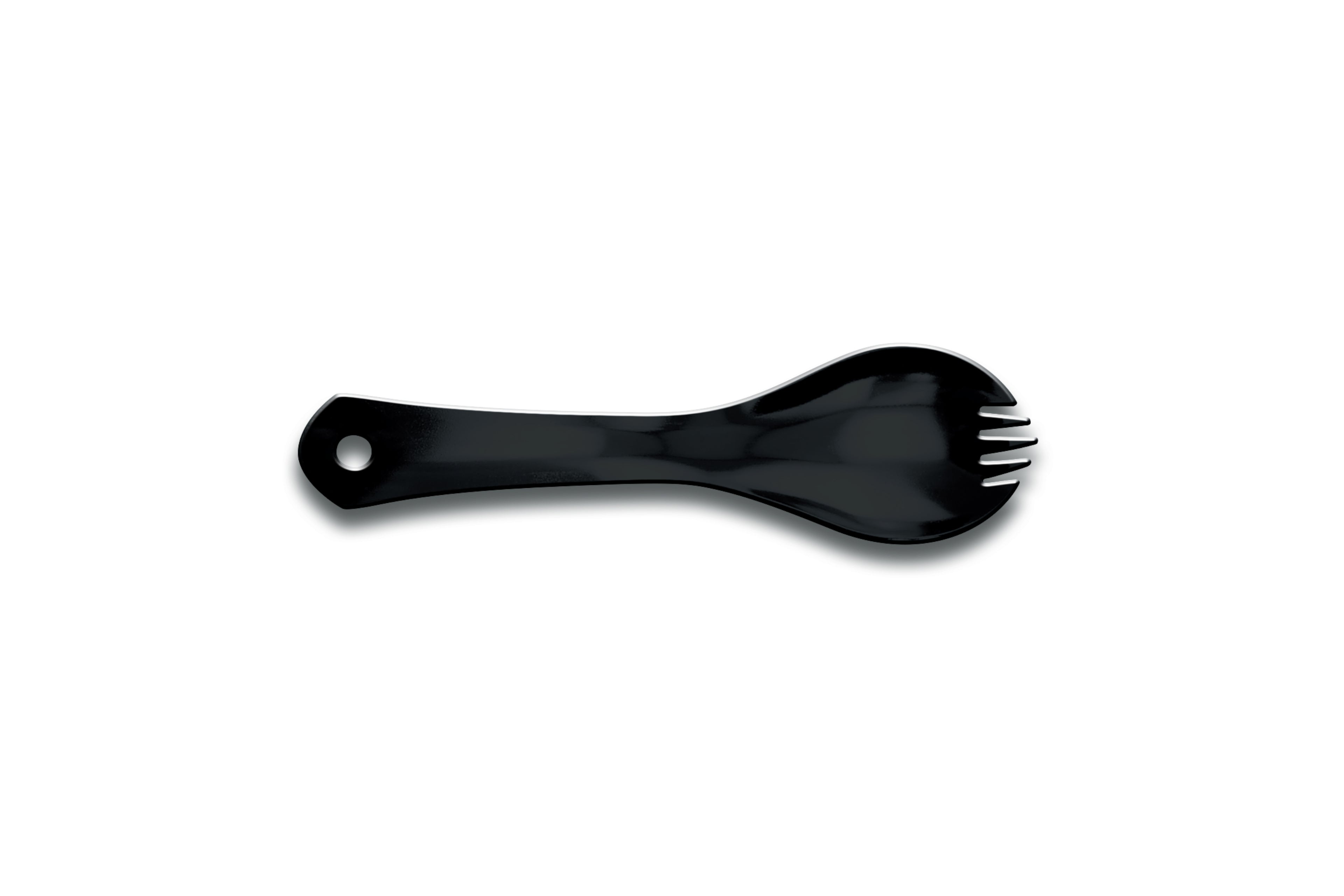
The CAC® - French Navy is a true concentration of the advanced technologies developed by TB. The blade is made of Nitrox® in a mixed version, providing excellent resistance to corrosion and a strong cutting ability. It is only available with a strap cutter and a corkscrew. The knife weighs 195g and has a blade length of 85mm. It comes with its own sheath, but the fork is not included. Profits from the sales of official French Navy products, such as the CAC "French Navy," help improve the quality of life for sailors deployed on land, at sea, under the ocean, and in the air.
(with corkscrew)
Technical specifications
(in grs)
195
55
Serrated
17
PA6
With
With
Axe_mobile
yes
Yes
(Pattern/finish)
(mm)
85
(mm)
145
Nitrox
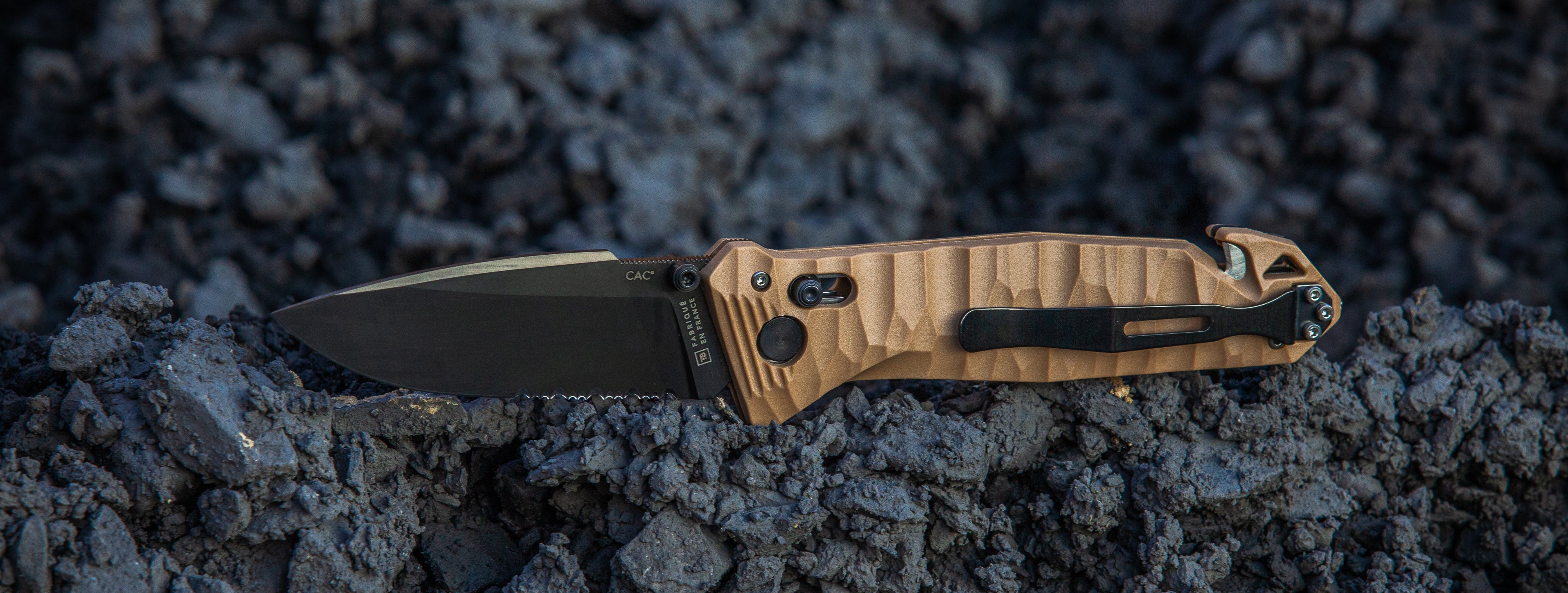
Blade
Smooth cut and serrated section
Window breaker
Tungsten Carbide Ball
Strap cutter
To cut seat belts or paracord
Belt Clip
Reversible for right or left handed wear.
Hole
For halyard or strap
Opening mechanism
Secure blade locking by movable axis. Ambidextrous.
The blade of the CAC® is made of Nitrox®, a nitrogen-doped stainless steel that gives the blade a high resistance to corrosion, especially since it is coated with a PVD coating. The cutting ability of this steel is also a strong point, combining flexibility and high resistance.
TB has also integrated a secure locking mechanism for the blade with a movable axis. This mechanism is extremely robust and ensures a fail-safe blade lock in the open position.
The CAC® was officially selected by the French Army in 2017 for its performance, quality, and price, beating many competing products. Its deployment in the various branches of the army began in early 2018 and will equip our soldiers until at least 2025.
The blade is perfectly resistant to corrosion and is made of Nitrox® with a smooth or mixed smooth+serrated cutting edge. The CAC® also has a glass breaker, a corkscrew, and a reversible belt clip. It is a true concentration of all the advanced technologies one can expect from an operational knife.
The handle is made of two fibreglass-reinforced polymer scales screwed onto the mechanism with stainless steel screws, one of which cleverly houses a strap cutter. This curved and interchangeable blade is designed to cut straps, ropes, and seat belts to facilitate extraction in case of an accident.
TB a également intégré le mécanisme de verrouillage sécurisé de la lame par axe mobile au CAC®. Cette mécanique est extrêmement robuste et assure un verrouillage de lame sans faille en position ouverte. Le CAC® a officiellement été sélectionné pour ses performances, sa robustesse, sa qualité et son prix par l’armée Française en 2017.
Parfaitement résistante à la corrosion, la lame est constitué de Nitrox®, dont le tranchant est lisse ou mixte lisse + serrassions.
Le CAC® dispose également d’un brise-vitre, d'un tire-bouchon (selon modèle) et d’un clip ceinture réversible. C'est un véritable concentré de toutes les technologies de pointe que l’on peut attendre d’un couteau opérationnel.
Le manche est constitué de deux plaquettes en polymère chargé de fibres de verre. Ces plaquettes sont vissées à la mécanique par des vis en acier inoxydable dont l'une d'elle loge astucieusement une lame coupe sangle. Cette lame courbe et interchangeable est conçue pour couper des sangles, des cordes et des ceintures de sécurité pour favoriser l'extraction en cas d'accident.
LE CAC® est également disponible en Jaune fluo qui réagit intensément à la lumière UV de façon à le retrouver dans des environnements difficiles et dans l'obscurité.
De nombreux accessoires sont disponibles en option.
The blade of the CAC® is made of Nitrox®, a nitrogen-doped stainless steel that gives the blade a high resistance to corrosion, especially since it is coated with a PVD coating. The cutting ability of this steel is also a strong point, combining flexibility and high resistance.
TB has also integrated a secure locking mechanism for the blade with a movable axis. This mechanism is extremely robust and ensures a fail-safe blade lock in the open position.
The CAC® was officially selected by the French Army in 2017 for its performance, quality, and price, beating many competing products. Its deployment in the various branches of the army began in early 2018 and will equip our soldiers until at least 2025.
The blade is perfectly resistant to corrosion and is made of Nitrox® with a smooth or mixed smooth+serrated cutting edge. The CAC® also has a glass breaker, a corkscrew, and a reversible belt clip. It is a true concentration of all the advanced technologies one can expect from an operational knife.
The handle is made of two fibreglass-reinforced polymer scales screwed onto the mechanism with stainless steel screws, one of which cleverly houses a strap cutter. This curved and interchangeable blade is designed to cut straps, ropes, and seat belts to facilitate extraction in case of an accident.
TB a également intégré le mécanisme de verrouillage sécurisé de la lame par axe mobile au CAC®. Cette mécanique est extrêmement robuste et assure un verrouillage de lame sans faille en position ouverte. Le CAC® a officiellement été sélectionné pour ses performances, sa robustesse, sa qualité et son prix par l’armée Française en 2017.
Parfaitement résistante à la corrosion, la lame est constitué de Nitrox®, dont le tranchant est lisse ou mixte lisse + serrassions.
Le CAC® dispose également d’un brise-vitre, d'un tire-bouchon (selon modèle) et d’un clip ceinture réversible. C'est un véritable concentré de toutes les technologies de pointe que l’on peut attendre d’un couteau opérationnel.
Le manche est constitué de deux plaquettes en polymère chargé de fibres de verre. Ces plaquettes sont vissées à la mécanique par des vis en acier inoxydable dont l'une d'elle loge astucieusement une lame coupe sangle. Cette lame courbe et interchangeable est conçue pour couper des sangles, des cordes et des ceintures de sécurité pour favoriser l'extraction en cas d'accident.
LE CAC® est également disponible en Jaune fluo qui réagit intensément à la lumière UV de façon à le retrouver dans des environnements difficiles et dans l'obscurité.
De nombreux accessoires sont disponibles en option.
FAQ
La lame "Serration" (crantée) est-elle indispensable en mer ?
Le mécanisme Axis Lock® craint-il le sel ou le sable ?
Est-il équipé d'un démanilleur ?
Its variations
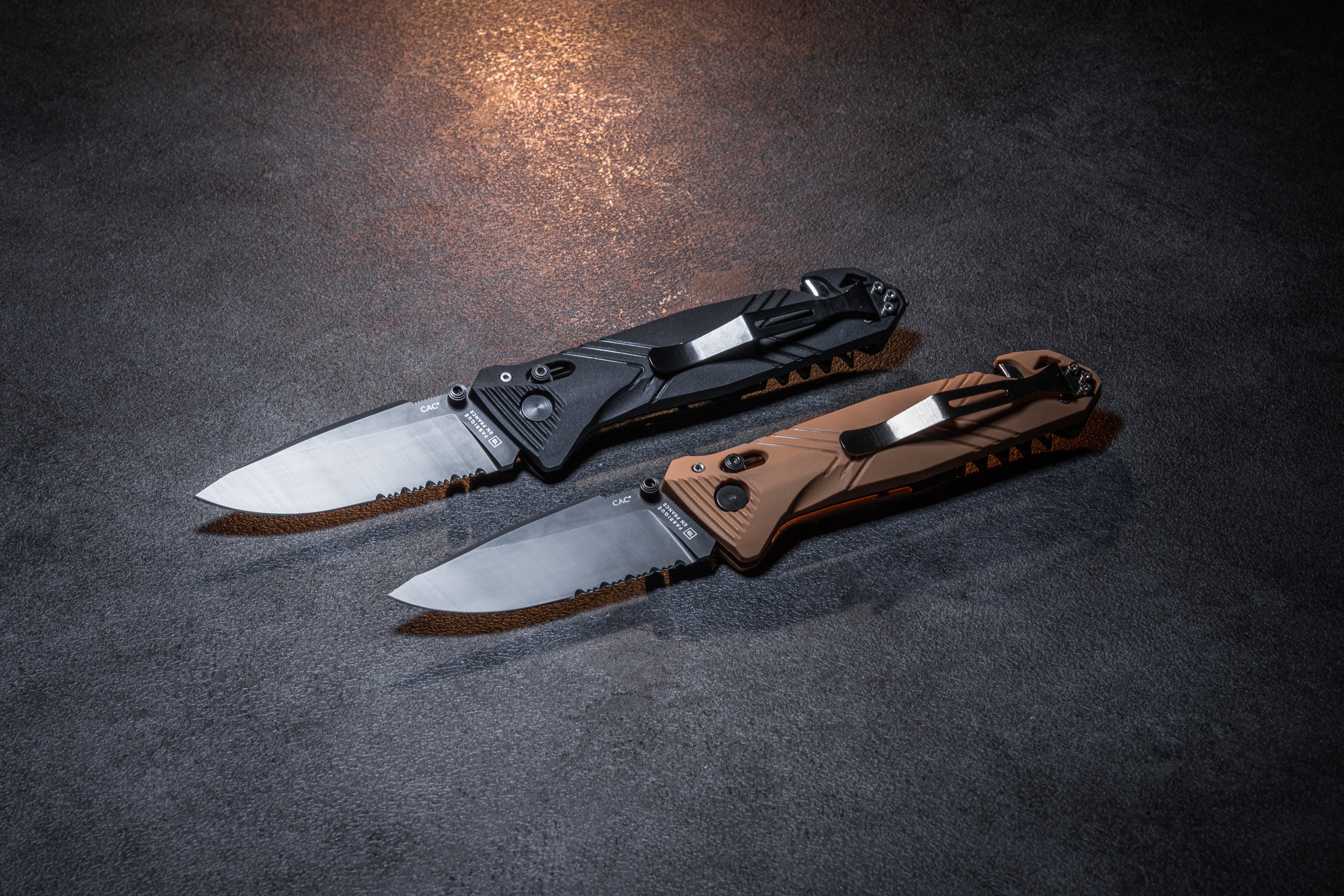
The C.A.C.® is a multifunctional knife designed for maximum adaptability. Initially, we designed the knife with handle plates made of PA6, a polymer reinforced with glass fibers to improve its robustness. The PA6 FV has astonishing characteristics in terms of resistance to deformation and shock absorption, making it ideal for the most demanding conditions of use.
However, we have recognized our customers' interest in producing individually machined G10 sleeve inserts in solid blocks. G10 is a composite material based on fiberglass, impregnated with epoxy resin. This material is renowned for its high resistance to humidity, heat, chemicals, and for its exceptional dimensional stability.
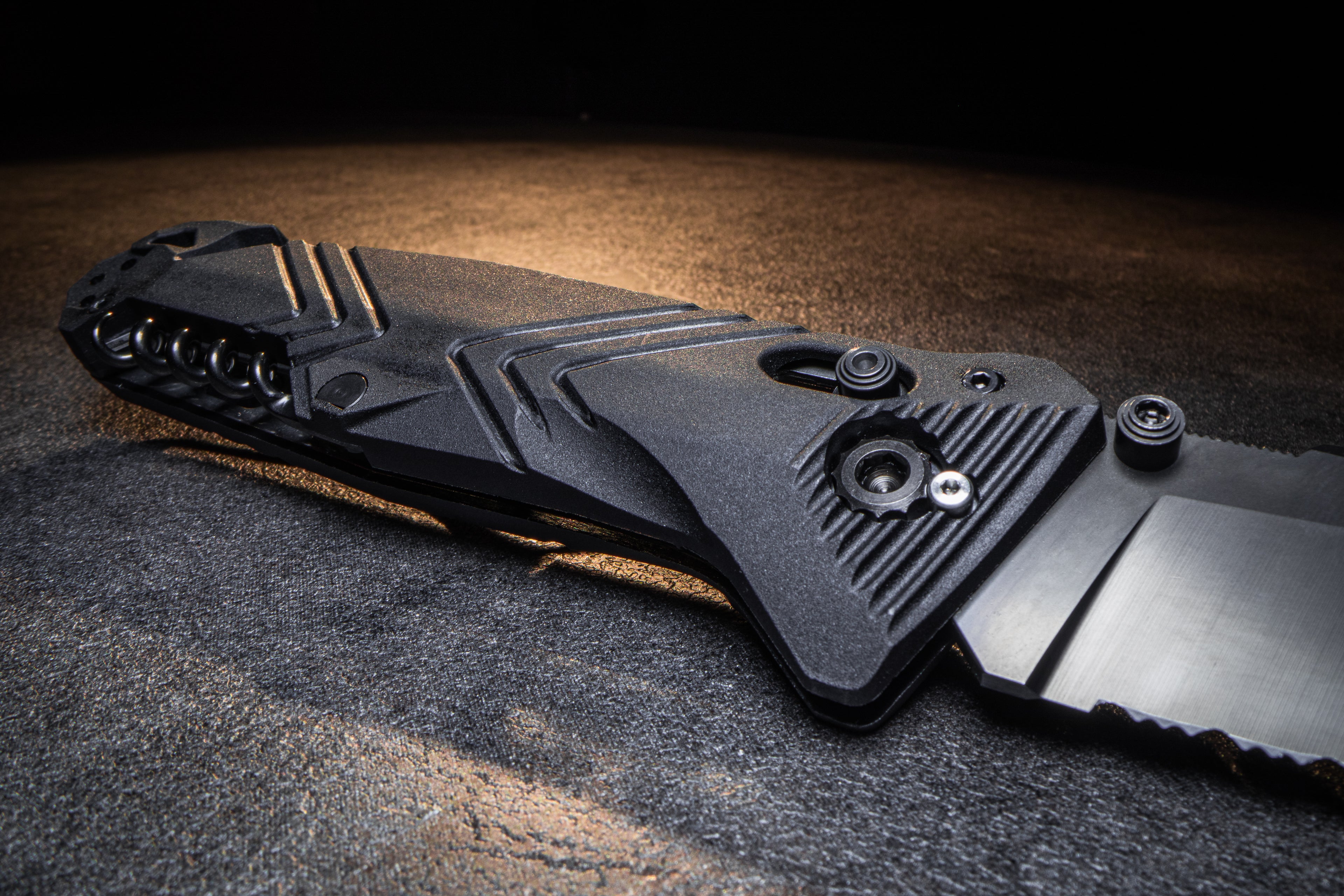
The C.A.C.® is a multifunctional knife designed for maximum adaptability. Initially, we designed the knife with handle plates made of PA6, a polymer reinforced with glass fibers to improve its robustness. The PA6 FV has astonishing characteristics in terms of resistance to deformation and shock absorption, making it ideal for the most demanding conditions of use.
However, we have recognized our customers' interest in producing individually machined G10 sleeve inserts in solid blocks. G10 is a composite material based on fiberglass, impregnated with epoxy resin. This material is renowned for its high resistance to humidity, heat, chemicals, and for its exceptional dimensional stability.
The C.A.C.® blade
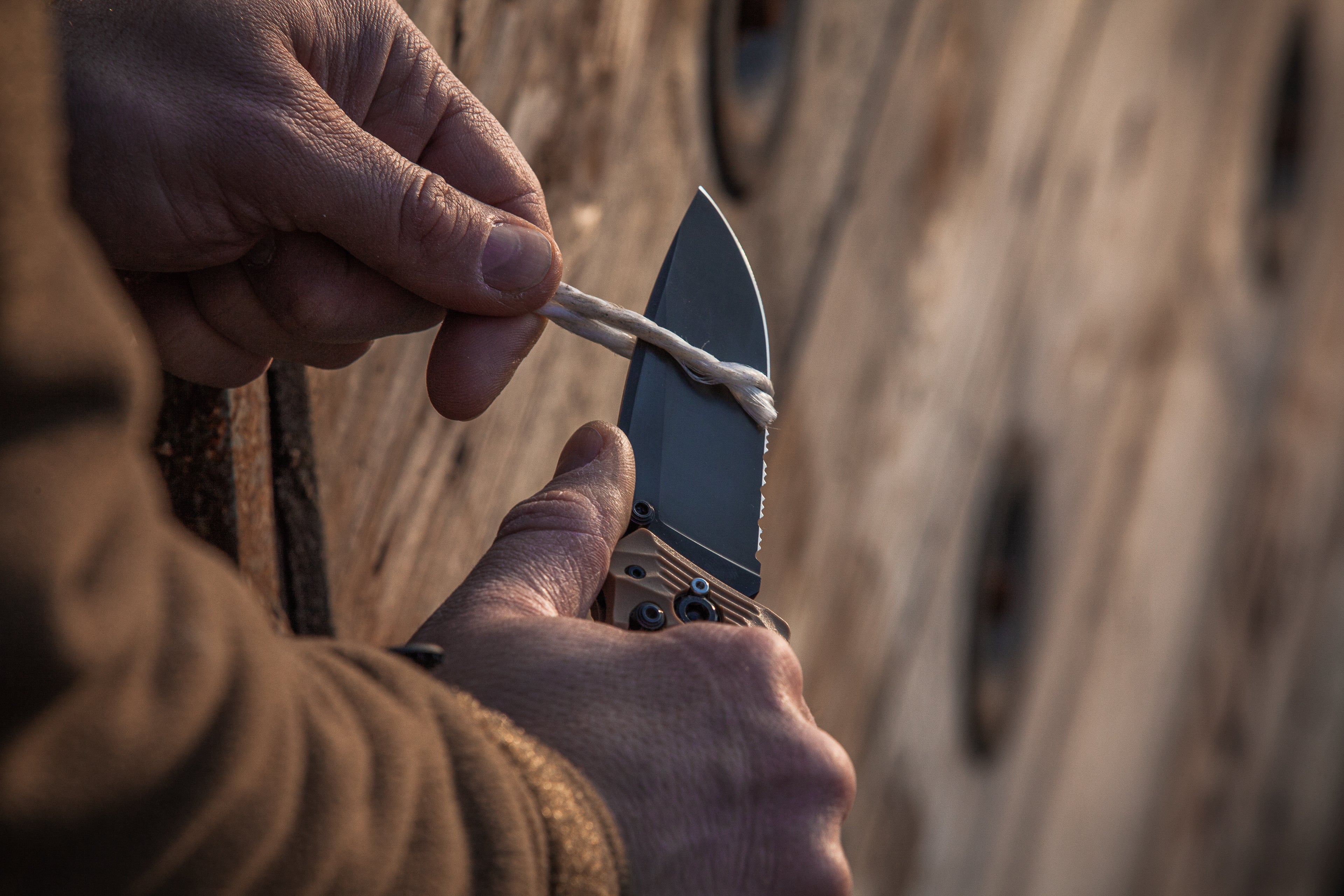
The C.A.C.® blade is made of stainless steel doped with nitrogen, called Nitrox®. Featuring 16% chromium and a carbon content of 0.35%, Nitrox® is easy to sharpen and resists corrosion like few martensitic steels.
We also offer blade alternatives for sale, MOX® steel, Damascus steel among others.
Notice
Caring for your knife
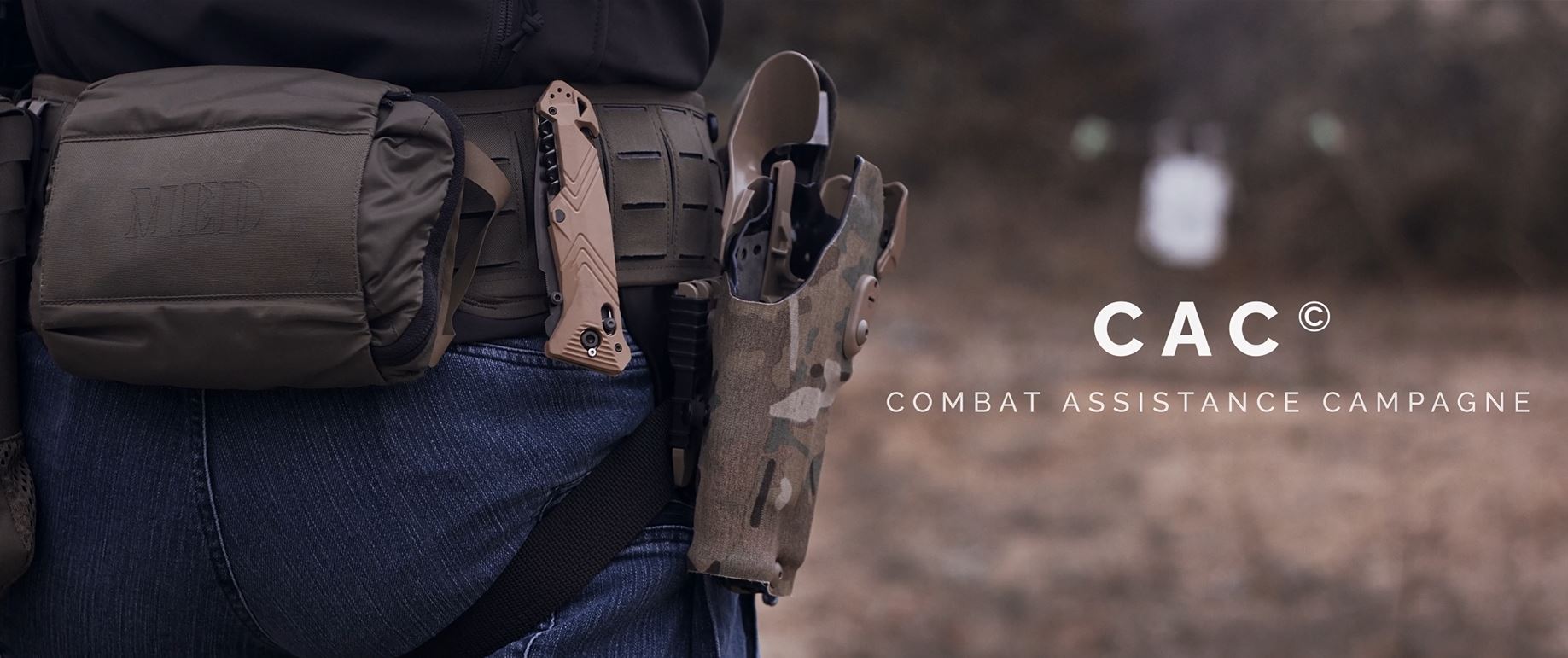
Nitrox® steel was developed, among other things, for its resistance to corrosion. In very humid or salty environments, it is essential to protect your C.A.C.® knife by occasionally applying clear oil to the metal parts.
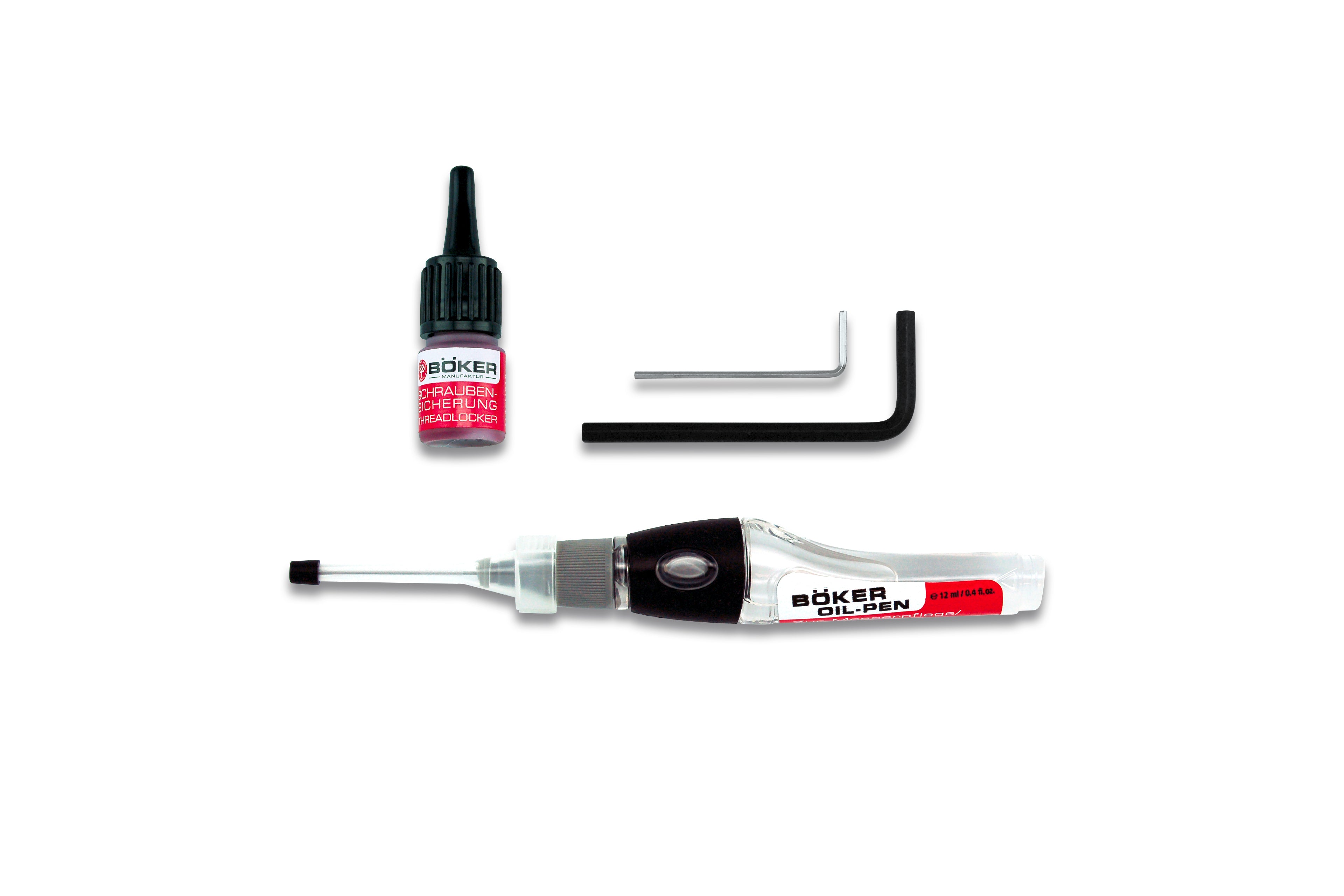
Occasionally, the belt clip screws may come loose, particularly if you change the clip's mounting direction (right/left). The application of thread lock on the screws, before tightening, is recommended (See supplier's instructions).
Detailed instructions for routine maintenance, sharpening, cleaning, lubricating and adjusting the C.A.C.® are included with each knife. These steps ensure your C.A.C.® remains an effective tool for all your outdoor needs. Take advantage of the robustness, technicality and safety that the C.A.C.® offers, while exploring the fauna and flora with the freedom that only TB Outdoor can offer.
Current operations
The operating settings have been made at the factory and do not require modification on your part. However, some common operations require partial dismantling of the knife. The shiny stainless steel screws, all of the same size (hexagon key T 1.5), are the only ones that need to be operated to carry out the operations below. The other screws, black in color, should not be handled to carry out these operations or to maintain your knife.
Sharpening
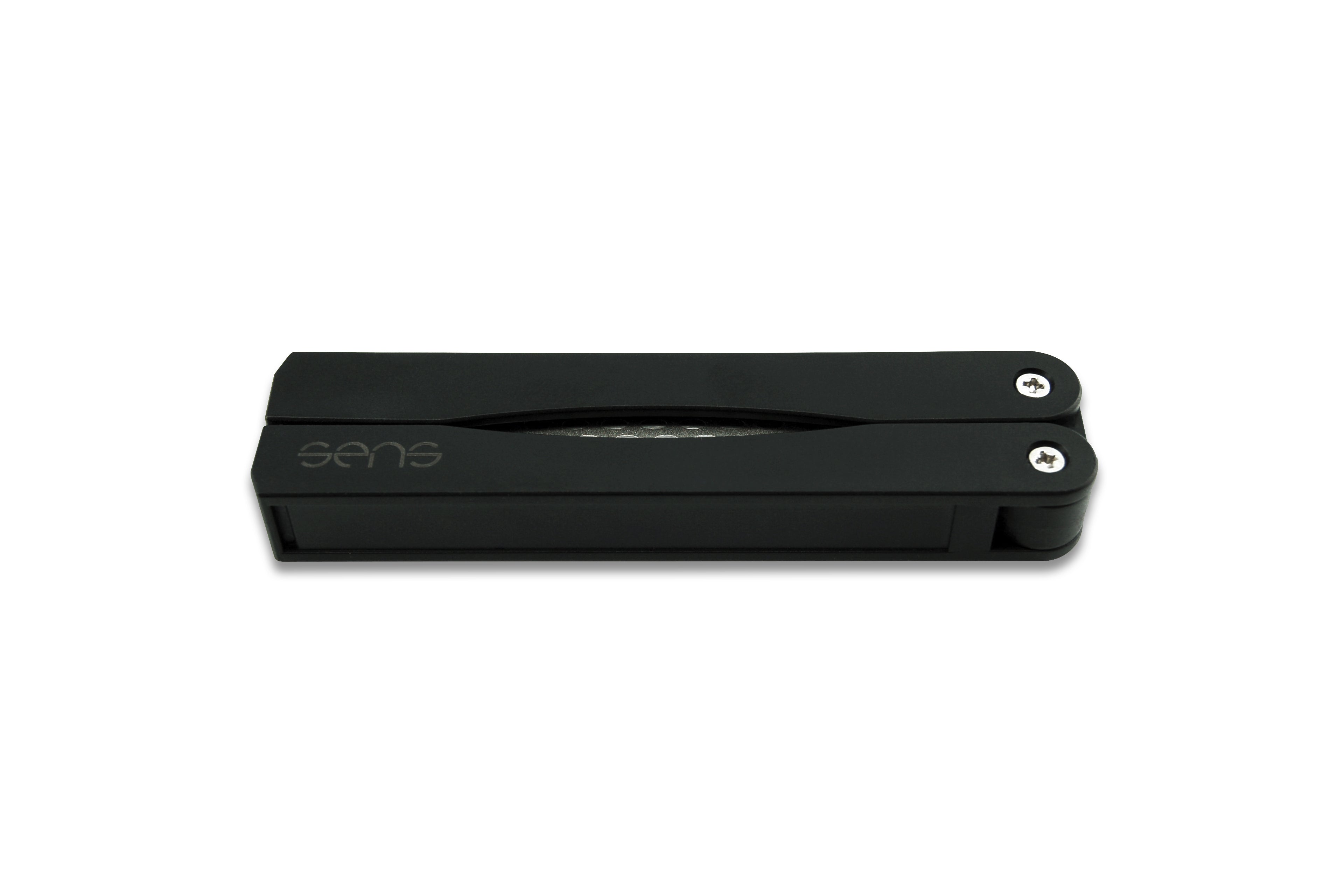
It is very easy to maintain the edge of C.A.C.® due to its hardness around 55 HRC. Regularly maintain the edge of your blade before it becomes too damaged. Maintain factory-set sharpening angles that ensure efficient cutting. There are a variety of products available for sharpening your knife. Choose the one you are most comfortable with to carry out this operation.
NEVER SHARPEN YOUR BLADE ON AN ELECTRIC GRINDWHEEL.
The part with serrations can be sharpened with the same accessories, but only on the side opposite the serrations.
An effective cutting tool
Your C.A.C.® knife has been designed to be a real cutting tool. Never use your knife as a screwdriver, crowbar, wood chisel or stamp. Its use for a function other than cutting can lead to irreversible damage.
Clean and lubricate
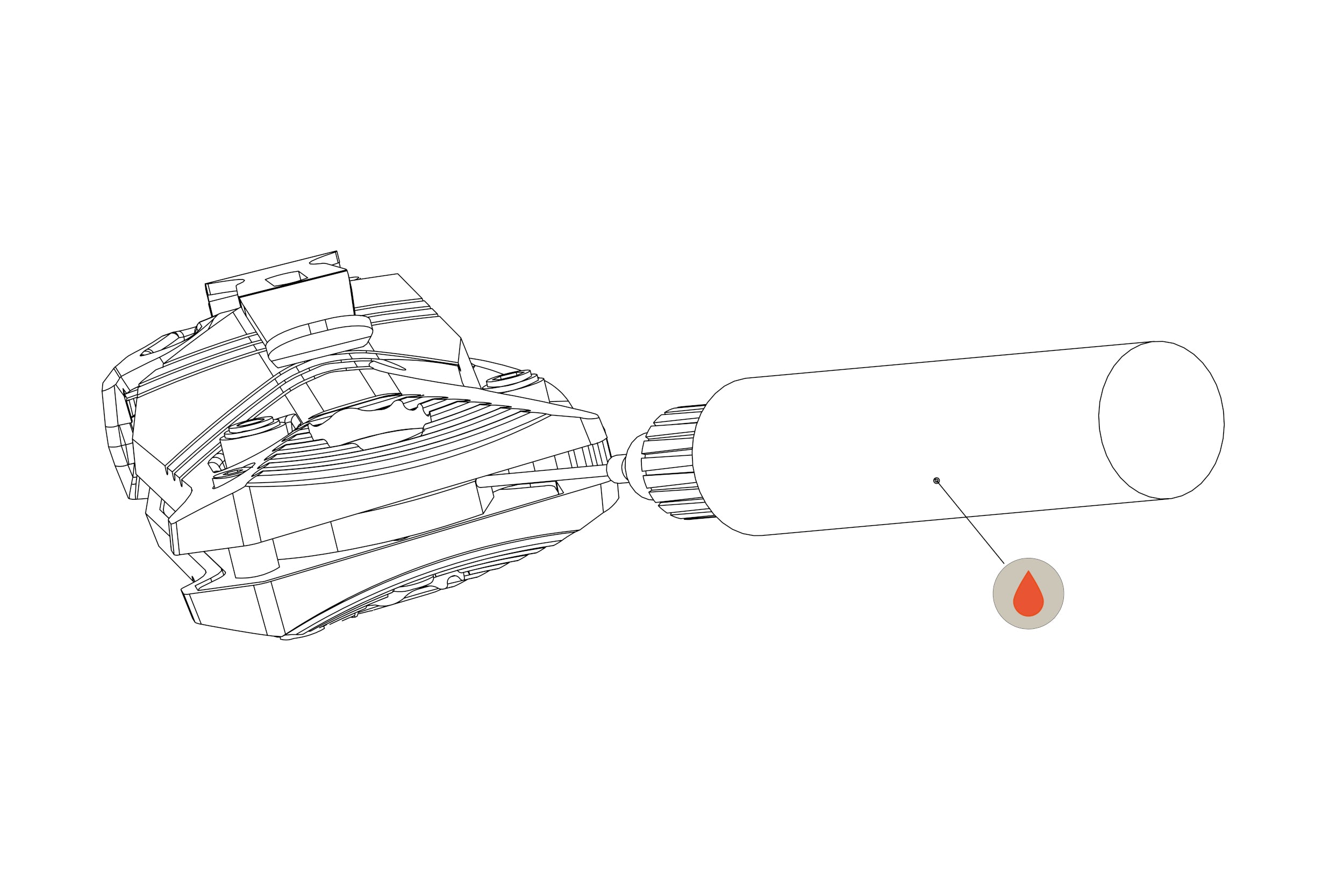
Always keep the mechanism area clean. Accumulation of dust and/or debris in this area may affect the operation of the blade locking mechanism. For effective cleaning, use warm soapy water, rinse thoroughly with hot water, then blow out and dry the mechanism completely, ideally with compressed air. Finally, apply a protective oily film. For optimal operation, regularly apply a drop of clear oil to the blade rotation axis.
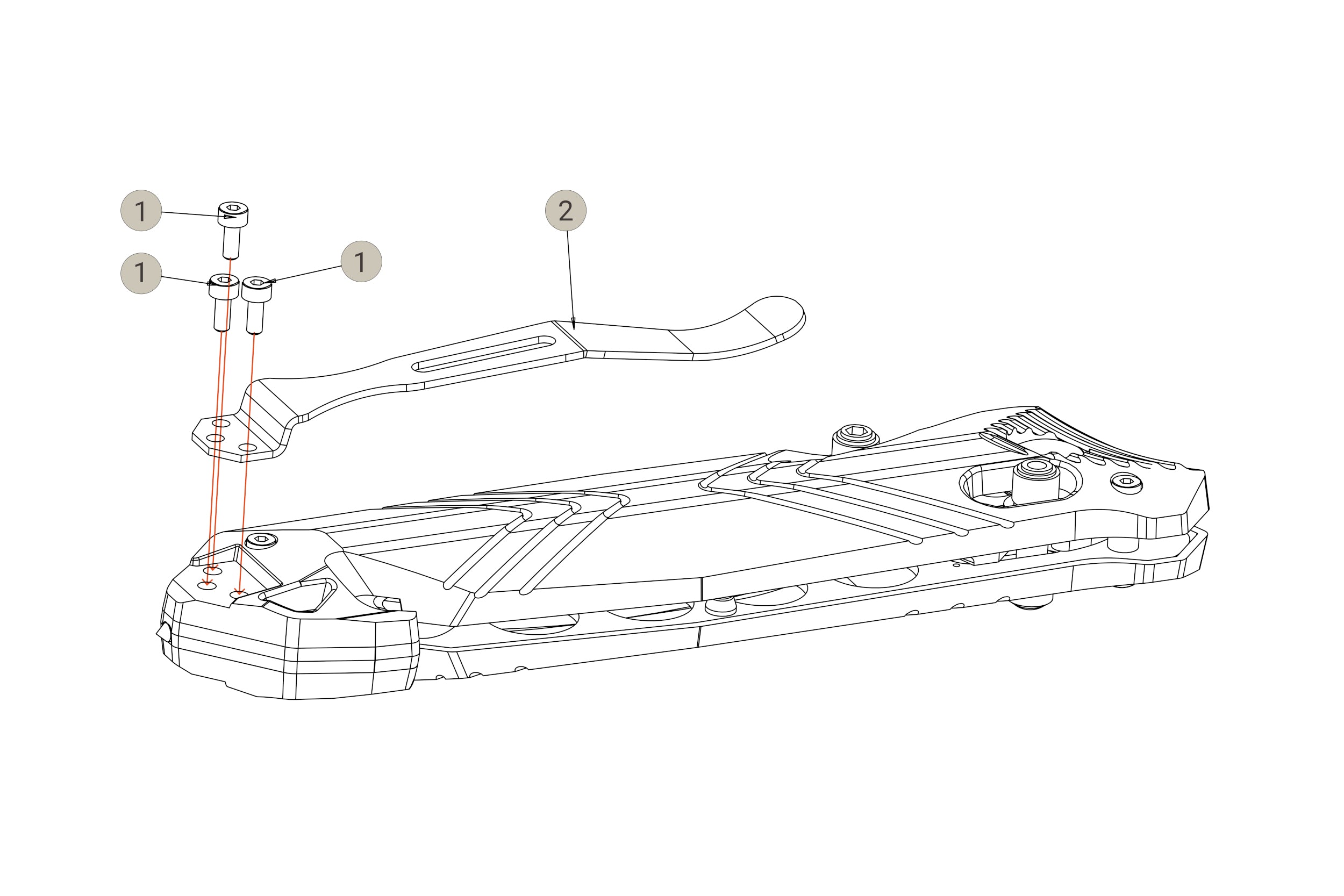
Changing the direction of use of the belt clip
The C.A.C.® knife is ambidextrous: In addition to the blade locking mechanism, which can be used by both right-handed and left-handed people, you can position the belt clip on the side of the knife that best suits your use. To reverse the belt clip mounting side, remove the 3 stainless steel screws (1). Position the belt clip (2) on the opposite side of the knife, then refit the 3 stainless steel screws (1). The application of thread lock on the screws, before tightening, is recommended to avoid any untimely unscrewing.
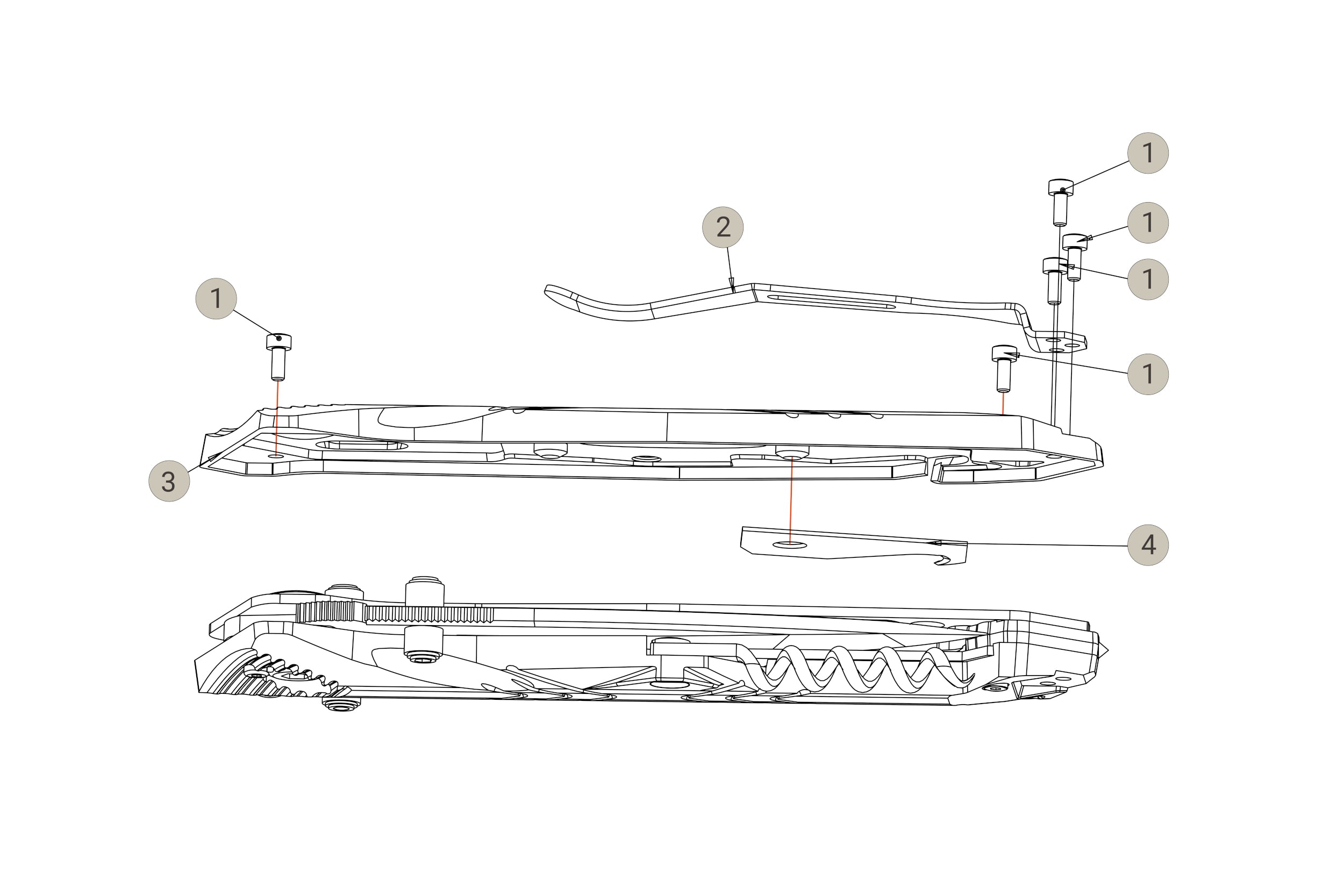
Replacing the strap cutter blade
If the belt clip (2) is mounted on the same side as the strap cutter (2), remove the 5 shiny stainless steel screws (1). Remove the belt clip (2) then remove the side of the handle (3). Replace the blade (4).
If the belt clip (2) is mounted on the same side as the corkscrew (3), remove only 2 shiny stainless steel screws (1). Remove dimension (3). Replace the blade (4). To reassemble your knife, proceed in the reverse order of the disassembly operations. The application of thread lock on the screws, before tightening, is recommended in order to avoid any untimely unscrewing.
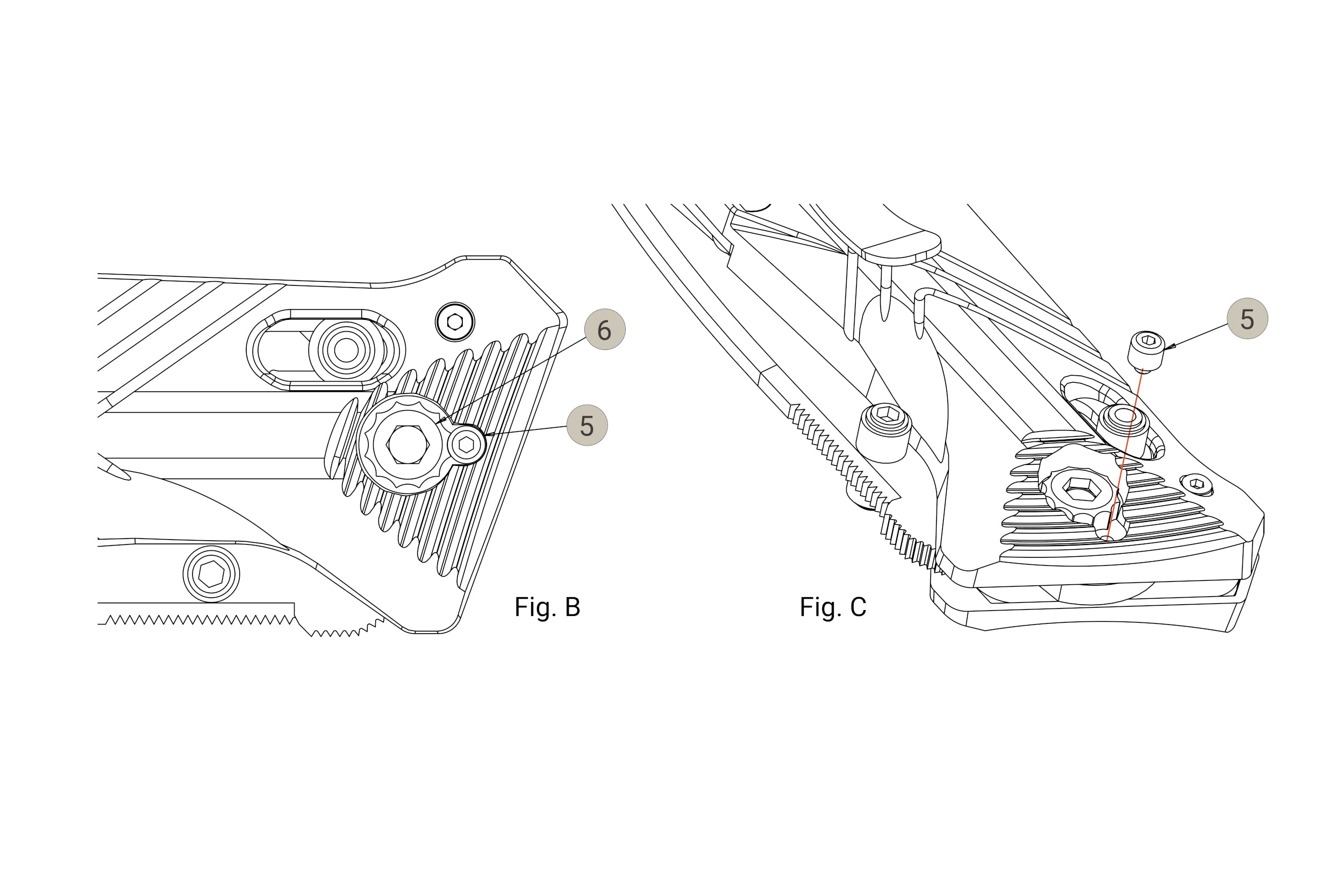
Blade clearance adjustment
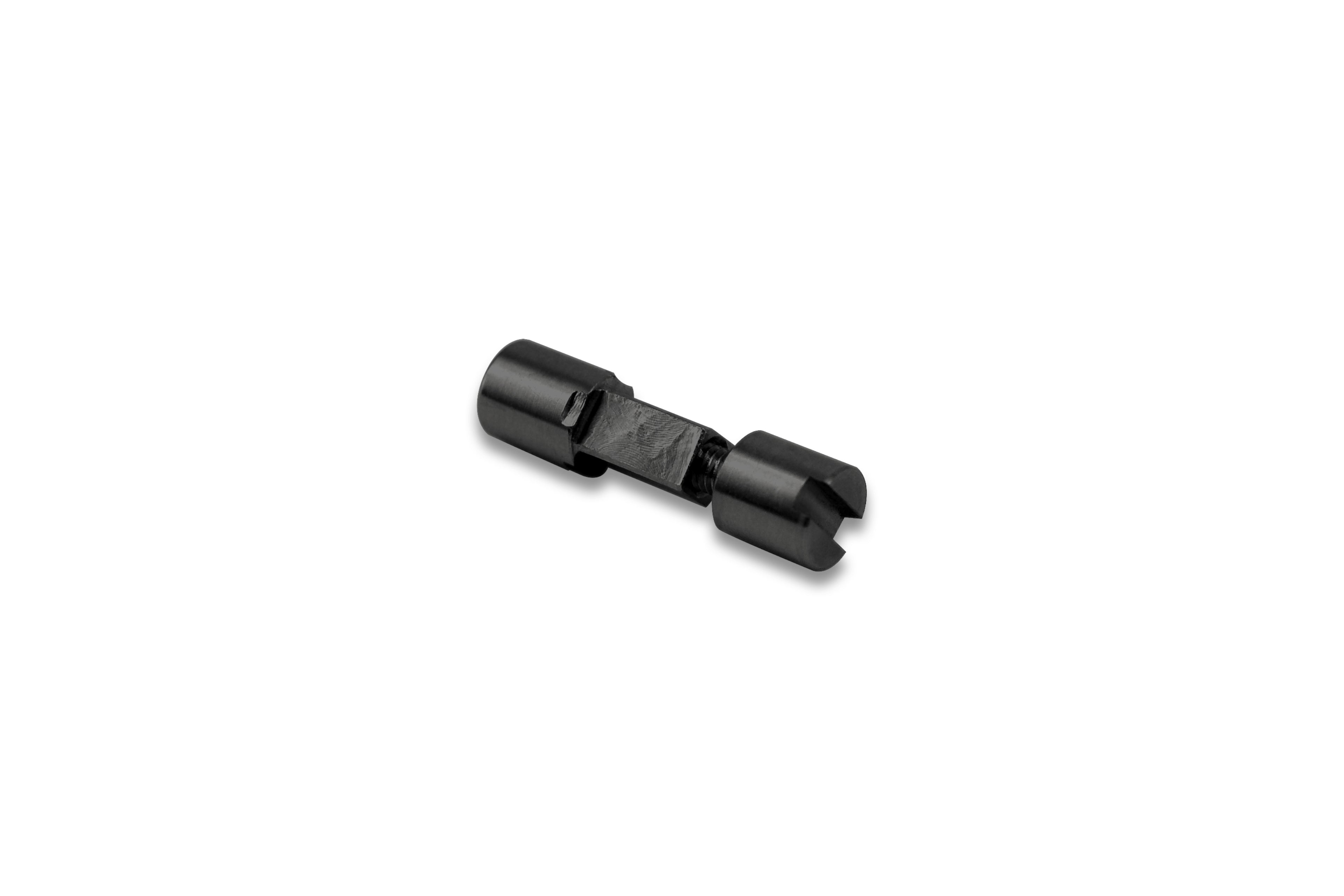
After many hours of use, it is possible that a slight lateral play may be felt at the blade axis. To guarantee impeccable operation in all circumstances, the adjustment of the blade axis (6) is “locked” by a specific shiny stainless steel locking screw (5). To adjust, remove the locking screw (5), then tighten or loosen the blade axle (6) as necessary. Lock this new adjustment by repositioning the locking screw (5) in one of the notches on the axle (6) provided for this purpose. Applying thread lock to the screws before tightening is recommended. Caution: excessive tightening of the axle (6) will prevent the blade from being maneuvered effectively. Prefer a “free” adjustment simply intended to compensate for lateral play.