
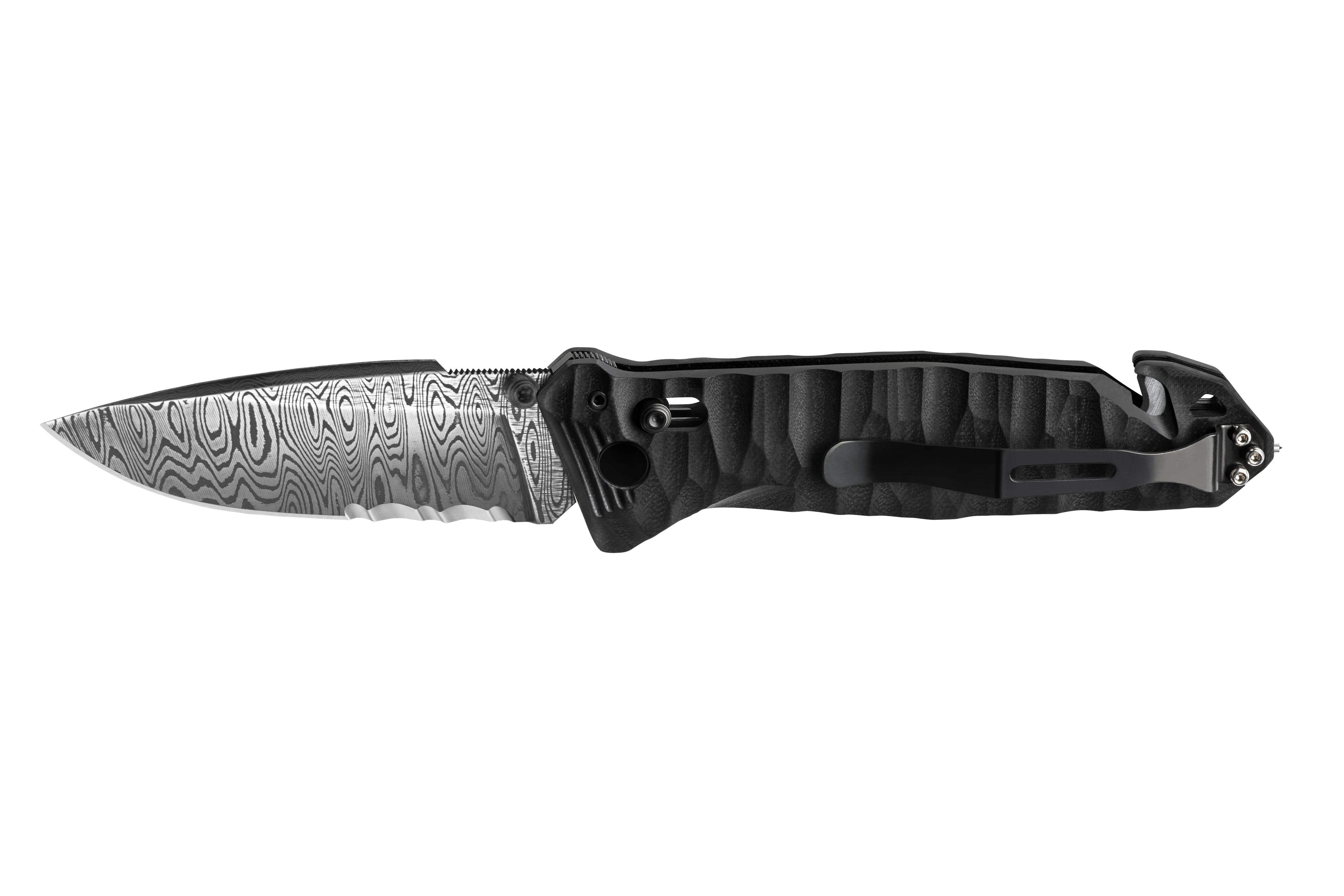
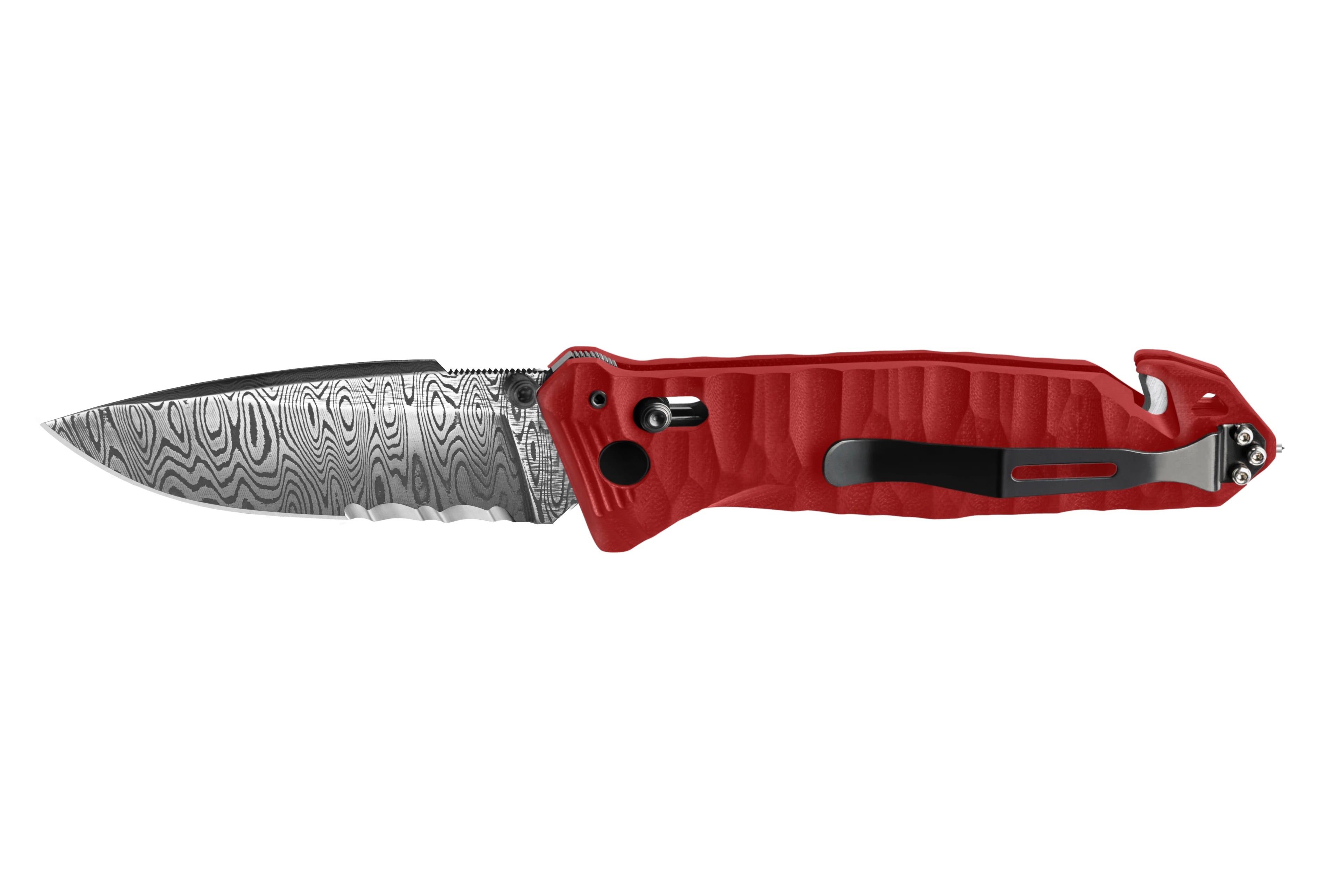
C.A.C.® Damascus Blade
(with corkscrew)


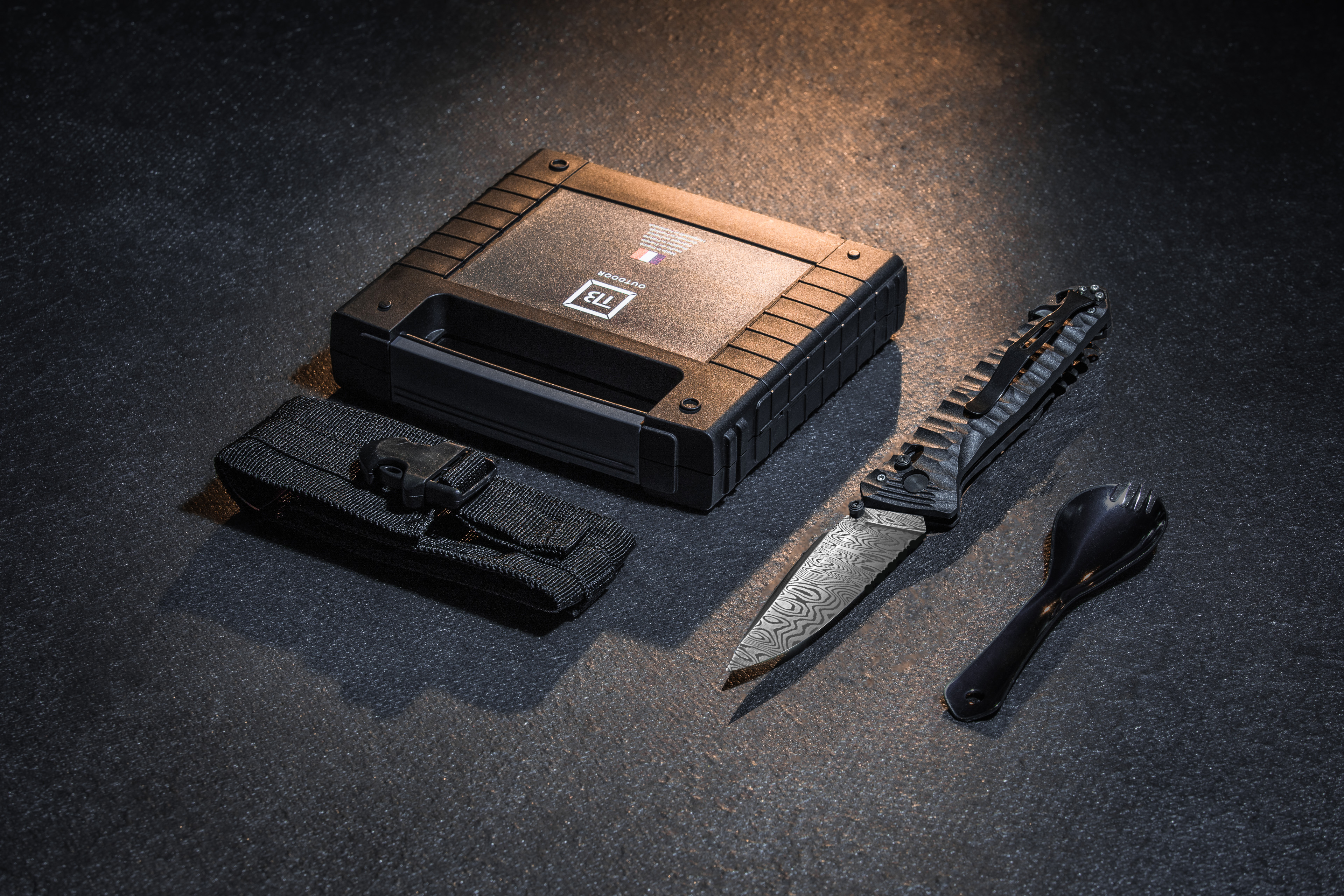
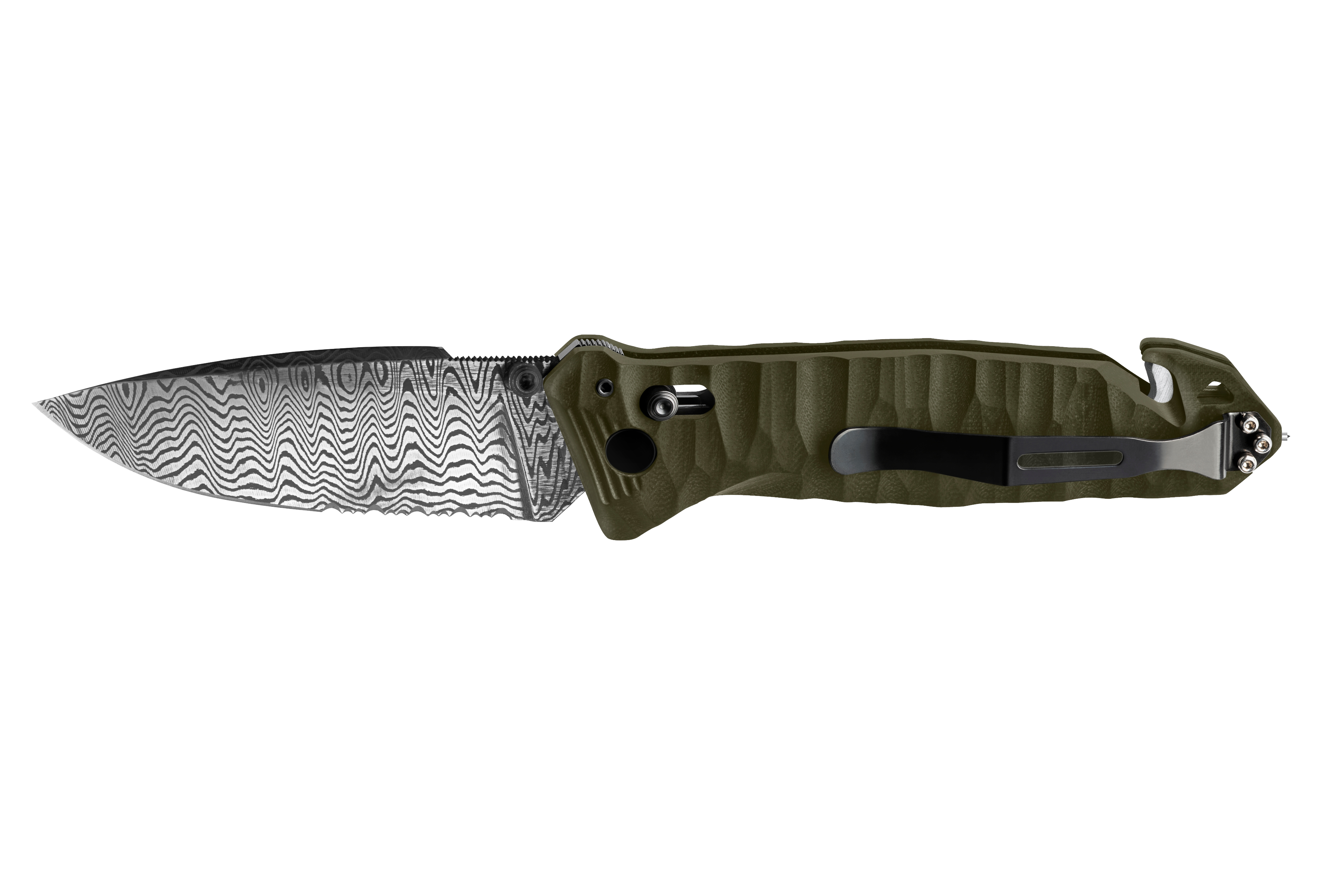
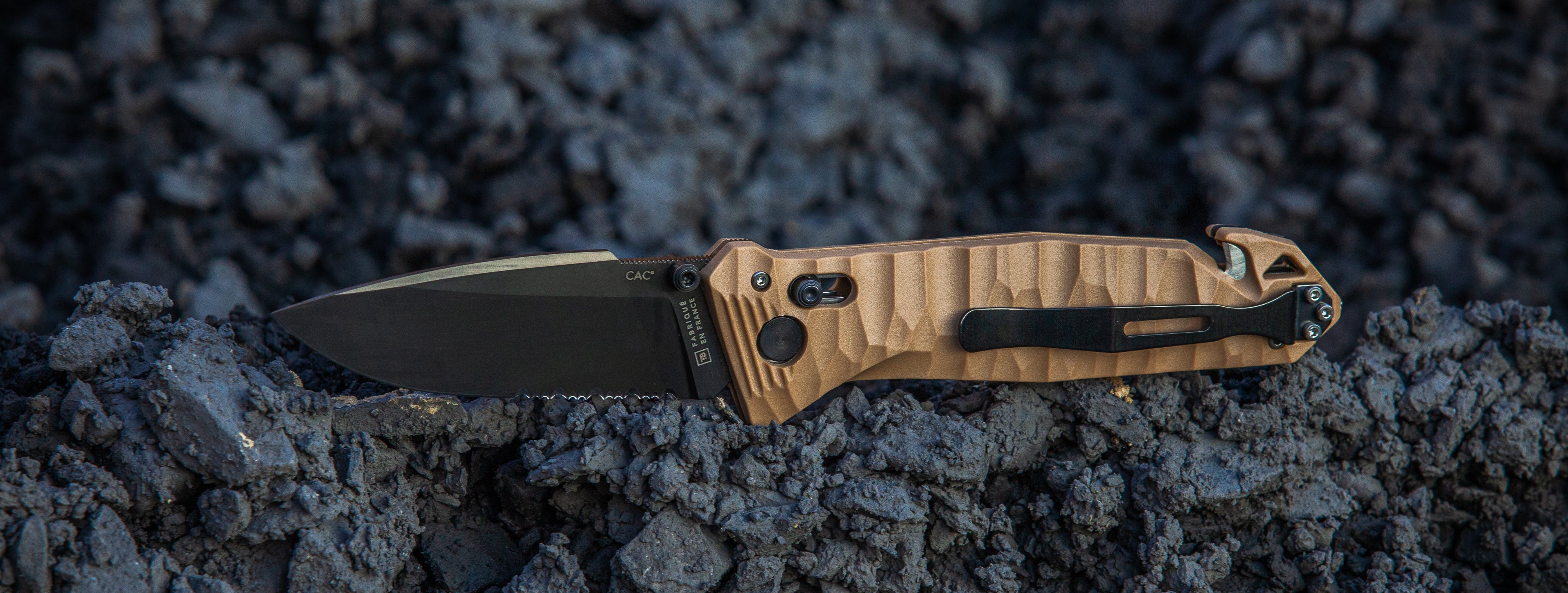
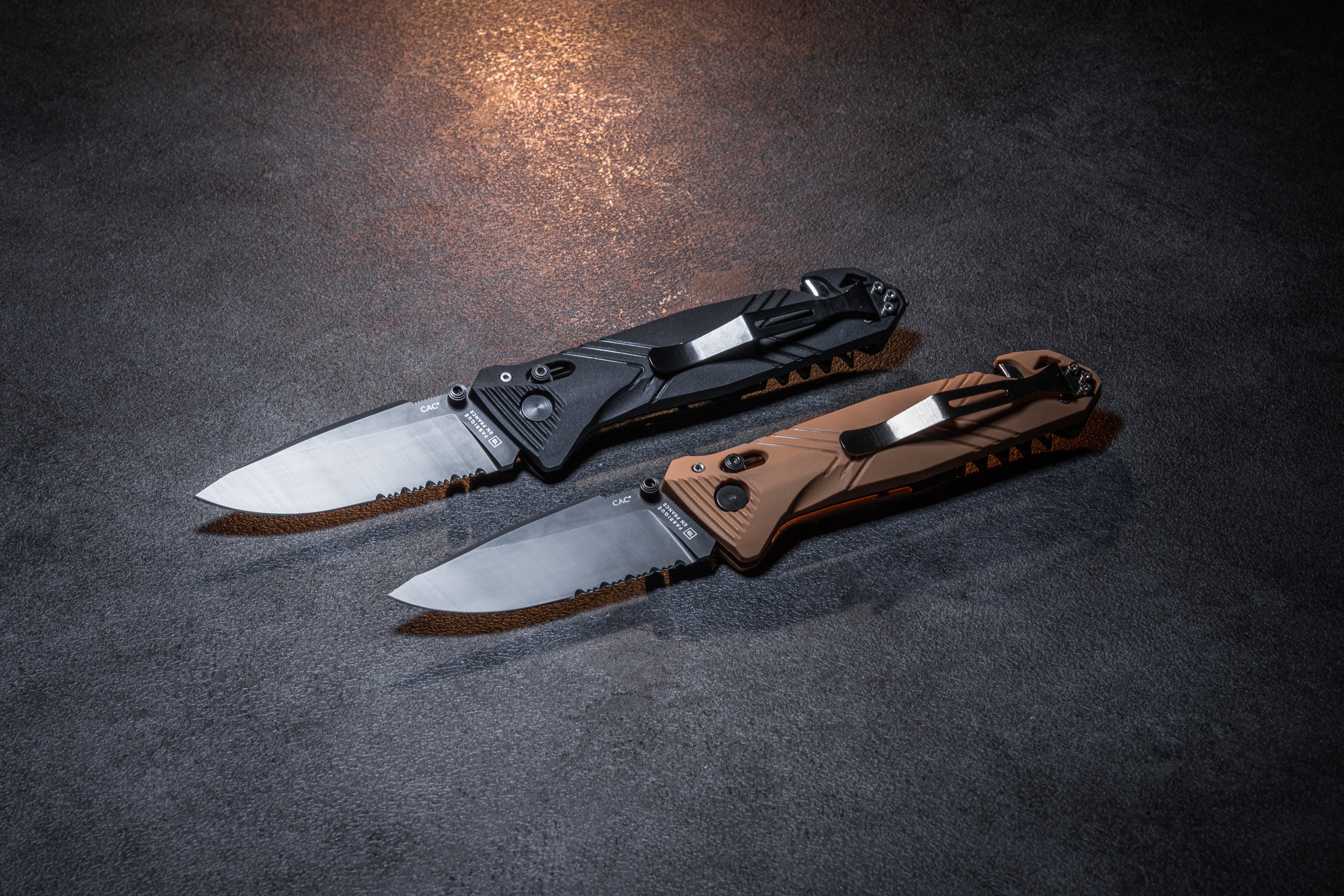
LE CAC® - Limited Edition DAMASCUS Blades. This exceptional knife is now available in a Damascus edition, with 3 handle colors to choose from. G10 handle knives are equipped with a strap cutter and do not have a corkscrew.
Weight: 195g
Blade length: 85mm
Closed length: 145mm
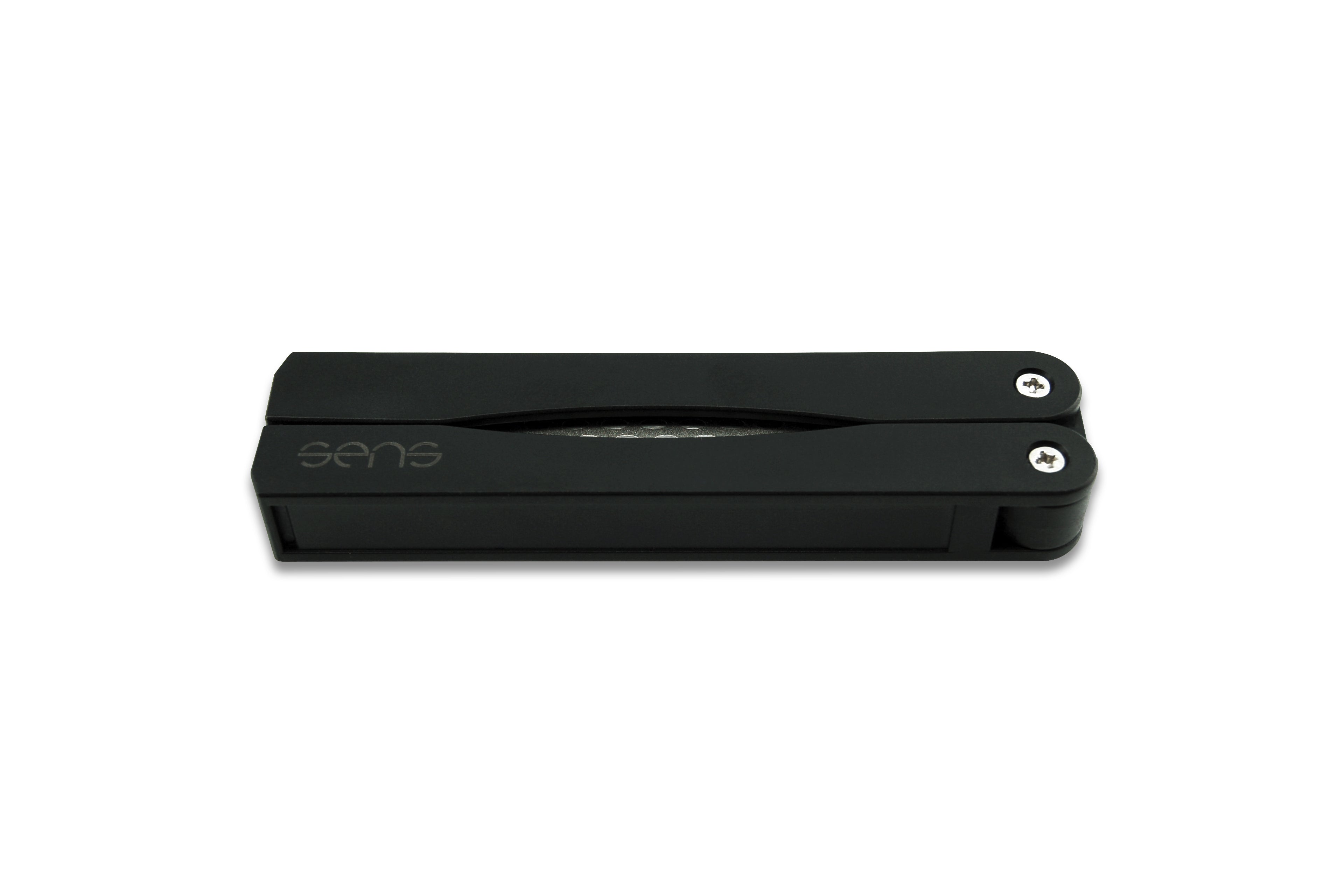
Knife sold with black Forks and a sheath.
(with corkscrew)
Technical specifications
(in grs)
195
+/-1
56.58
Serrated
(Per side in °)
17
G10
With
Without
Axe_mobile
yes
Yes
(Pattern/finish)
(mm)
85
(mm)
145
Damascus
Blade
Smooth cut and toothed section
Window breaker
Tungsten carbide ball
Strap cutter
For cutting seat belts or paracord
belt clip
Reversible for right or left handed wear.
Hole
For halyard or strap
Opening mechanism
Secure blade locking by movable axis. Ambidextrous.
The history of CAC®
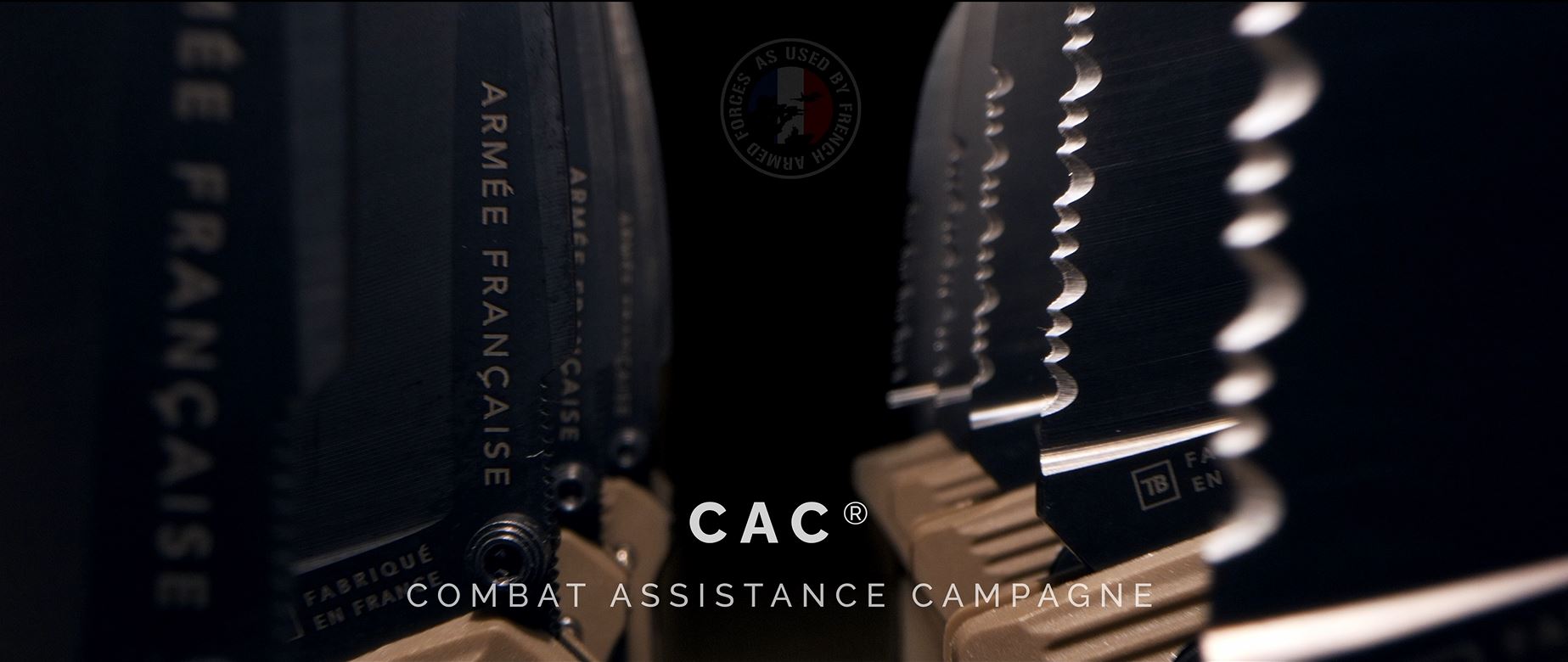
This knife is our company's response to the request expressed by the French army through very precise specifications: to design a robust, ambidextrous field knife with one-handed opening and closing. .
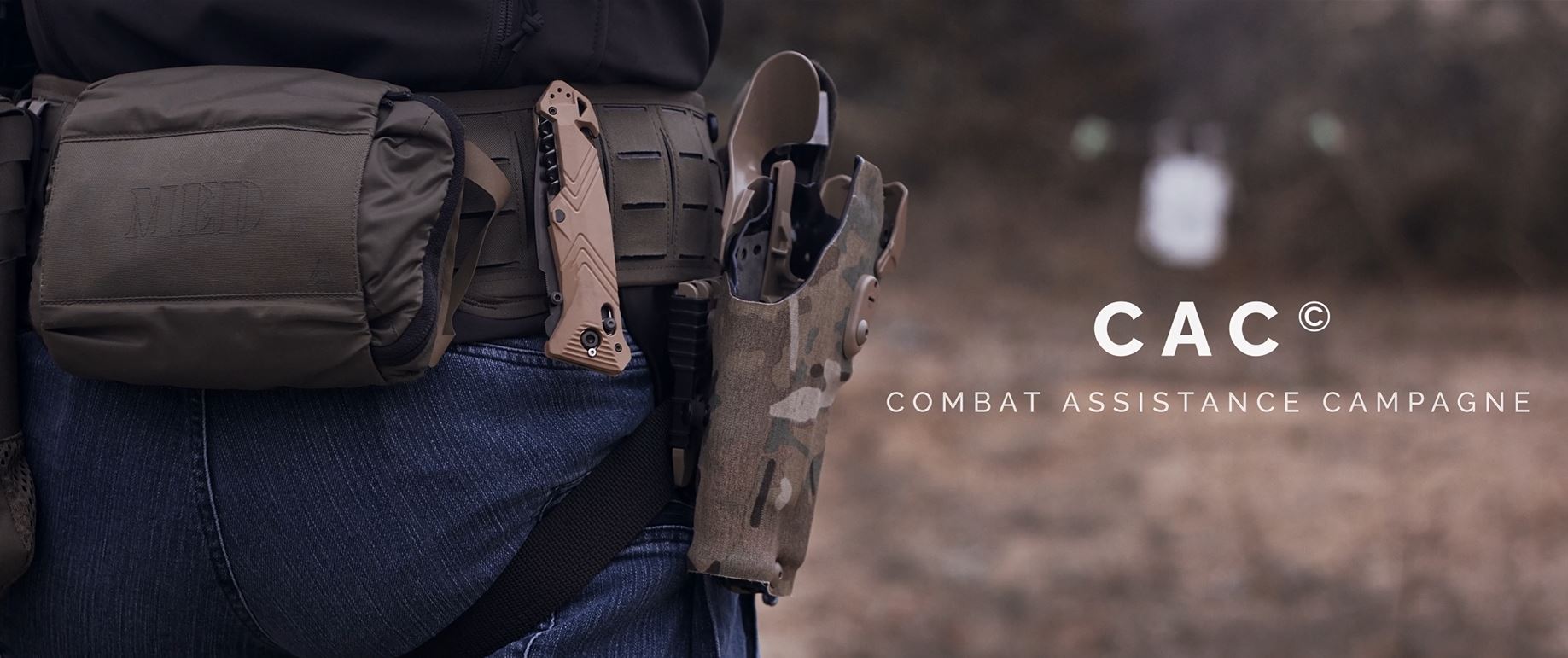
The CAC®, or Combat Assistance Campagne, is the result of a collaboration between TB Outdoor and Philippe Perotti, former French special forces.
The CAC® was officially selected by the French army in 2016, over numerous competing products for its performance, its robustness, its uncompromising manufacturing quality, and its price.
Since 2018, the CAC® has been widely deployed among our military forces and contributes daily to their security.
The CAC® is the third iteration of the "Campaign Knife" that Tarrerias-Bonjean designs and manufactures for the French Army. Its uncompromising design, lightness, and robustness make the CAC® an exceptional knife. Much more technical and ambitious than its predecessors, the CAC® is TB's answer to the French Army's request: to design a robust, ambidextrous knife that can be opened and closed with one hand. To create this exceptional knife, TB collaborated with Philippe Perotti, a former member of the French Special Forces and author of a dozen books on marksmanship and training. His recognized expertise in close combat maximized the knife's effectiveness, making the CAC® the ideal companion for our troops in all theaters of operation. The CAC®'s locking mechanism is extremely robust and ensures flawless blade locking in the open position. The CAC blade is unique in that it's made from nitrogen-doped stainless steel, Nitrox®. Our production facility and engineers actively participated in the development of this specially formulated steel. Nitrox® replaces some of the carbon in this stainless steel during manufacturing. This gives the blade exceptional corrosion resistance, further enhanced by a PVD coating.
Cutting capacity is also a strong point of this steel which combines flexibility and high resistance.
TB has also integrated the CAC®'s secure blade locking mechanism with a movable pin. This mechanism is extremely robust and ensures flawless blade locking in the open position. The CAC® was officially selected by the French Army in 2017 for its performance, robustness, quality, and price.
Perfectly corrosion-resistant, the blade is made of Nitrox®, with a smooth or mixed smooth + serrated edge.
The CAC® also features a glass breaker, a corkscrew (depending on the model), and a reversible belt clip. It's a true showcase of all the cutting-edge technologies one would expect from a high-performance knife.
The handle consists of two fiberglass-reinforced polymer plates. These plates are screwed to the mechanism with stainless steel screws, one of which cleverly houses a strap cutter blade. This curved, interchangeable blade is designed to cut straps, ropes, and seat belts to facilitate extraction in the event of an accident.
LE CAC® is also available in Fluorescent Yellow which reacts intensely to UV light so that it can be found in difficult environments and in the dark.
Numerous accessories are available as options.
Its variations
The CAC® is a multifunctional knife designed for maximum adaptability. Initially, we designed the knife with handle plates made of PA6, a polymer reinforced with glass fibers to improve its robustness. The PA6 FV has astonishing characteristics in terms of resistance to deformation and shock absorption, making it ideal for the most demanding conditions of use.
However, we have recognized our customers' interest in producing individually machined G10 sleeve inserts in solid blocks. G10 is a composite material based on fiberglass, impregnated with epoxy resin. This material is renowned for its high resistance to humidity, heat, chemicals, and for its exceptional dimensional stability.
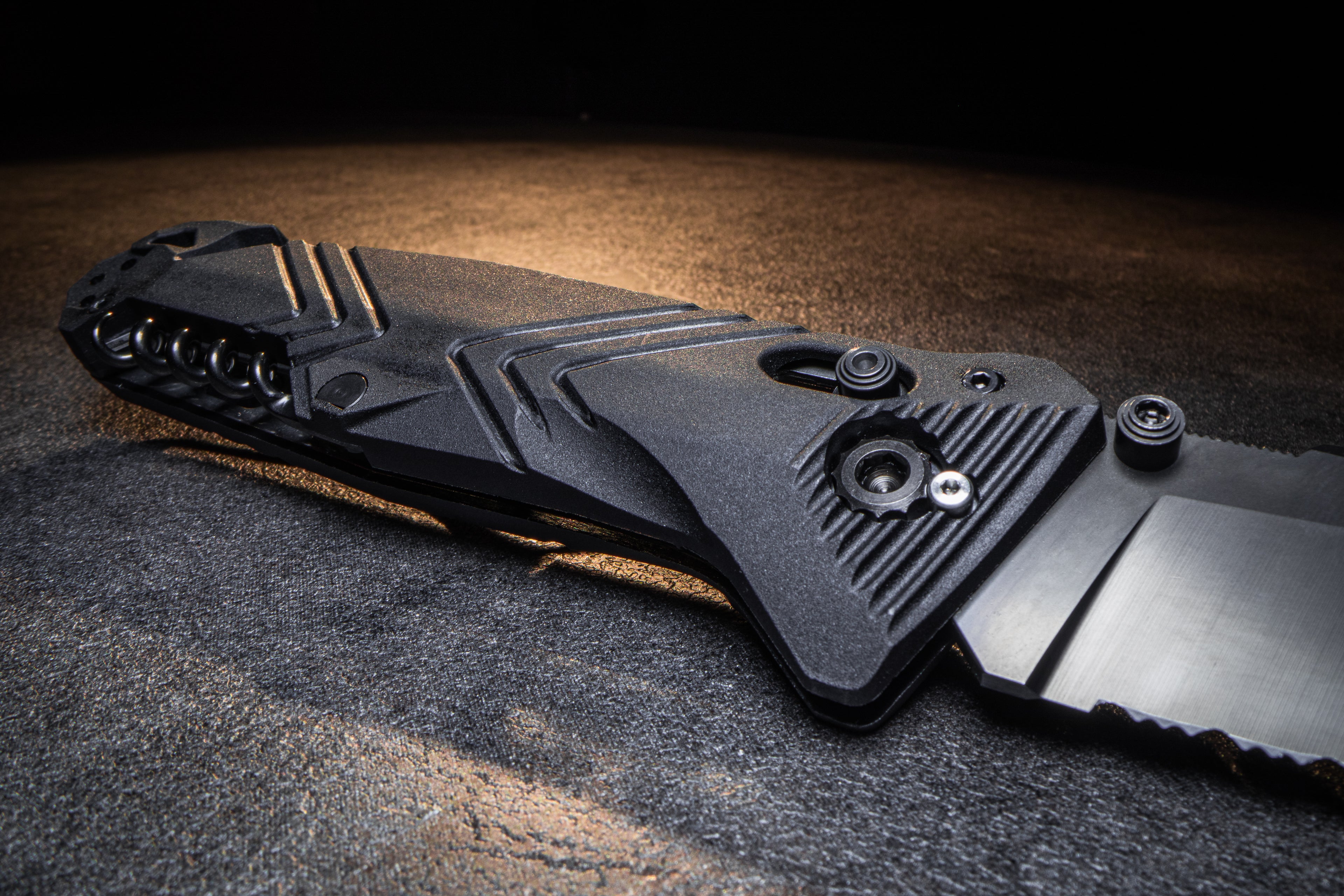
Additionally, the versatility of the CAC® knife is enhanced by varied blade options, including fully smooth blades for a clean, precise cut, and blades with serrations for more aggressive work akin to sawing. Additional accessories, such as the strap cutter and corkscrew, can be added or removed from the configurations to tailor each knife to your specific needs!
In short, with more than 27 possible configurations of the CAC® knife, including different handle materials, blade types, colors and finishes, we are able to offer a tool truly adapted to everyone's requirements.
The CAC® blade
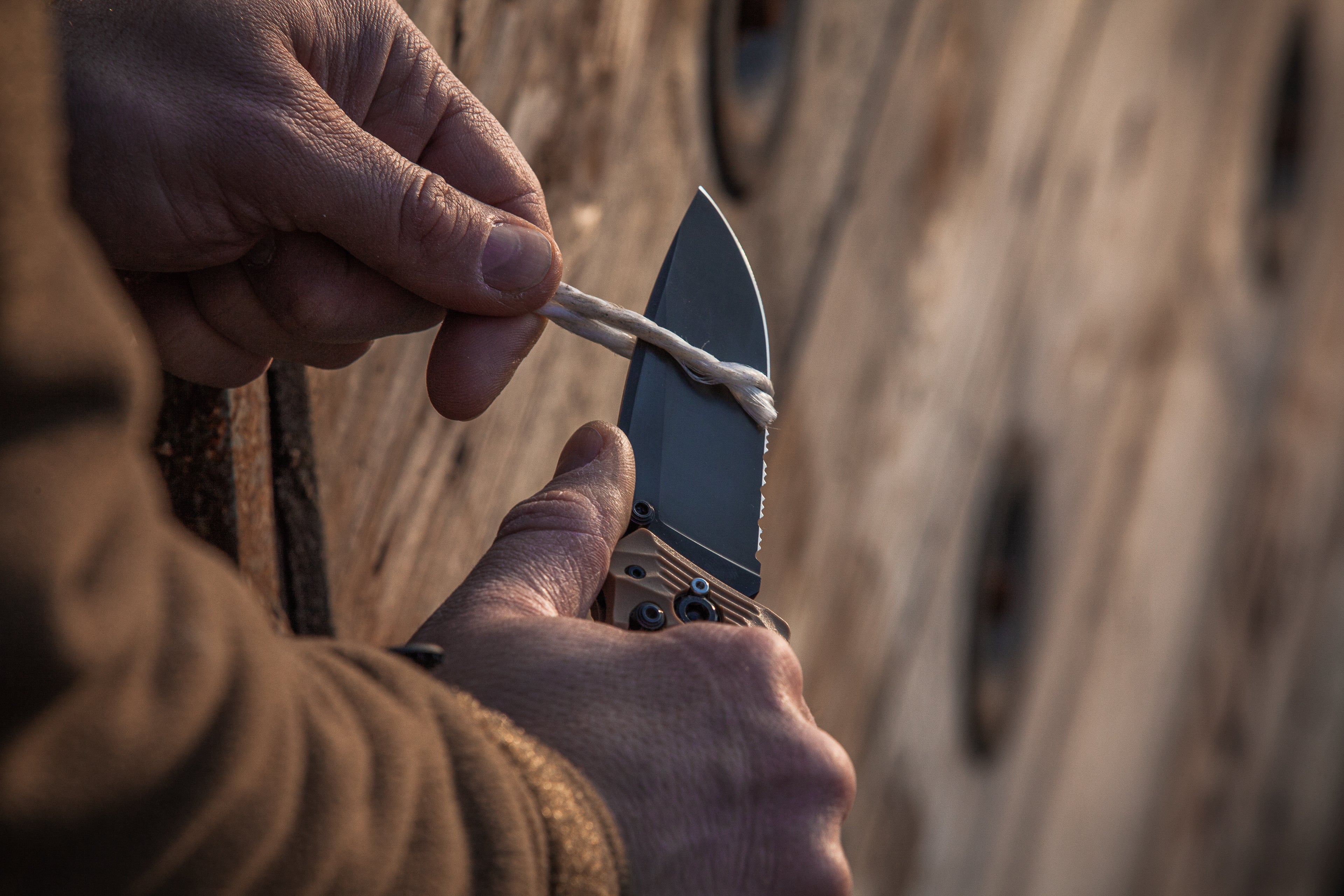
The CAC® blade is made of stainless steel doped with nitrogen, called Nitrox®. Featuring 16% chromium and a carbon content of 0.35%, Nitrox® is easy to sharpen and resists corrosion like few martensitic steels.
We also offer blade alternatives for sale, MOX® steel, Damascus steel among others.
Notice
Caring for your knife
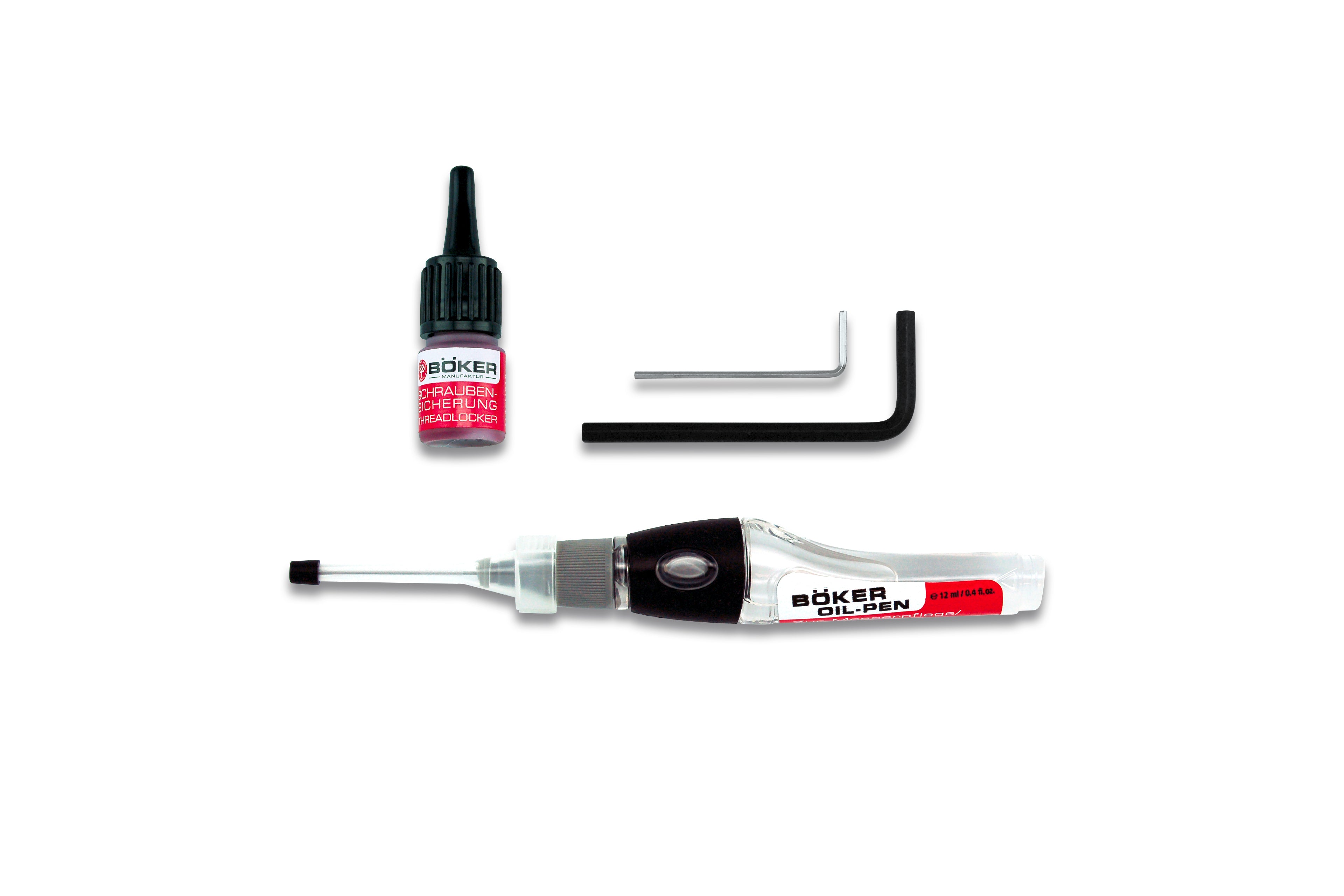
Nitrox® steel was developed, among other things, for its resistance to corrosion. In very humid or salty environments, it is essential to protect your CAC® knife by occasionally applying clear oil to the metal parts.
Occasionally, the belt clip screws may come loose, particularly if you change the clip's mounting direction (right/left). The application of thread lock on the screws, before tightening, is recommended (See supplier's instructions).
Detailed instructions for routine maintenance, sharpening, cleaning, lubricating and adjusting the CAC® are included with each knife. These steps ensure your CAC® remains an effective tool for all your outdoor needs. Take advantage of the robustness, technicality and safety that the CAC® offers, while exploring the fauna and flora with the freedom that only TB Outdoor can offer.
Current operations
The operating settings have been made at the factory and do not require modification on your part. However, some common operations require partial dismantling of the knife. The shiny stainless steel screws, all of the same size (hexagon key T 1.5), are the only ones that need to be operated to carry out the operations below. The other screws, black in color, should not be handled to carry out these operations or to maintain your knife.
Sharpening
It is very easy to maintain the edge of CAC® due to its hardness around 55 HRC. Regularly maintain the edge of your blade before it becomes too damaged. Maintain factory-set sharpening angles that ensure efficient cutting. There are a variety of products available for sharpening your knife. Choose the one you are most comfortable with to carry out this operation.
NEVER SHARPEN YOUR BLADE ON AN ELECTRIC GRINDWHEEL.
The part with serrations can be sharpened with the same accessories, but only on the side opposite the serrations.
An effective cutting tool
Your CAC® knife has been designed to be a real cutting tool. Never use your knife as a screwdriver, crowbar, wood chisel or awl. Its use for a function other than cutting can lead to irreversible damage.
Clean and lubricate
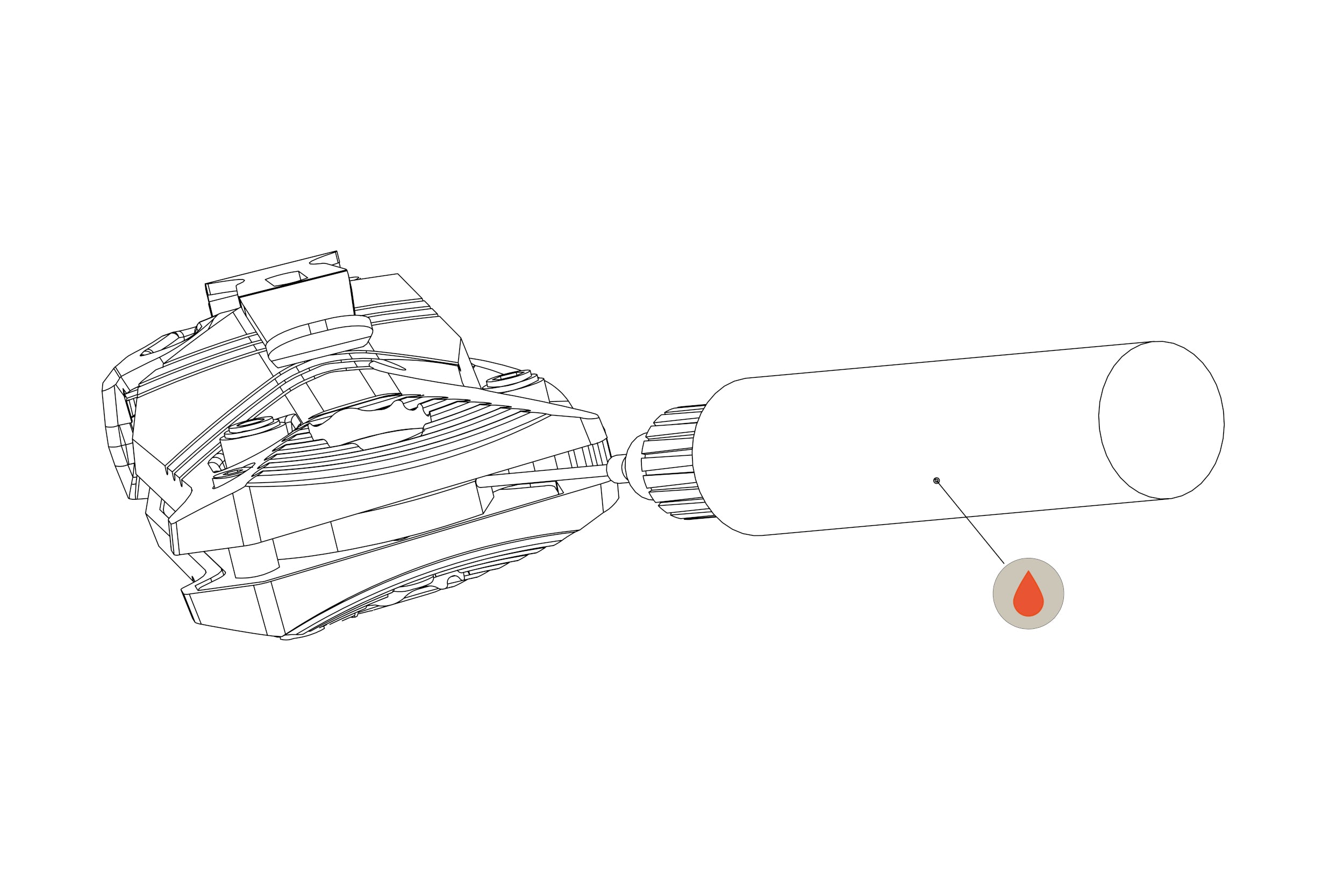
Always keep the mechanism area clean. Accumulation of dust and/or debris in this area may affect the operation of the blade locking mechanism. For effective cleaning, use warm soapy water, rinse thoroughly with hot water, then blow out and dry the mechanism completely, ideally with compressed air. Finally, apply a protective oily film. For optimal operation, regularly apply a drop of clear oil to the blade rotation axis.
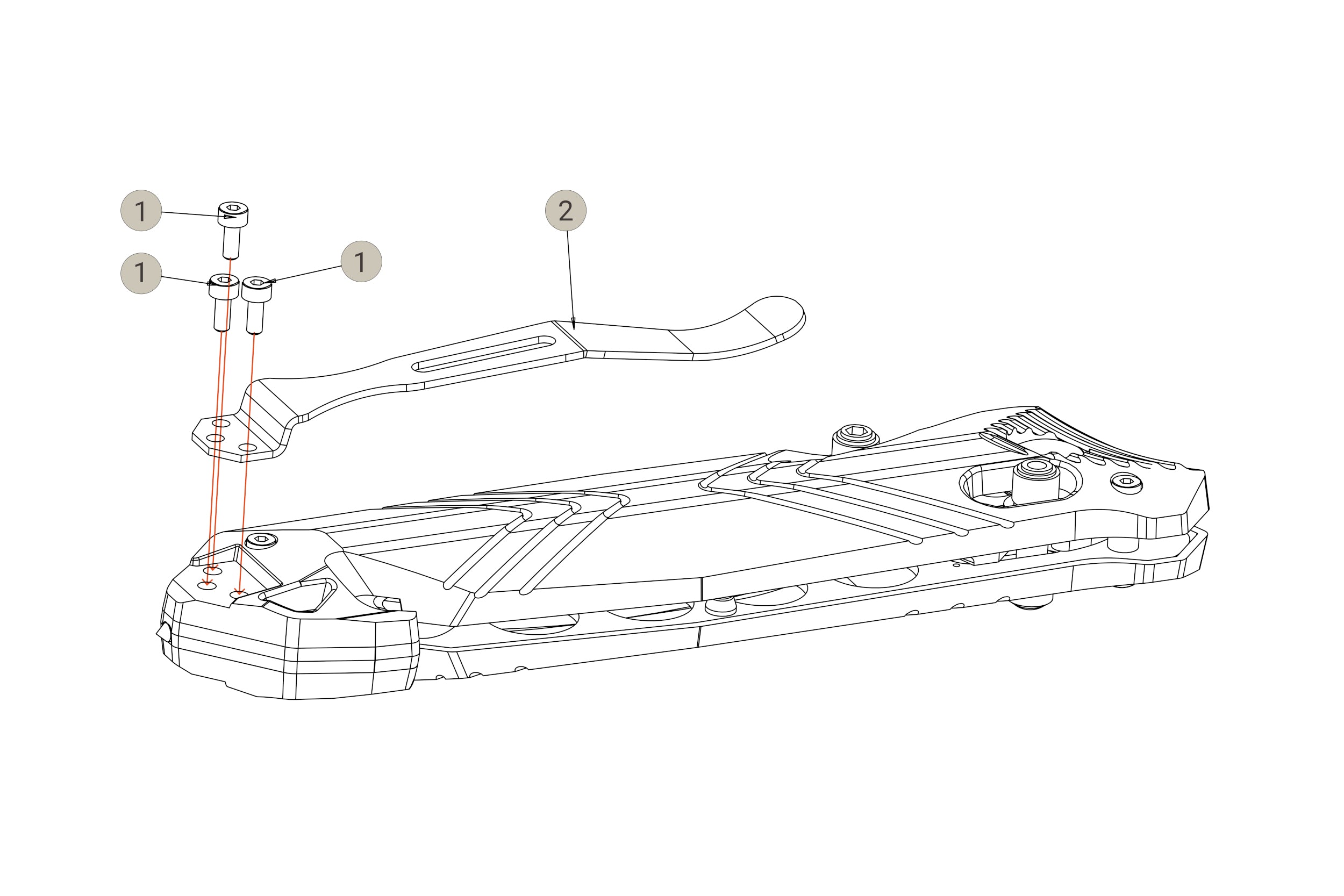
Changing the direction of use of the belt clip
The CAC® knife is ambidextrous: In addition to the blade locking mechanism, which can be used by both right-handed and left-handed people, you can position the belt clip on the side of the knife that best suits your use. To reverse the belt clip mounting side, remove the 3 stainless steel screws (1). Position the belt clip (2) on the opposite side of the knife, then refit the 3 stainless steel screws (1). The application of thread lock on the screws, before tightening, is recommended to avoid any untimely unscrewing.
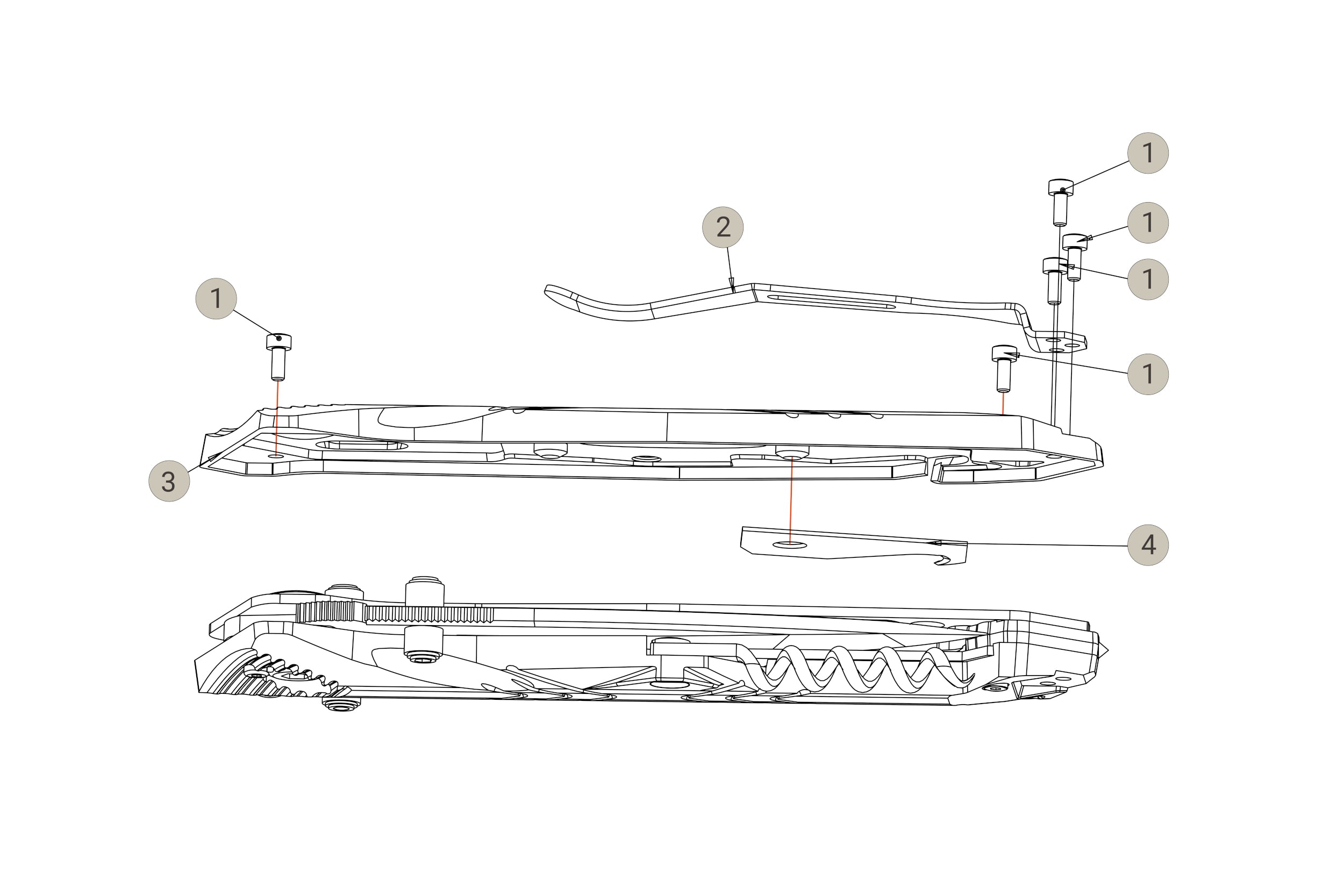
Replacing the strap cutter blade
If the belt clip (2) is mounted on the same side as the strap cutter (2), remove the 5 shiny stainless steel screws (1). Remove the belt clip (2) then remove the side of the handle (3). Replace the blade (4).
If the belt clip (2) is mounted on the same side as the corkscrew (3), remove only 2 shiny stainless steel screws (1). Remove dimension (3). Replace the blade (4). To reassemble your knife, proceed in the reverse order of the disassembly operations. The application of thread lock on the screws, before tightening, is recommended in order to avoid any untimely unscrewing.
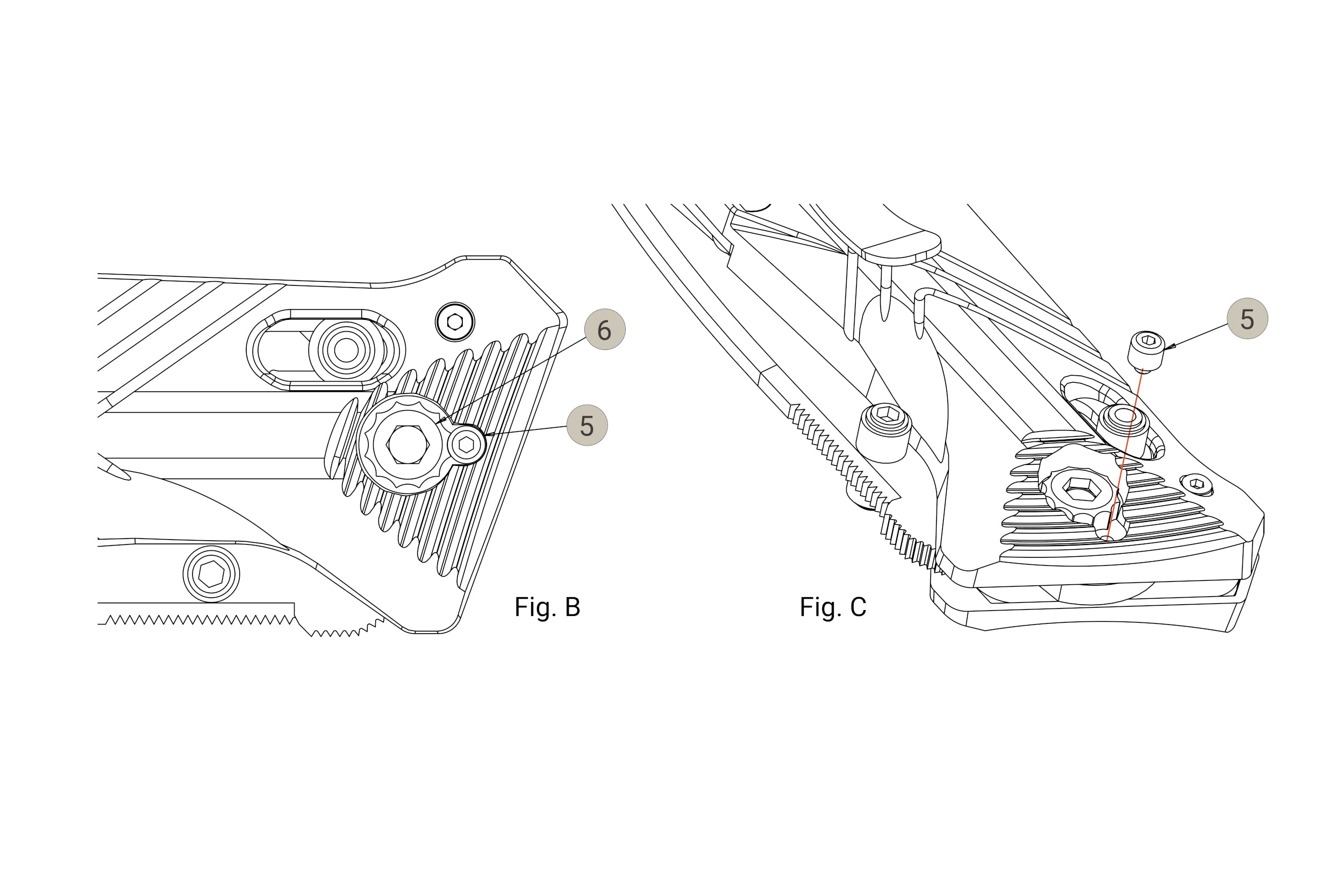
Blade clearance adjustment
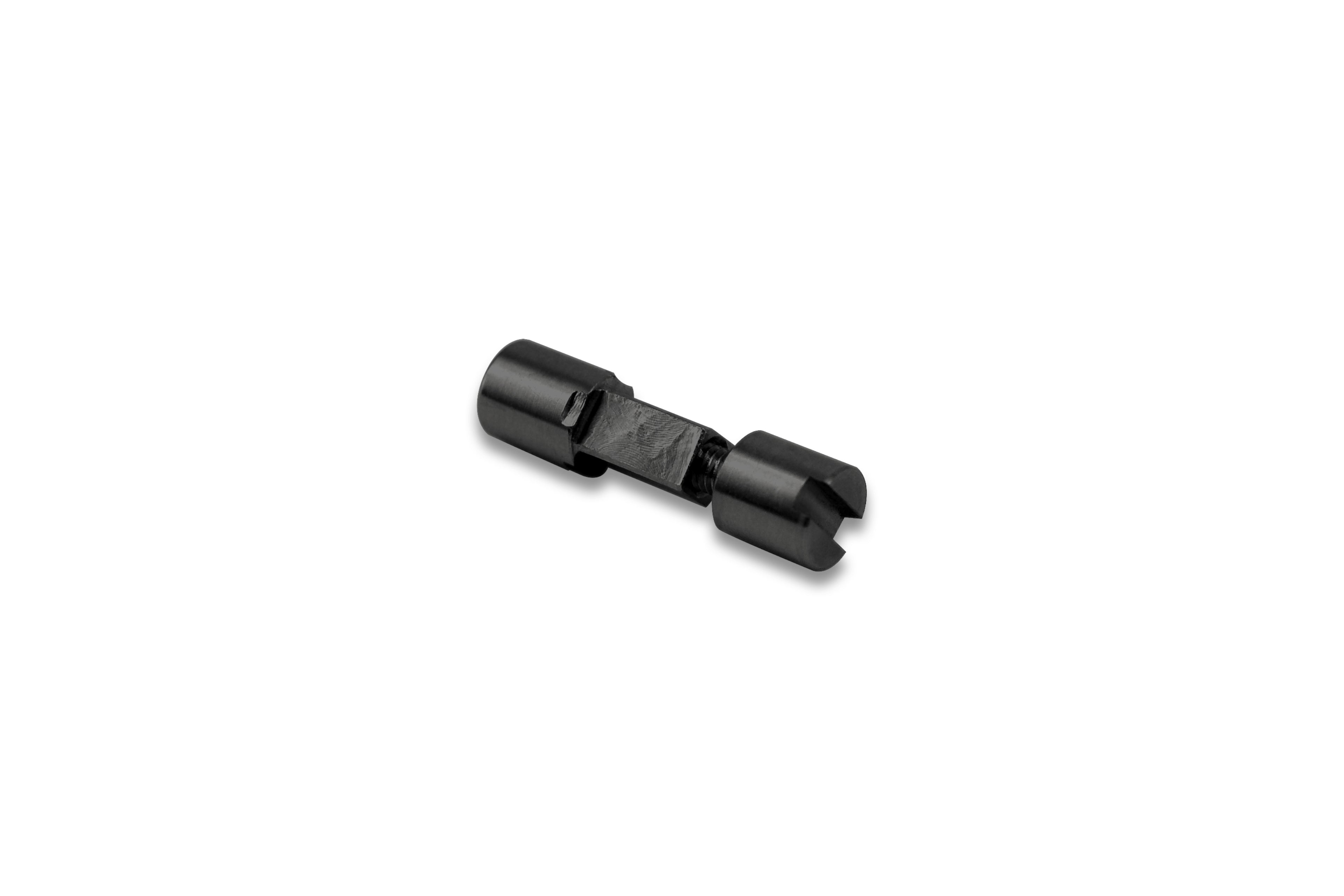
After many hours of use, it is possible that a slight lateral play may be felt at the blade axis. To guarantee impeccable operation in all circumstances, the adjustment of the blade axis (6) is “locked” by a specific shiny stainless steel locking screw (5). To adjust, remove the locking screw (5), then tighten or loosen the blade axle (6) as necessary. Lock this new adjustment by repositioning the locking screw (5) in one of the notches on the axle (6) provided for this purpose. Applying thread lock to the screws before tightening is recommended. Caution: excessive tightening of the axle (6) will prevent the blade from being maneuvered effectively. Prefer a “free” adjustment simply intended to compensate for lateral play.