A survival knife is more than just a tool. It's the essential companion for anyone venturing into the wilderness. Whether you're practicing bushcraft or preparing for extreme situations, its reliability is paramount. This guide breaks down the characteristics of an exceptional blade.
We'll explore every technical aspect, from full-stitch construction to steel selection. We'll draw on the expertise of TB Outdoor, a long-standing supplier to the French Army, to illustrate these principles. Get ready to master the art of choosing your most faithful adventure companion.
What are the key points of this guide?
- The fundamental role: Understanding the missions of a survival knife.
- Technical criteria: Analyze the construction, the steel, the handle and the blade.
- The TB Outdoor selection: Discover the knives tested by the French Army.
- Maintenance: Ensuring the longevity and performance of your blade.
- FAQ & Glossary: Answers to your questions and key definitions.
How to choose the ultimate survival knife?
Choosing a survival knife is a personal and technical decision. It's not about choosing randomly, but about selecting a tool that will be there for you in critical situations. This guide gives you the keys to making an informed choice. A choice that could, one day, make all the difference.
What is the actual purpose of a survival knife?
A survival or bushcraft knife is a multi-functional tool. Its versatility is its primary quality. Its main functions are clear:
- Woodworking: This is its primary function. It must be able to cut, split small logs ( batoning ) and carve kindling chips ( feathersticks ).
- Food preparation: Its blade must be effective for preparing game or vegetables, and easy to clean.
- Construction and repair: From creating an emergency shelter to repairing equipment, its robustness is constantly put to the test.
- Lighting the fire: The back of the blade, if it is at a right angle, is perfect for scraping a firesteel and producing powerful sparks.
What are the technical criteria for a reliable knife?
A knife's performance depends on precise design choices and materials. Let's analyze the crucial points.
Why is the full silk construction non-negotiable?
A knife is said to be "full tang" when the blade and handle are made from a single piece of metal. This one-piece construction guarantees maximum strength. It is essential for withstanding extreme stresses such as batoning, without risk of breakage. For a survival knife, it is an absolute prerequisite.
Which type of steel should I choose: carbon or stainless?
The choice of steel is central to performance. Each type has its advantages, and the choice depends on your priorities.
| Carbon Steel | Stainless steel |
|---|---|
|
Benefits : - Very robust. - Easy to sharpen in the field. - Produces excellent sparks. |
Benefits : - Excellent corrosion resistance. - Very little maintenance. - Retains its sharpness well. |
|
Disadvantages: - Susceptible to rust, requires maintenance. - It develops a patina over time. |
Disadvantages: - More difficult to resharpen. - Less effective with a firesteel. |
How important is the neck and grind?
- The handle: Its ergonomics are crucial. A poorly designed handle is uncomfortable and dangerous. Materials like Micarta or G10 offer excellent grip, even with wet hands.
- The grind: This refers to the geometry of the cutting edge. The Scandinavian grind is very popular in bushcraft. It is robust, easy to sharpen, and ideal for wood.
Which TB Outdoor knives are proven for survival?
Our expertise, forged with the French Army, is reflected in benchmark models. Their military specifications guarantee uncompromising robustness.
| Model | Key Features | Ideal Use |
|---|---|---|
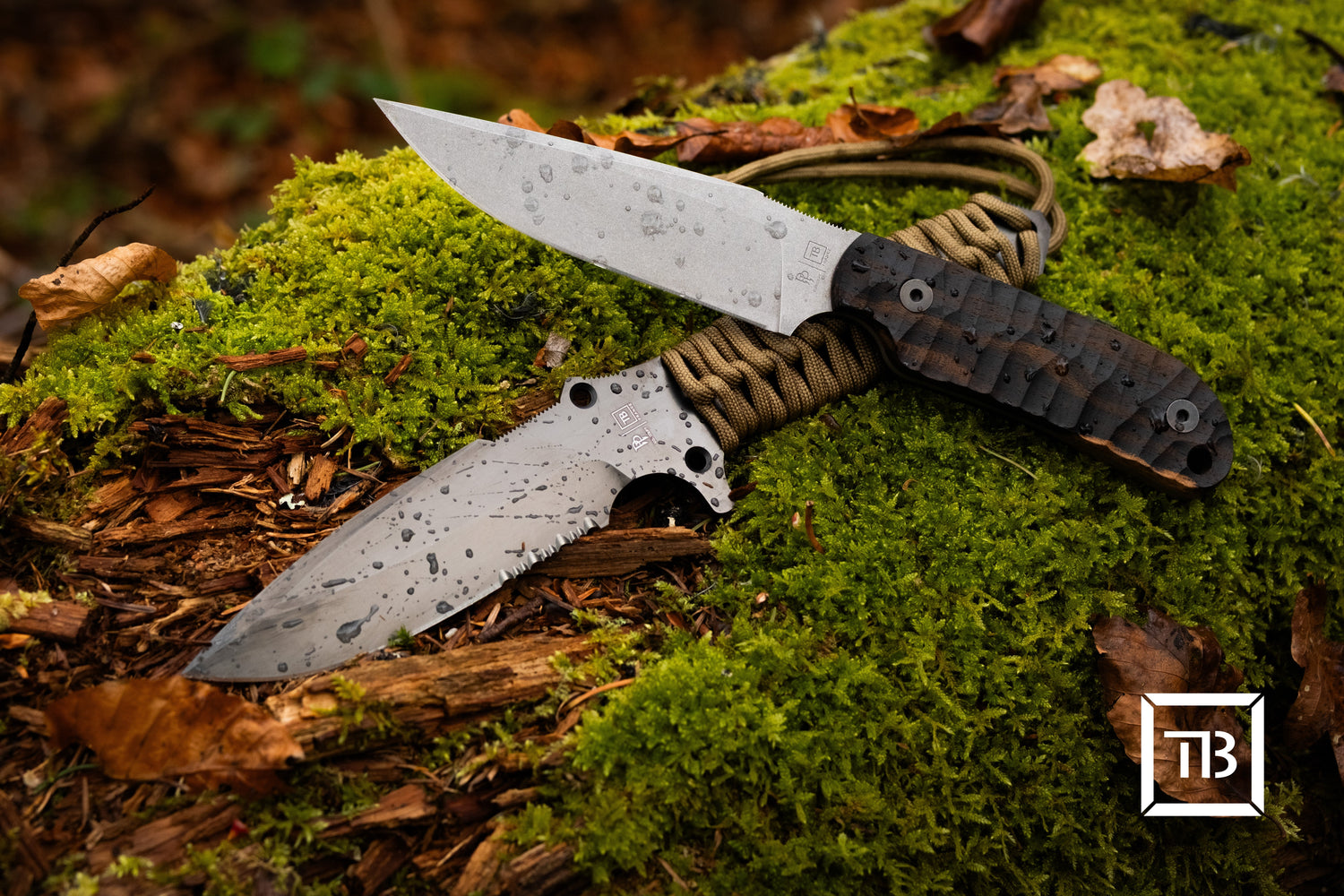
| Baroudeur® | Standard fixed blade (2001-2017). Robust, durable, designed for demanding tasks. | Bushcraft, base camp. The ultimate reliable and versatile knife. |
| Marauder® | High-performance fixed blade. Ergonomic design, superior cutting power for precision work. | Advanced user seeking cutting performance and comfort for fine tasks. |
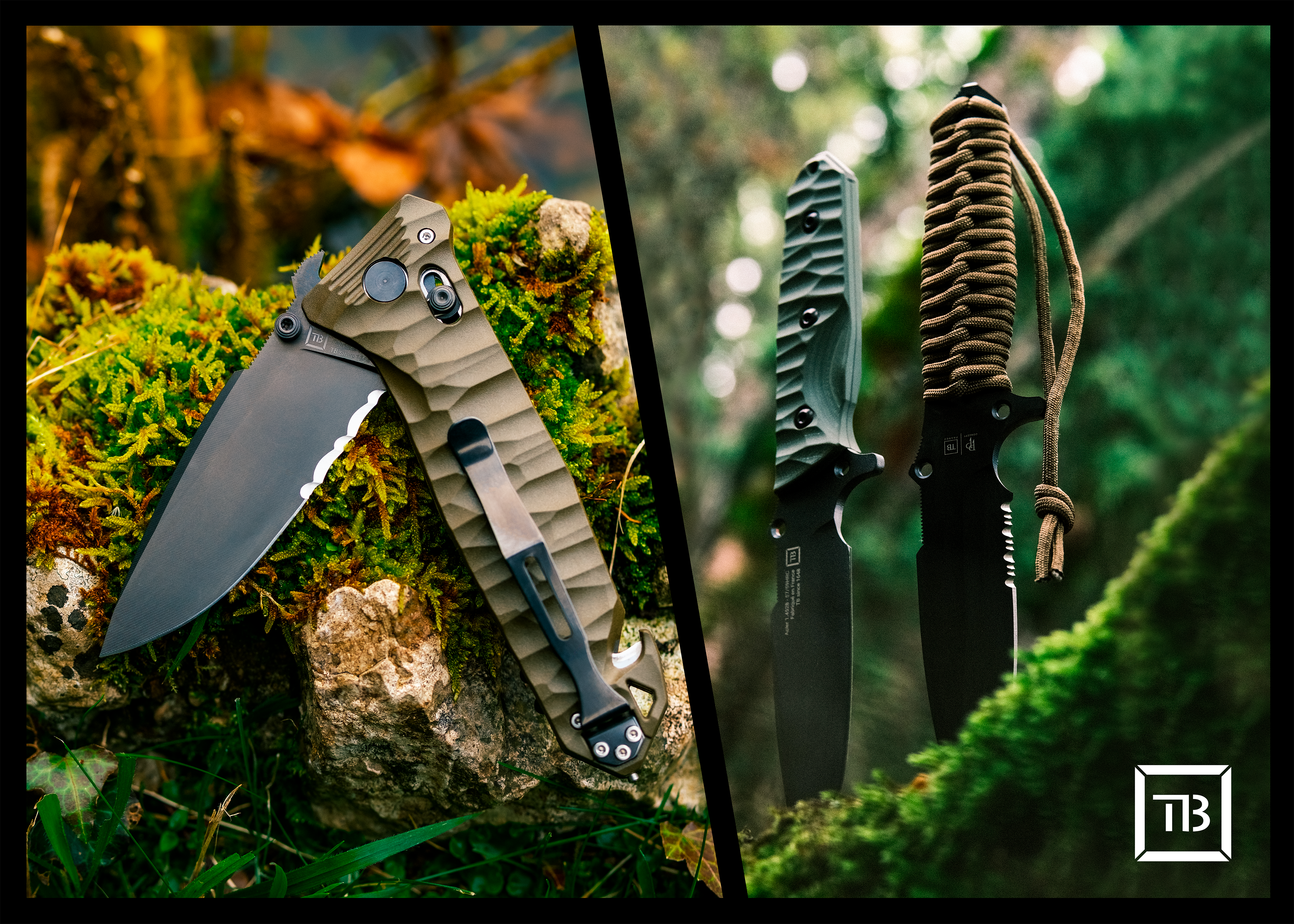
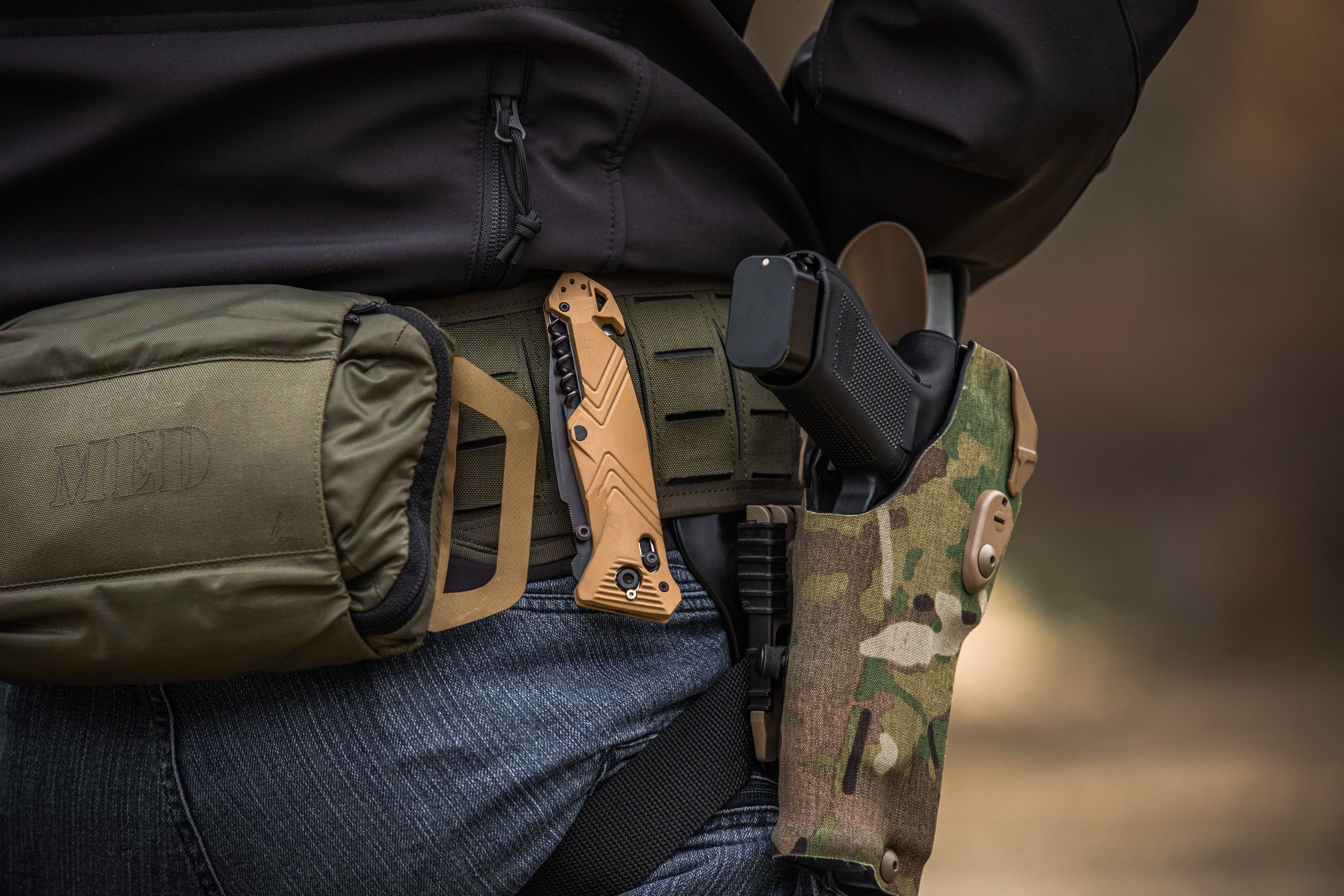
| CAC® | Standard issue folding knife (since 2018). Ultra-robust locking mechanism, combination or smooth blade. | Excellent as a backup knife or as an additional tool (EDC). A fixed blade remains superior for heavy-duty work. |
How do you care for your knife so that it lasts a lifetime?
A good knife is an investment. Proper maintenance ensures its longevity and your safety.
- Sharpening: This is an essential skill. A dull knife is dangerous. Practice regularly with a quality whetstone.
- Cleaning: After each use, clean the blade and handle. For carbon steel, dry the blade immediately and thoroughly to prevent corrosion.
- Protection: Apply a thin layer of protective oil to the blade (especially for carbon steel) before storing the knife.