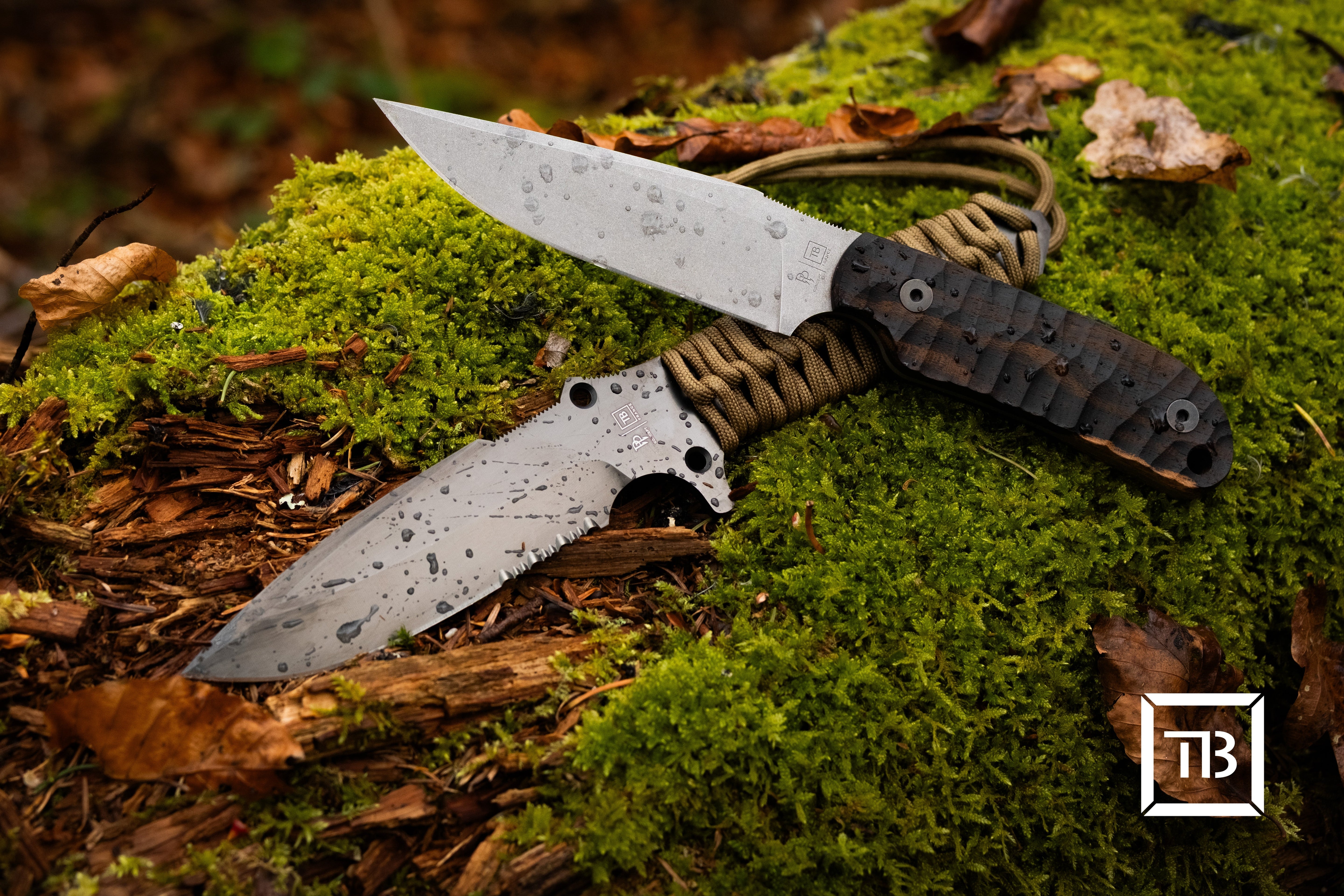
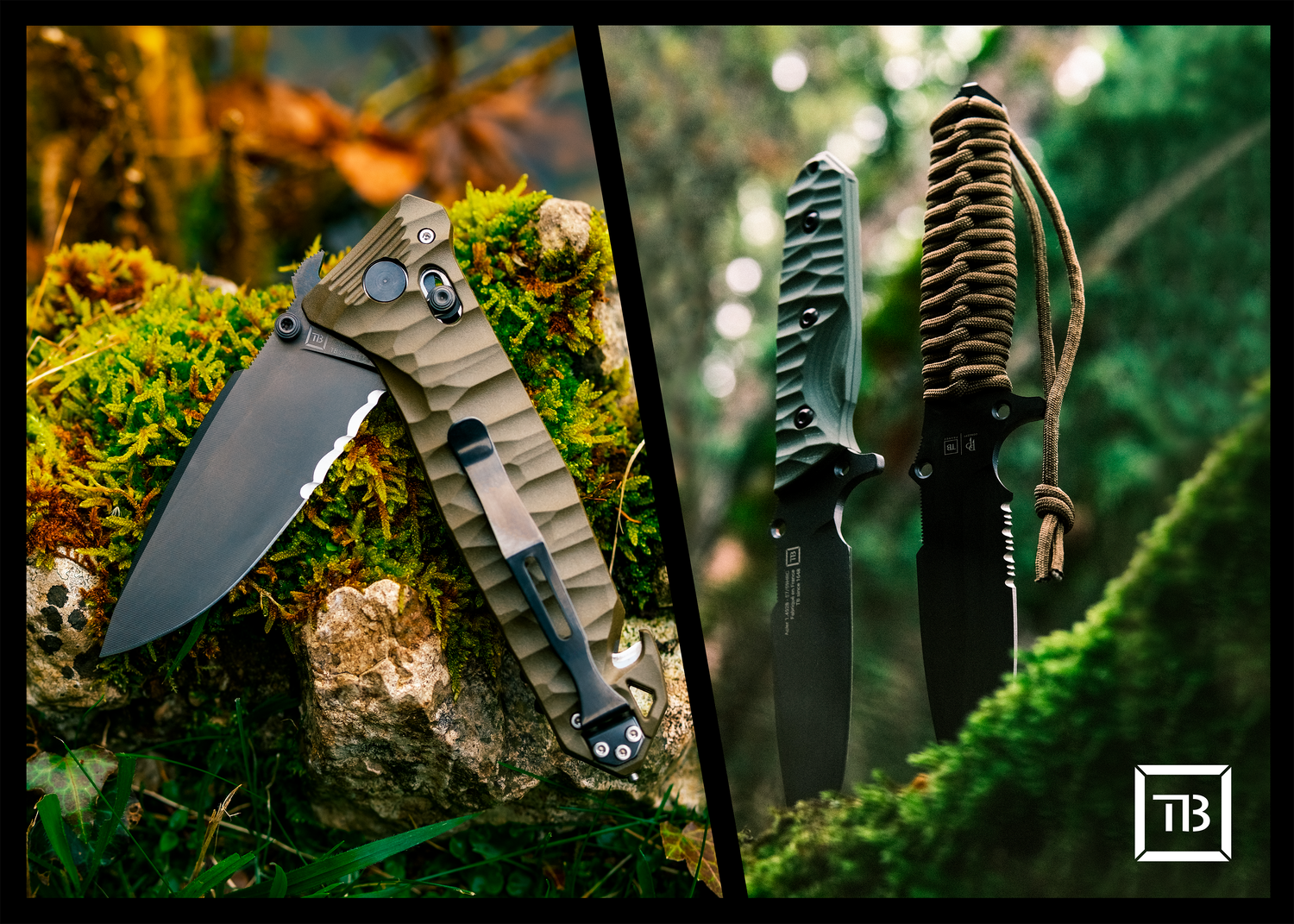
This is the great debate among knife enthusiasts: should you choose a fixed-blade knife or a folding knife? The former symbolizes absolute robustness. The latter is the champion of versatility and discretion. In reality, there is no single answer. The "best" knife doesn't exist. There is only the right tool for the right purpose.
This article breaks down the strengths and weaknesses of each category. We help you see things clearly so you can choose the blade that will be the perfect extension of your hand.
What are the key points of this comparison?
- The fixed blade knife: The choice of brute force and uncompromising reliability.
- The folding knife: The advantage of versatility, discretion and multifunctionality.
- The face-to-face comparison: A summary table to visualize the differences at a glance.
- Selection criteria: Technical aspects not to be overlooked when finalizing your choice.
Folding knife or fixed blade knife: how to make the right choice?
Choosing a knife is a personal decision that should be guided by reason and intended use. Before making your decision, you need to understand what each type of construction entails. Let's analyze the performance, safety, and practicality of each.
When should you choose a fixed-blade knife?
The fixed-blade knife is the epitome of simplicity and sturdiness. Its full tang construction makes it an exceptionally robust tool. It's the ideal choice for demanding situations.
- For heavy work: That's his area of expertise. Wood splitting, preparing wood for a shelter, or any task requiring significant force are his responsibilities.
- For maximum safety: The absence of moving parts ensures safety. There is no risk of the blade closing on your fingers. In an emergency, this simplicity is a significant advantage.
- For bushcraft and survival: For any activity where you rely on your knife, a fixed-blade knife is essential. Models like the Kraken, developed with Commando Hubert, exemplify this philosophy of absolute reliability.
Its main drawback? Its bulk. Larger and requiring a case, it is less discreet and less practical to carry on a daily basis.
In what situations is a folding knife the best ally?
The folding knife is the epitome of portability and versatility. It's the ideal companion for a multitude of everyday tasks. It's often the preferred choice for discreet carry (EDC - Every Day Carry).
- Versatility is its greatest asset. Models like the CAC® integrate tools such as a glass breaker or a strap cutter, in addition to the blade.
- For portability: It slips into a pocket or clips onto a belt. The folding knife is easy to take anywhere.
- For fine tasks: A shorter, more manageable blade is perfect for precision work, such as opening a package or cutting string.
Its weaknesses? Its inherent robustness is less than that of a fixed blade. It also requires more regular maintenance to keep its mechanism clean.
How can you compare them at a glance?
To summarize, here is a comparative table highlighting the strengths and weaknesses of each category.
| Criteria | Fixed Blade Knife | Folding Knife |
|---|---|---|
| Robustness | Maximum. Ideal for batoning. | Good to excellent, limited by the axis. |
| Security | Very high. No accidental closure. | Raised with good locking. |
| Portability | Low. Bulky, requires a case. | Excellent. Compact, lightweight, pocket-sized. |
| Versatility | Limited to cutting. | Very high. Often multifunctional. |
| Interview | Very simple. Easy to clean. | More demanding (mechanism). |
| Ideal Use | Bushcraft, survival, camping, heavy work. | EDC, hiking, DIY, everyday use. |
What other technical criteria should be considered?
Beyond the construction itself, other elements must be taken into account to refine your choice.
Which steel for which blade?
For outdoor use, stainless steel is the preferred choice. It will resist corrosion well. Carbon steels, while robust, require constant maintenance to prevent rusting.
What blade shape and handle should I choose?
A drop point blade is the most versatile. The handle must offer excellent grip, even with gloves or in wet conditions. Materials like G10 are reliable choices.