Bushcraft isn't just a survival activity; it's the art of living in harmony with nature using ancestral techniques. To successfully immerse oneself in this, the knife remains, without a doubt, the central tool. At TB-1648, we forge blades that meet real-world field demands, far from cinematic gadgets. Whether you're a fan of the Marauder or looking for your first forest companion, understanding the anatomy and function of your blade is crucial. This guide details every technical aspect to help you select a tool that will never let you down, from cutting kindling to setting up camp.
The Bushcraft Knife Essentials
- Robustness: Opt for a full-tang construction for maximum shock resistance.
- Versatility: A blade between 10 and 12 cm covers 90% of forest tasks.
- Sharpness: Scandinavian or flat grind is ideal for woodworking and easy maintenance.
- Maintenance: The choice between carbon steel (razor sharpness) and stainless steel (corrosion resistance) depends on your environment.
What exactly is bushcraft?
The term bushcraft, popularized by figures like Mors Kochanski, refers to acquiring skills that allow one to subsist and thrive in a wild environment. Unlike survival, which is an imposed and urgent situation, bushcraft is a voluntary process of reconnection. It involves learning to use natural resources sustainably. This is where the knife comes in, not as a weapon, but as an extension of the forest artisan's hand.
Typical uses in the wild
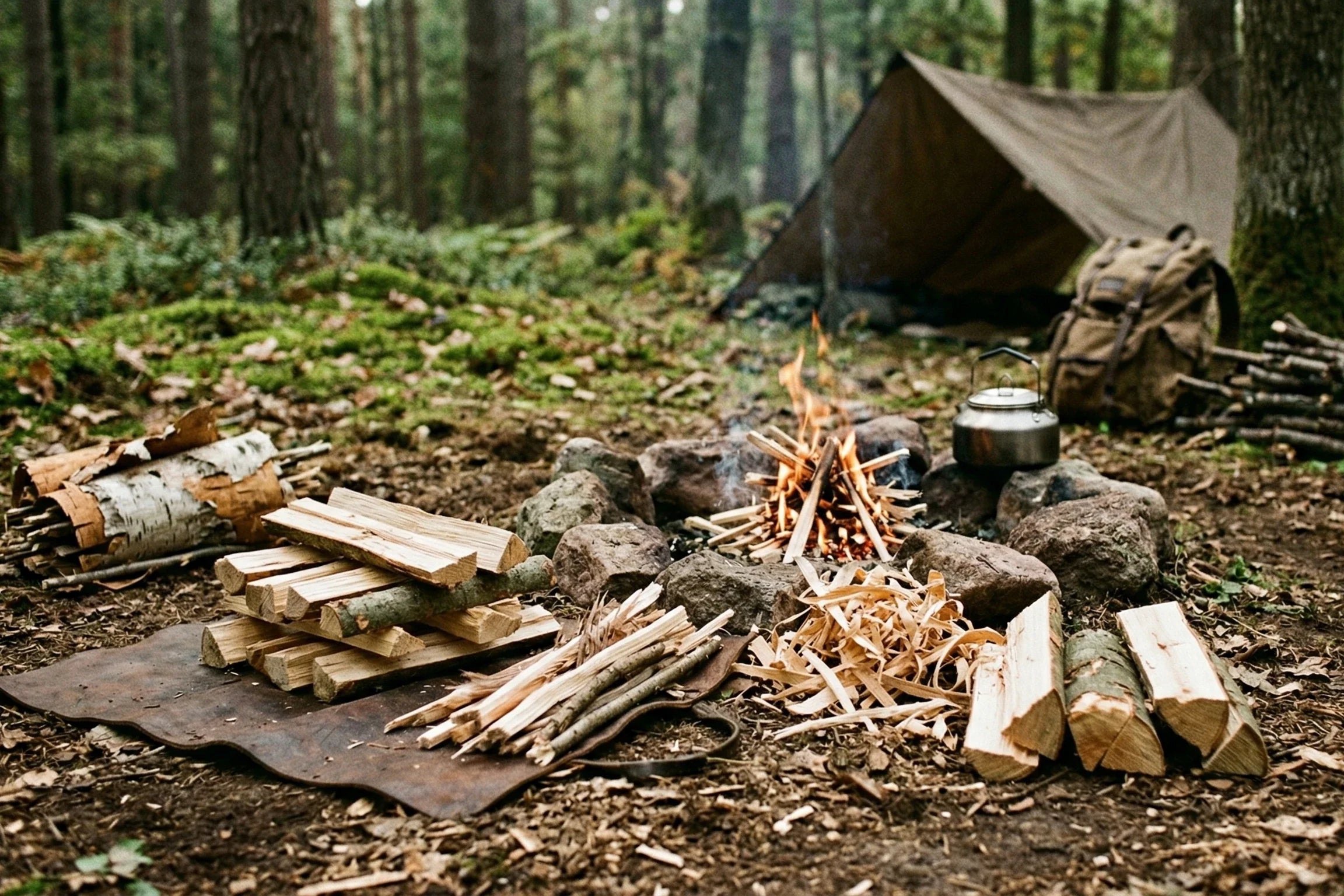
In the forest, your knife is used for a multitude of precise tasks. It's used to harvest birch bark for starting fires, to carve hazel tent stakes, or to transform roots into makeshift cordage. Repeating these actions requires a tool that doesn't cause painful pressure points in the palm of your hand.
What a bushcraft knife must withstand
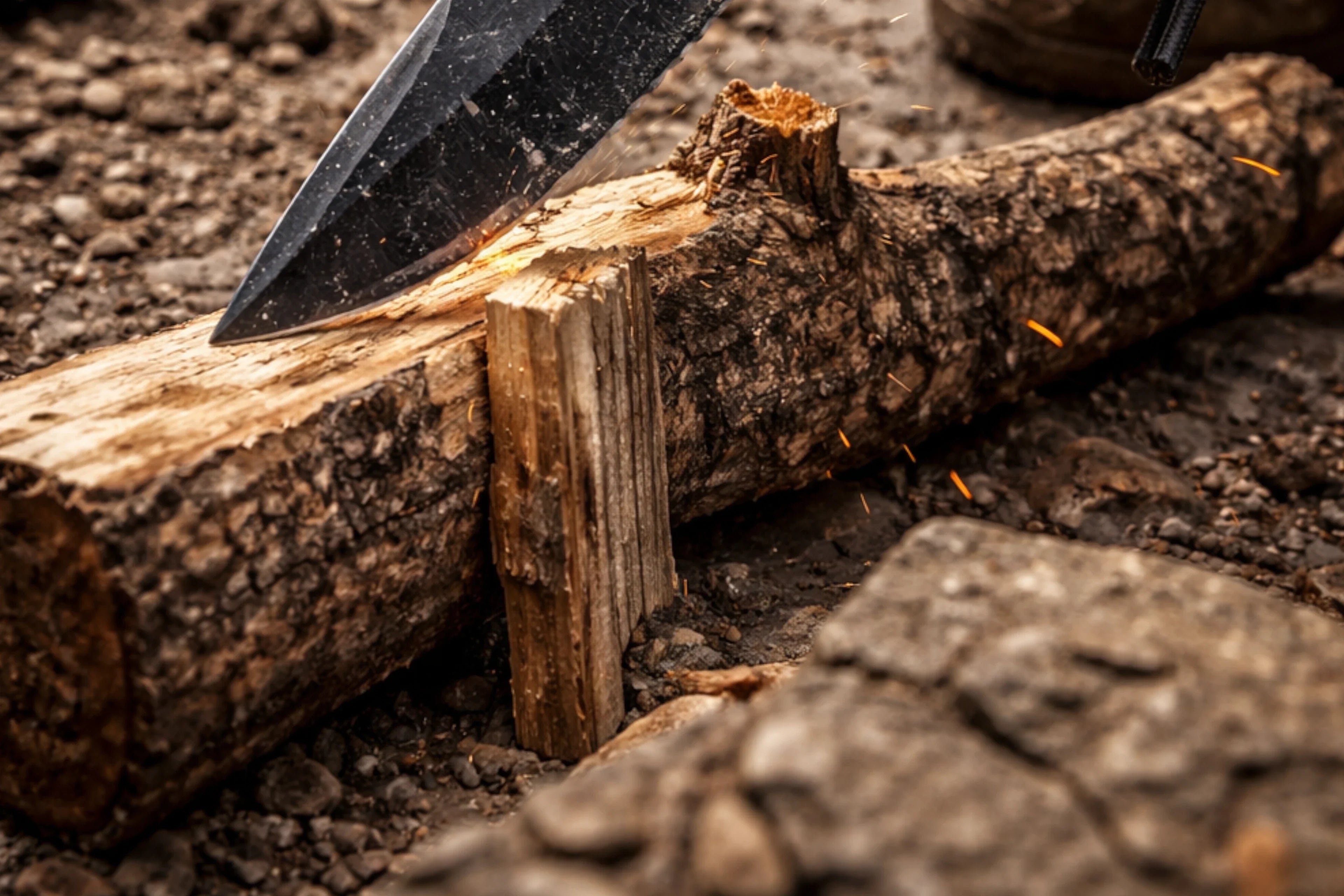
The material undergoes severe mechanical stress. "Batoning," a technique involving striking the spine of the blade with a piece of wood to split a log, is the ultimate test. A poor-quality knife will snap clean at the tang. That's why, at TB-1648, we emphasize the quality of heat treatments to ensure optimal resilience of the steel.
What is a bushcraft knife used for?
The usefulness of a specific bushcraft knife lies in its ability to perform heavy-duty tasks without sacrificing the surgical precision needed for crafting secondary tools.
- Wood carving: Creating V-shaped or square notches to assemble camp structures.
- Fire preparation: Making "feather sticks" to catch the slightest spark from a ferrocerium rod.
- Crafting simple objects: Carving a spoon, bowl, or wooden mallet directly on-site.
- Camp preparation: Cutting low branches to insulate the ground or clear a sleeping area.
Wood carving
Carving is at the heart of the discipline. A good knife must be able to penetrate the fibers of hard wood without deflecting. The sharpening angle plays a decisive role here. An angle that is too fine will chip, while an angle that is too obtuse will not "bite" into the material. Our workshop tests validate blade profiles capable of withstanding significant lateral pressure when hollowing out wood pieces.
Fire preparation
Beyond cutting, the spine of the blade (the edge opposite the cutting edge) must have sharp 90° angles. This allows you to scrape a ferrocerium rod to produce a shower of high-temperature sparks without dulling the main cutting edge. This is a detail often overlooked by novices, but essential for autonomy in the forest.
Characteristics of a good bushcraft knife
| Component | Recommended Specification | Field Advantage |
|---|---|---|
| Mounting type | Full Tang | Absolute structural solidity |
| Blade thickness | 3 mm to 4.5 mm | Splitting capability without heaviness |
| Hardness (HRC) | 56 - 59 HRC | Balance between edge retention and ease of sharpening |
| Handle material | Micarta, G10 or Loaded Polymer | Rot-proof and constant grip even when wet |
Fixed blade or folding knife
For serious bushcraft, a fixed blade is imperative. A folding knife has a natural weak point: the pivot pin. In the event of a violent impact or twisting, the locking mechanism can fail, leading to serious injury risks. A fixed blade offers metal continuity that dissipates impact energy along the entire length of the tool.
Suitable grind
The grind is the shape of the blade's cross-section. The Scandinavian grind is often favored because it's easy to resharpen on a flat stone: you just lay the bevel flat. However, at TB-1648, we appreciate the full flat grind for its superior versatility when it comes to preparing food after woodworking.
What blade shape should you choose?
The geometry of the tip influences precision and shock resistance during drilling tasks in wood.
Drop point
This is the most versatile shape. The tip is lowered relative to the spine of the blade, offering excellent control for skinning or fine carving. It is structurally very strong because it maintains good steel thickness right to the end.
Spear point
Symmetrical, this shape places the tip perfectly in line with the force exerted during drilling. It is ideal for creating holes in wood for tenon and mortise joints. However, it is less effective for cutting tasks in camp cooking.
| Model | Blade Shape | Dominant Use | Maintenance |
|---|---|---|---|
| Marauder | Drop Point | Survival / Extreme Versatility | Moderate (Stainless Steel) |
| Camp Knife | Flat / Bushcraft | Heavy woodworking | Simple (Whetstone) |
| Precision blade | Wharncliffe | Fine carving / Peeling | Frequent (Leather/Strop) |
What blade length for bushcraft?
Size does not define power, but rather the effectiveness of leverage and maneuverability.
- Below 9 cm: Excellent for carving and skinning, but insufficient for splitting medium-sized wood sections.
- Between 10 and 12 cm: The "sweet spot." Allows batoning wrist-sized logs while remaining light enough to be worn on the belt all day.
- Beyond 12 cm: Enters the category of camp knives or machetes. More tiring for prolonged use, they excel at brush clearing.
Mistakes to avoid
Choosing your first knife is often a matter of heart, but some classic pitfalls await practitioners.
Buying too big
A massive knife is impressive but often useless. Precision requires lightness. A tool that is too heavy will tire your wrist when making small objects, increasing the risk of slipping and cutting yourself.
Choosing an uncomfortable handle
A handle with pre-molded finger grooves may seem ergonomic in the store, but becomes agony in the field if your hands don't exactly match the mold. A neutral, oval-section handle allows for varying grips (hammer grip, power grip, reverse grip) without discomfort.
Underestimating steel maintenance
Even the best steel in the world will lose its edge. Not knowing how to sharpen your knife in the field is a major fault. We always recommend carrying a small diamond or ceramic stone to maintain the blade's edge after an intensive work session.
Precautions for use and safety
- Never stab: Do not stab your knife into the ground; rocks would destroy the edge instantly.
- Safety zone: Always observe the "blood circle" (an arm's length around you) when handling a blade.
- Cut away: Never cut towards yourself or any part of your body.
- Mallet use: For batoning, only use a soft wood club, never a metal hammer or a stone.
Conclusion
Choosing a bushcraft knife at TB-1648 is an investment for the long term. Whether it's high-performance stainless steel or ergonomics designed for the hands of craftsmen, our models like the Marauder are crafted to become a natural extension of your will in the wilderness. Take the time to feel the balance of the blade, because a good knife doesn't just cut: it tells a story between man and forest. Prepare for your next bivouac with the assurance of equipment forged in the tradition of Thiers.
Bushcraft FAQ
Should I choose carbon steel or stainless steel?
Carbon steel offers a finer and easier-to-restore edge, but it oxidizes quickly. Stainless steel is preferable in humid or coastal environments for its rust resistance, at the cost of slightly more complex sharpening.
Can you cook with a bushcraft knife?
Yes, but the thickness of the blade (often > 3mm) makes cutting thin vegetables more difficult than with a paring knife. It's a versatile tool, not a chef's knife.
What is batoning?
It is a technique consisting of striking the back of a fixed blade with a stick to split firewood. It requires a full tang knife to avoid breaking the structure.
TB-1648 Technical Glossary
- Full Tang: A design where the blade's steel extends through the entire length and width of the handle.
- HRC (Rockwell Hardness): A scale for measuring the hardness of a metal. A good camp knife is between 56 and 59 HRC.
- Grind: The profile of the thinned part of the blade that forms the cutting edge. Determines penetration into the material.