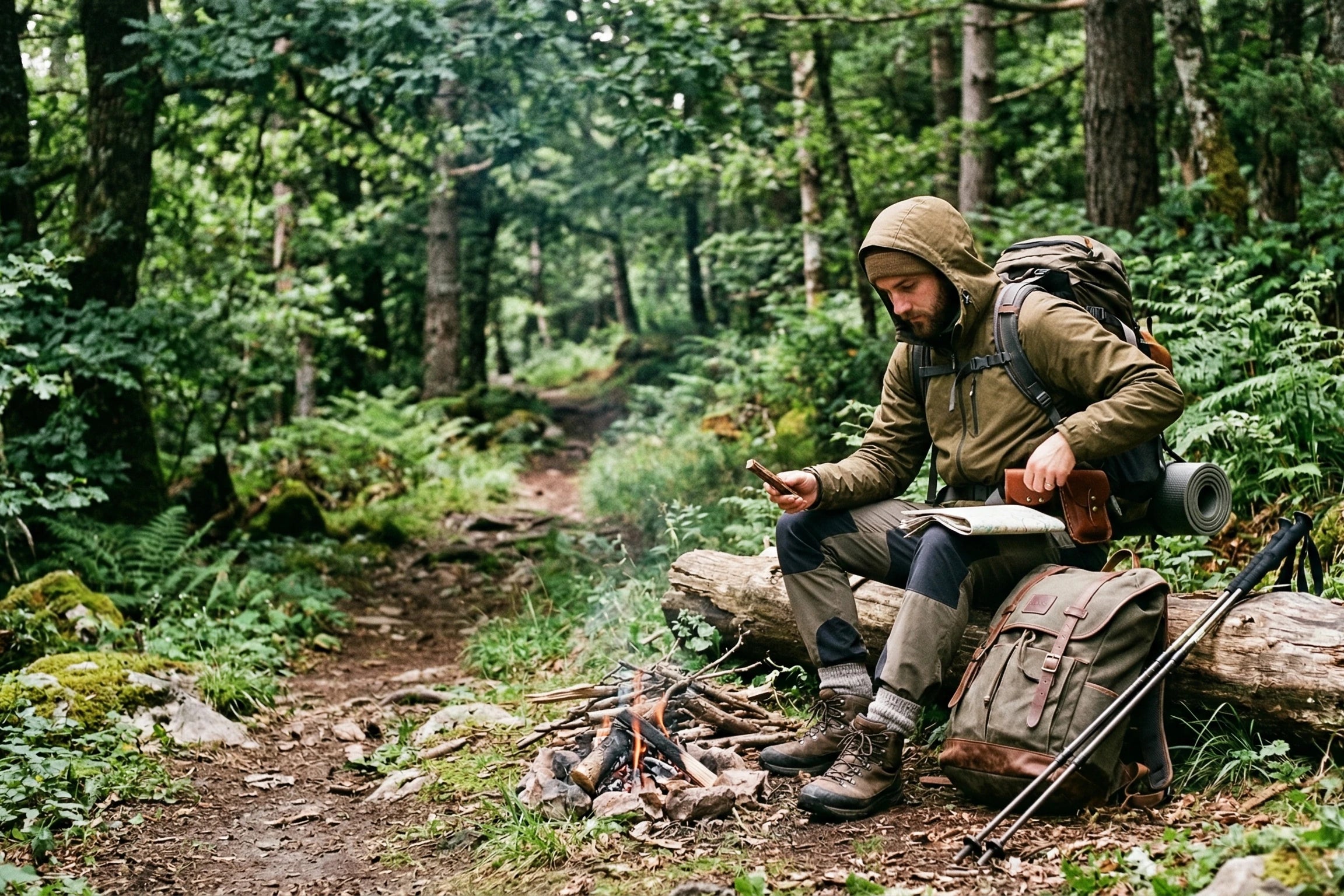
The art of bushcraft relies on the ability to adapt and create with what nature provides. At the heart of this practice, the knife is not a weapon, but the primary tool of the woodsman. At TB-Outdoor, we forge blades capable of transforming a simple branch into a shelter or camping tool. Whether you prefer the Maraudeur for its surgical precision or the Vengeur® for its robustness, understanding the purpose of your blade is the first step towards self-sufficiency in the forest.
- Versatility: A tool designed for cutting, carving, and transforming organic matter.
- Robustness: A fixed construction is preferred to withstand mechanical stresses.
- Precision: A blade geometry allowing for meticulous woodworking.
- Durability: Steels selected for their resilience and ease of maintenance.
Simple definition of a bushcraft knife
A bushcraft knife is a versatile cutting tool, usually with a fixed blade, optimized for woodworking and daily tasks in a natural environment. Unlike a pure survival knife which can be massive, the bushcraft model prioritizes balance and ergonomics to allow for prolonged use without fatigue. It is the essential companion for anyone who wishes to live "with" nature rather than simply survive in it.
The most common uses in the wild
The use of a TB-Outdoor knife in a bushcraft configuration covers a wide range of technical missions necessary for setting up a comfortable camp.
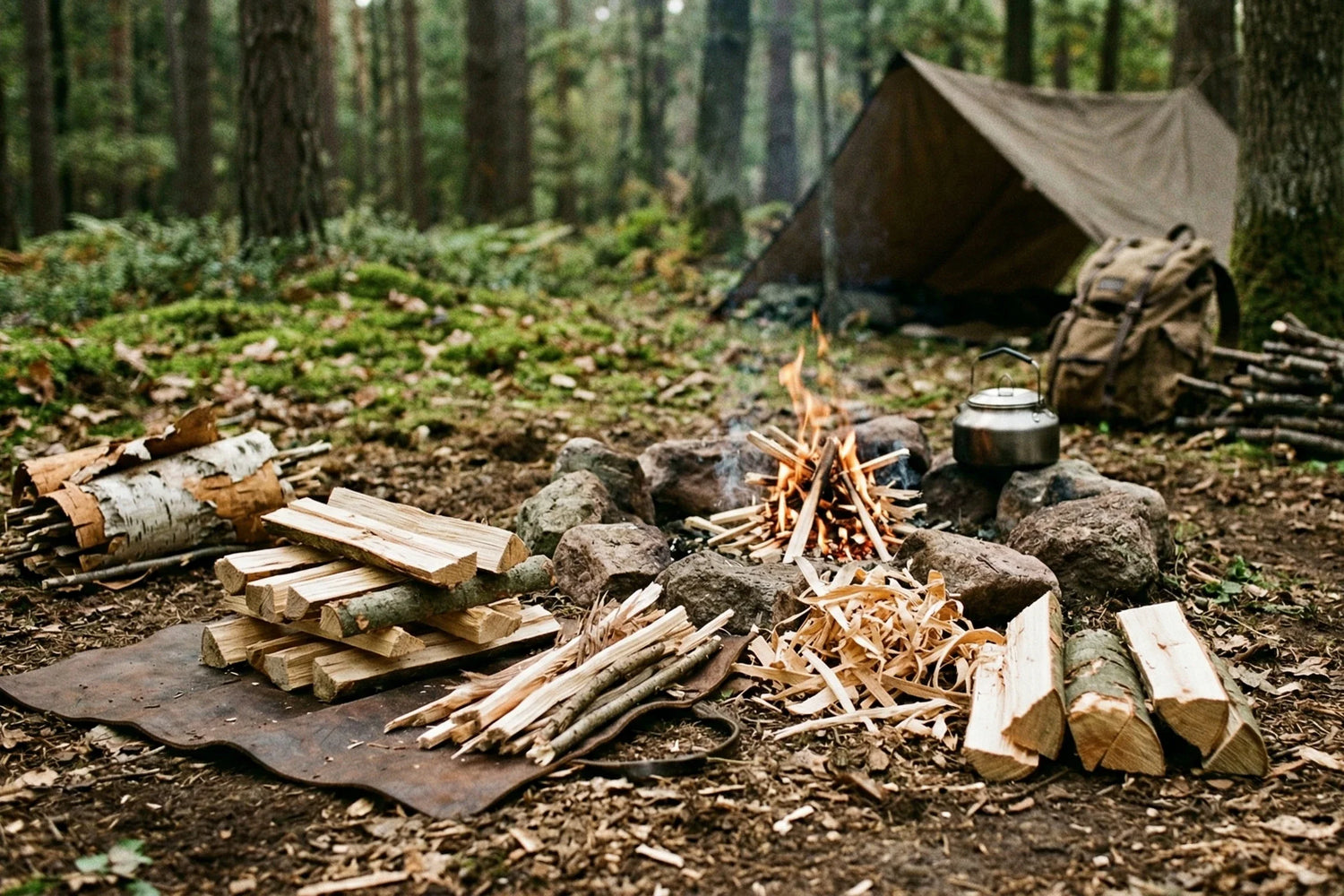
Preparing kindling
The most frequent task is splitting small sections of wood to reach the dry core, protected from moisture. This is called light batoning. A robust blade with a full tang is a major advantage here to ensure user safety.
Making stakes
Whether it's for securing a tarp or creating supports for a fire crane, the ability to carve precise points and notches is crucial. The maneuverability of our blades allows for controlled material removal for solid assemblies.
Preparing a fire
Beyond cutting, the knife is used to produce "feather sticks" (thin shavings) that ignite with the slightest spark. The spine of the blade, if it has a sharp edge, can also be used to strike a ferrocerium rod.
Cutting rope and materials
Setting up camp often requires cutting paracord or plant ties. A razor-sharp edge, like that of the Mox steel in our models, ensures a clean cut without fraying.
Preparing a simple meal
The bushcraft knife must remain hygienic and efficient for camp cooking. It allows for slicing vegetables or preparing game with precision close to that of a professional kitchen knife.
What not to ask of it
Even though TB-Outdoor knives are renowned for their endurance, they remain precision instruments that should be respected.
Overly extreme tasks
A knife is neither an axe nor a crowbar. Using it to fell large trees or pry rocks risks causing irreversible damage to the steel structure or breaking the tip.
Replacing all tools
Bushcraft teaches economy of motion and tools, but every instrument has its limits. For heavy cutting tasks, a folding saw or a small axe will always be more effective and safer than a knife pushed to its limits.
Misuses that damage the blade
Avoid cutting on hard surfaces like stone or metal, which would instantly dull the edge. Similarly, prolonged exposure to plant acids without immediate cleaning can stain the steel, even if it is stainless.
Who is it useful for?
The bushcraft knife is for anyone who sees nature as a space for creation.
Beginners
For those learning the basics, a versatile model like the Bivouac allows them to become familiar with cutting gestures safely thanks to its intuitive ergonomics.
Hikers
Hikers will appreciate a lightweight tool capable of dealing with unforeseen events (emergency repairs, food preparation) without weighing down their pack.
Bivouac enthusiasts
For setting up camp for a night, speed of execution is essential. A reliable knife allows for efficient setup before nightfall.
Autonomy enthusiasts
For the long-term immersion expert, the knife is a life insurance policy. They will choose a model like the Maraudeur for its ability to maintain a functional edge for several weeks.
How to choose a model suitable for this use?
The choice is based on precise technical criteria that guarantee the suitability between the tool and your practice.
| Criterion | Recommended specification | Technical reason |
|---|---|---|
| Blade type | Fixed (Full Tang) | Impact resistance |
| Length | 10 to 15 cm | Balance precision/leverage |
| Steel Hardness | 56-59 HRC | Edge retention and easy sharpening |
| Grind | Scandi or Flat | Performance in wood |
Bushcraft knife vs. survival knife
The distinction is subtle: the survival knife is often "thicker" and heavier, designed for emergency situations where you need to be able to break anything with it. The bushcraft knife is thinner, sharper, and more focused on carving and woodworking.
Our recommended models
- Maraudeur: For its high-performance fixed blade and pro balance.
- Vengeur®: For its all-proof robustness during heavy-duty tasks.
- C.A.C®: For those who prefer the compactness of an ultra-secure folder for occasional use.
| Need | Recommended model | Sharpening frequency |
|---|---|---|
| Versatility / EDC | C.A.C® | Monthly |
| Intensive woodworking | Maraudeur | After each outing |
| Tactical / Survival use | Vengeur® | Depending on use |
FAQ: Everything you need to know about bushcraft use
What is the best blade shape for beginners?
A "Drop Point" blade is the most versatile. It offers a solid tip for piercing and sufficient belly for long cuts and cooking.
Can I use a folding knife for bushcraft?
Yes, for light tasks such as carving small wood or cooking. However, for splitting wood, a fixed knife is highly recommended to avoid damaging the folding mechanism.
How do I maintain my blade in the forest?
Always wipe the blade after each use to remove moisture and resins. A simple pass on leather or a portable stone is enough to maintain the edge.