Which EDC knife should you choose? The everyday carry guide
In our arsenal, the Every Day Carry (EDC) knife is the most frequently used tool. This daily companion must offer the perfect compromise between compactness, accessibility, and robustness without compromising safety. At TB-Outdoor, we design blades derived from our military heritage to meet field requirements while remaining discreet in urban environments. Whether you are looking for an ultra-light folding knife like the Unboxer® folding knife, an outdoor model like the Bivouac®, or professional equipment such as the C.A.C.®, our range meets your needs. Also, consider checking out our accessories to maintain your equipment.
- Portability: An EDC knife should be forgotten in your pocket or on your belt until the moment it is needed.
- Nitrox® Steel: A blade choice that is sharp, easy to maintain, and highly resistant to corrosion with a hardness of approximately 55 HRC.
- Safety: A reliable locking system and an ergonomic grip are essential.
What is an EDC knife?
Simple definition
The abbreviation EDC (Every Day Carry) refers to all the equipment and tools we carry on our person daily. An EDC knife is a utility blade designed for quick, occasional tasks, such as opening packages, cutting string, or preparing a snack while hiking.
Why carry one
In emergency situations or during small daily chores, having an immediate cutting edge reduces action time. Resilience comes from preparation: a reliable tool is the modern adventurer's first line of defense.
In which daily uses
From unpacking boxes to emergency equipment repairs or precision work, EDC supports field professionals and demanding city dwellers alike.
The criteria for a good EDC knife
Compactness
Volume and weight determine carrying comfort. A knife that is too heavy or too bulky ends up staying in your bag. We favor flat and lightweight profiles, with a featherweight that is essential, such as the 57g for the Unboxer or 82g for the Bivouac.
Discretion
The pocket clip must allow for deep and discreet carry without unnecessarily attracting attention. A belt clip is essential in EDC, like the Unboxer's tool-free repositionable clip (via a simple pinch).
Ease of opening
One-handed, ambidextrous, or quick opening is essential for acting under any circumstances. The use of thumb studs ensures smooth one-handed opening.
Safety
The blade locking mechanism must be robust to prevent accidental closing during heavy-duty cutting. This includes the innovative and patented liner-less forced notch system, the mobile axis locking system (Axis-lock type) of the C.A.C., as well as the pump mechanism of the Bivouac.
Steel and maintenance
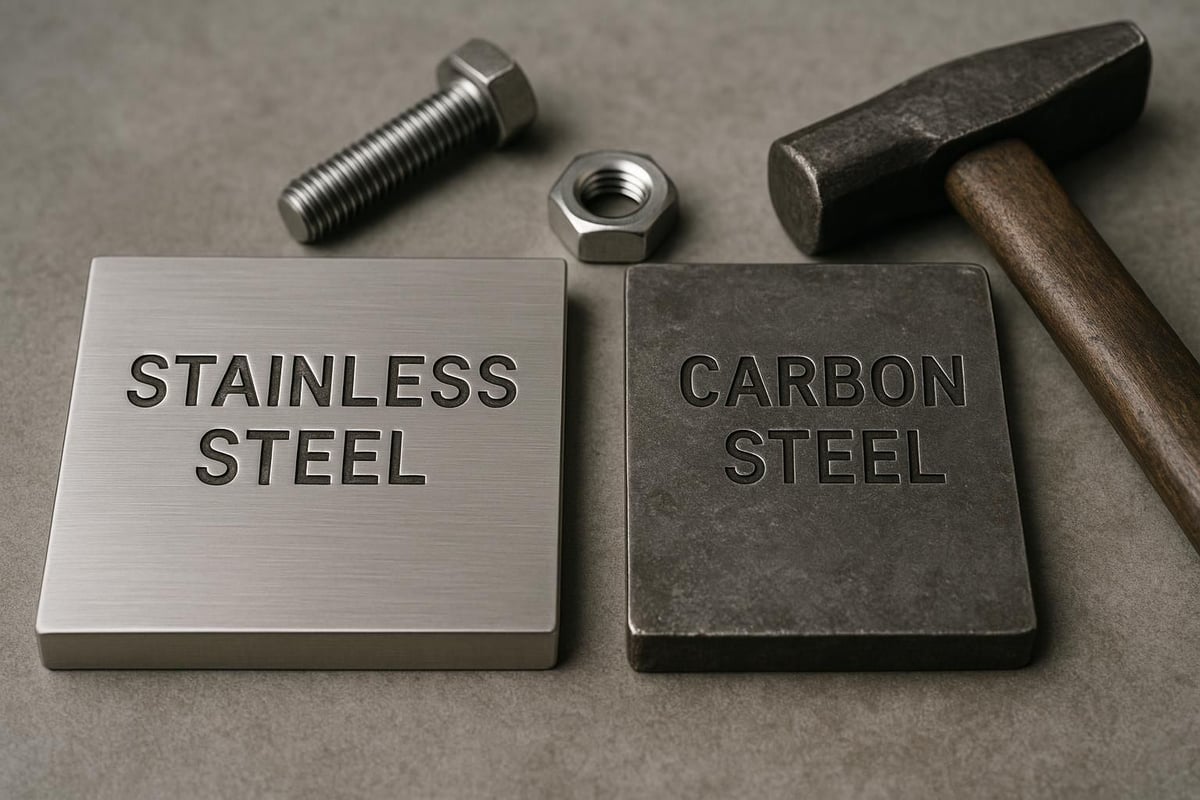
The steel used must resist oxidation due to perspiration and not require constant sharpening. The Nitrox® steel in our ranges perfectly meets this need thanks to its nitrogen-doped alloy with 16% chromium and 0.35% carbon.
What is the ideal size for an EDC?
The ideal total open length is generally between 15 and 18 cm for a weight of less than 80 grams. A 6 to 8 cm blade offers excellent maneuverability for utility work without being perceived as a weapon.
EDC folding knife or mini fixed blade?
| Format | Advantages | Disadvantages |
|---|---|---|
| Folding knife | Compactness, safe pocket carry. | Mechanical parts requiring cleaning. |
| Mini fixed blade | Extreme robustness, no mechanism to clean. | Sheath carry is more visible, larger volume. |
Comparative table of EDC steels
| Steel type | Chromium content | Hardness (HRC) | Corrosion resistance |
|---|---|---|---|
| Nitrox® | 16% | ~55 | Very good |
| MOX® | >18% | ~58 | Exceptional |
Which EDC should you choose according to your profile?
Urban
An extremely light and discreet knife, like the Unboxer® knife, which offers an excellent grip and features a glass-fiber reinforced PA6 handle.
Light outdoor
For enthusiasts who want emergency equipment, a small, lightweight folding knife resistant to moisture with a shockproof ABS handle like the Bivouac®.
Manual work
A reinforced locking mechanism and a blade capable of withstanding repeated and abrasive cuts are essential. One can lean toward textured G10 handles for maximum grip.
Minimalist user
A sleek, flat design without frills, easy to slip into a pocket or a minimalist survival kit.
Errors to avoid with an EDC knife
- Neglecting cleaning: A folding knife accumulates lint and debris in the mechanism. Periodic cleaning is vital.
- Using the tip as a lever: Fine tips are not designed for twisting. Use a dedicated tool.
- Tightening the axis too much: A blade should open easily; adjust the axis without blocking it.
Our recommended EDC models
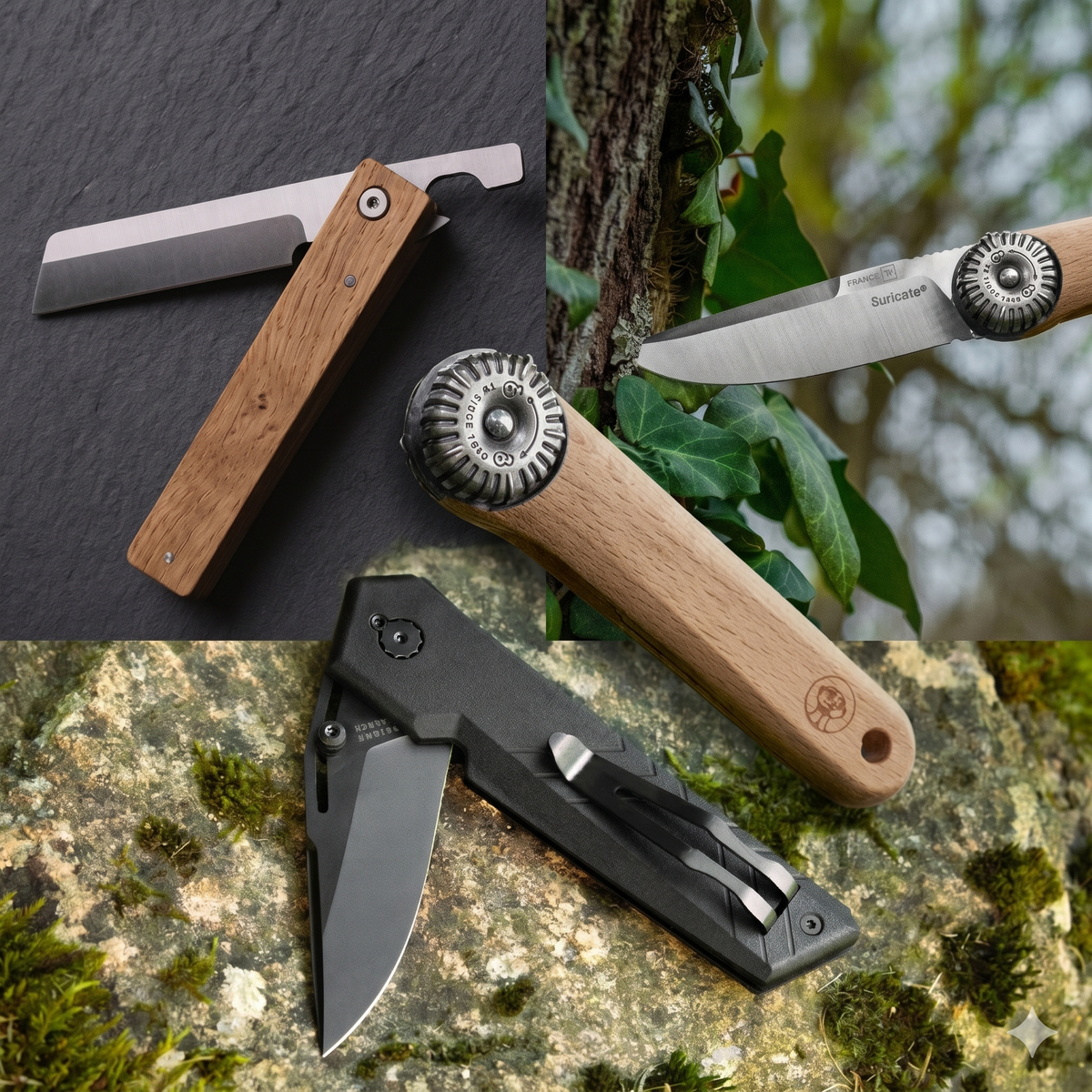
- Unboxer® knife: The ultimate ultra-light EDC, featuring a Nitrox® steel blade and an ergonomic design with a glass-fiber reinforced PA6 handle.
- C.A.C.®: Military-grade robustness adapted for everyday pockets, with its reinforced polymer handle and ultra-secure one-handed locking system.
- Bivouac®: For adventurers seeking functionality, with its pump mechanism and shockproof ABS handle.
FAQ
- Question: What is the difference between an EDC knife and a survival knife? Answer: The EDC knife is optimized for discretion and common utility tasks, while the survival knife is larger, heavier, and designed for heavy-duty work.
- Question: Does the matte black PVD coating provide extra protection? Answer: Yes, this (Physical Vapor Deposition) coating provides an anti-reflective protective layer that improves corrosion resistance.
- Question: How do you maintain the mechanism of an EDC folding knife? Answer: Use a suitable lubricant and blow compressed air into the mechanism area to remove dust.