Stainless steel or carbon steel: which one to choose for an outdoor knife?
In the wild, survival depends on the reliability of your tools. Choosing the steel for a bushcraft or survival knife is more than just an aesthetic detail. The blade's composition directly determines its resistance to corrosion, edge retention, and ease of sharpening in the field. At TB-Outdoor, we forge blades designed to withstand extreme stresses, whether it’s preparing a campfire or performing heavy-duty tasks. This article details the differences between stainless steels, such as MOX or Nitrox, and carbon steels to help you optimize your gear.
- Resistance: TB-Outdoor stainless steels (Nitrox, MOX) prevent oxidation in humid environments.
- Sharpening: Nitrox allows for quick maintenance with a diamond stone.
- Heavy-duty work: MOX offers an exceptional hardness of 58 HRC for the Maraudeur®.
Understanding the difference simply
General composition
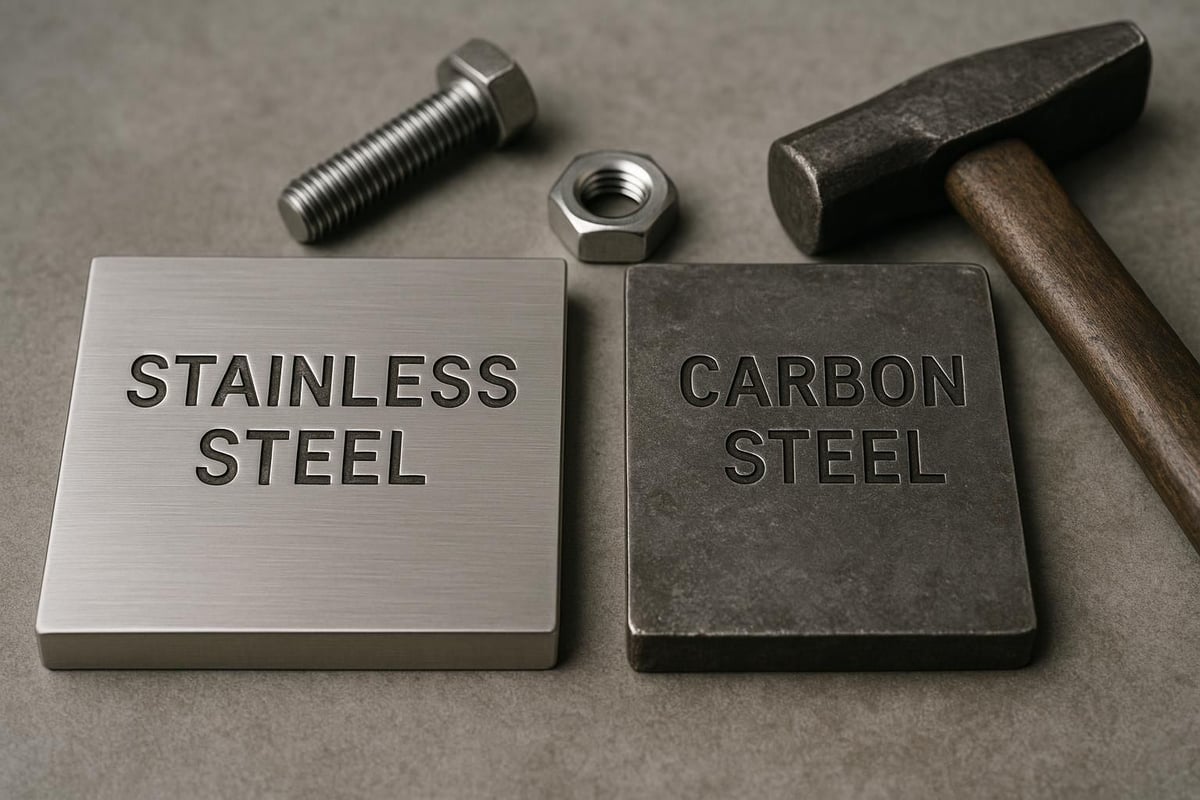
The distinction between stainless steel and carbon steel is based mainly on the presence of chromium and carbon. Stainless steel contains at least 12 to 13% chromium, which creates a passive layer that prevents rust. Carbon steels, meanwhile, have a higher proportion of carbon, which increases hardness and edge retention but at the expense of moisture resistance.
Corrosion resistance
In extreme bushcraft conditions, humidity and game blood accelerate oxidation. Steels containing more than 16% chromium, like those used in our military ranges, offer superior protection against the elements.
Edge sharpness
Hardness measured in HRC (Hardness Rockwell C) determines the blade's wear resistance. A very hard blade keeps its edge longer but takes more time to sharpen.
Maintenance
Carbon steel requires regular cleaning and oiling to prevent rust spots. Conversely, modern stainless steel requires much less attention.
The advantages of stainless steel
Ease of use
The main asset of stainless steel lies in its low maintenance. Our steels, such as Nitrox®, contain 16% chromium and 0.35% carbon, which ensures excellent oxidation resistance while remaining easy to sharpen.
Humid conditions
In the forest or when crossing swampy areas, stainless steel resists harsh weather without deteriorating. This is why it equips the C.A.C.®.
Casual user
For enthusiasts who don't have the time to polish and oil their blade every evening at camp, stainless steel offers absolute peace of mind.
The advantages of carbon steel
Ease of sharpening
In the field, a knife gets dull. Carbon steel can be easily touched up on a simple natural stone or a pebble, which is an essential survival quality.
Field feel
Demanding users appreciate the particular "bite" of carbon steel and its robustness during thermal shocks.
Serious user
Survival professionals and bushcraft enthusiasts love the patina that forms on the blade over time, offering natural protection and a unique history.
Which steel to choose based on your activity?
| Activity | Recommended steel | Main advantage |
|---|---|---|
| Hiking | Nitrox® | Lightweight, corrosion resistance, no maintenance. |
| Camping | Acuto 440 / Nitrox® | Food and utility versatility. |
| Survival | MOX® | High hardness for batoning and heavy tasks. |
| Intensive use | MOX® | Excellent wear and torsion resistance. |
Resistance comparison table
| Steel type | Chromium content | Hardness (HRC) | Corrosion resistance |
|---|---|---|---|
| Nitrox® | ~16% | 56-57 | Very good |
| MOX® | >18% | ~58 | Exceptional |
| Acuto 440 | High | ~58 | Excellent |
Most frequent misconceptions
Stainless steel never rusts: This is false. It is "stainless," not "imperishable." Without maintenance, it can develop spots in a saline environment. Carbon steels are fragile: Also false. Properly heat-treated, carbon steel is extremely resistant.
How to maintain each type of steel
For stainless, a simple rinse with fresh water and drying is sufficient. For carbon, it is recommended to apply a thin layer of mineral or food-grade oil after each use and avoid leaving the knife damp in its sheath.
Steels used on outdoor knives
- Nitrox® steel: Nitrogen-doped stainless, perfect balance for military and EDC use.
- MOX® steel: TB-Outdoor proprietary, 58 HRC hardness, for heavy tasks like the Maraudeur®.
- Alenox® steel: Extreme chromium concentration for maximum corrosion resistance (Commandeur® dagger).
FAQ
- Question: What is the best steel for batoning in bushcraft? Answer: MOX® steel is ideal because it combines high hardness and shock resistance.
- Question: How to sharpen Nitrox® steel in the field? Answer: Use a TB-Outdoor diamond sharpener to restore bite quickly.
- Question: Does PVD coating protect the blade? Answer: Yes, the anti-reflective black PVD coating provides an extra protective layer against corrosion.