How to maintain an outdoor knife?
Whether on an operation or deep in the wilderness, your knife is a direct extension of your hand. Whether you are building a fire, cutting cord, or prepping a ration, neglected equipment can become a critical failure point. At TB-Outdoor, we apply military-grade rigor to the design of our tools, a legacy of our status as an official supplier to the French Army. Whether you use a folding knife such as the Bivouac®, a survival knife like the Maraudeur®, or other tactical equipment, regular field maintenance is an operational requirement. This guide shares professional forging techniques to ensure maximum longevity for your blade.
- Operational discipline: Clean and dry your blade after every use to prevent corrosion.
- Edge maintenance: Use a suitable sharpener, such as the TB-Outdoor diamond sharpener, to maintain the edge of your Nitrox® or MOX® steel blades.
- Mechanism maintenance: Regularly inspect the pivot of folding models and apply a drop of fine oil.
Why maintenance is essential
Lifespan
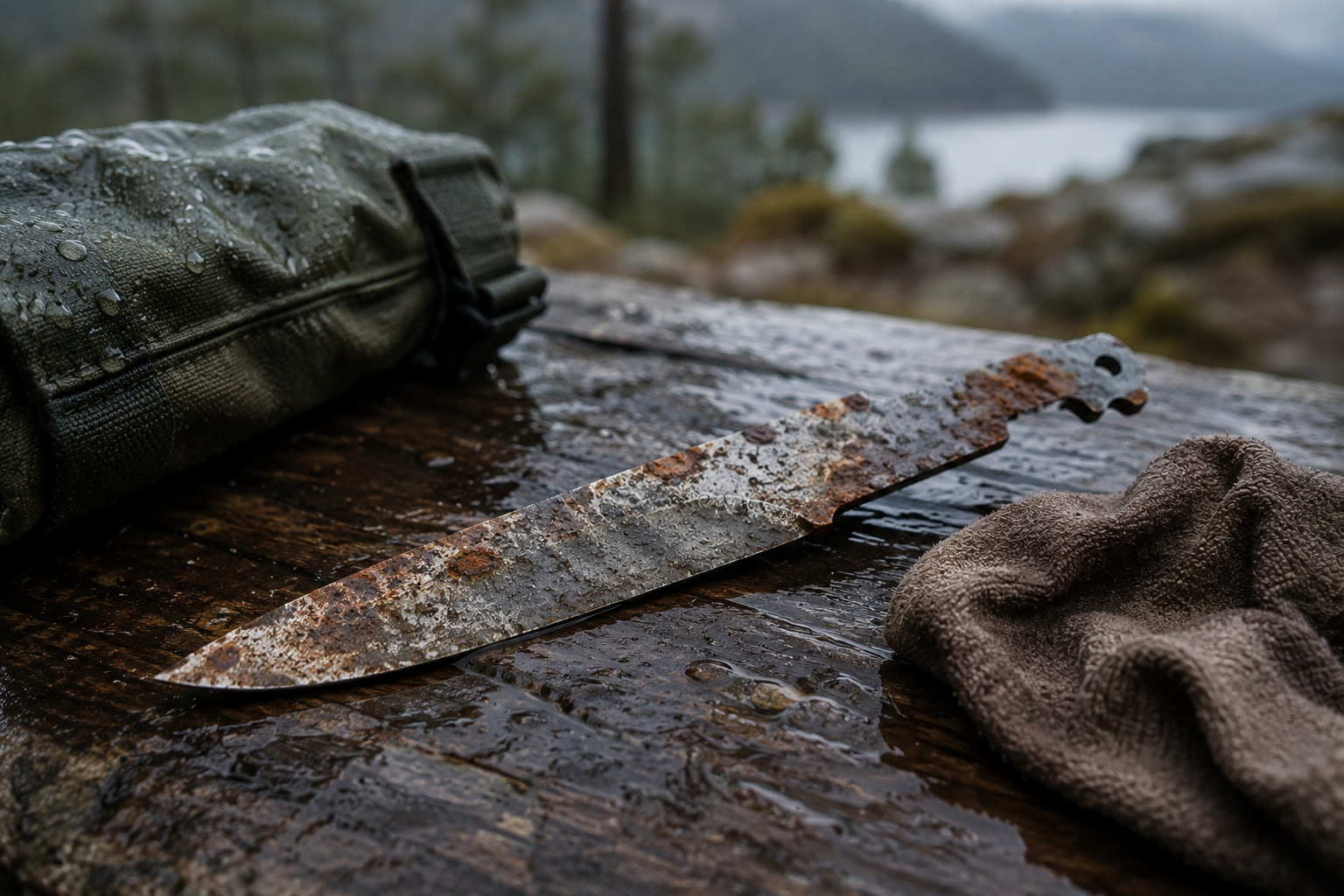
Steel, even of high quality, suffers from wear caused by friction and acidity. Removing sap or moisture residue preserves the metal's structure and extends the useful life of your equipment.
Safety
A poorly maintained knife can slip during heavy cutting or jam its opening mechanism. Maintaining the locking system ensures that the blade remains locked in the open position under any circumstances.
Cutting performance
A dull edge requires more energy to perform a task, increasing the risk of an accident. Preventive maintenance avoids the need to repair a completely deteriorated blade.
Basic steps after use
Clean the blade
Immediately remove mud, sap, and game blood. Use lukewarm water and mild soap, then rinse thoroughly. On full-tang survival knives like the Impact 127®, cleaning the fixed unit is quick because there are no mechanical crevices.
Dry properly
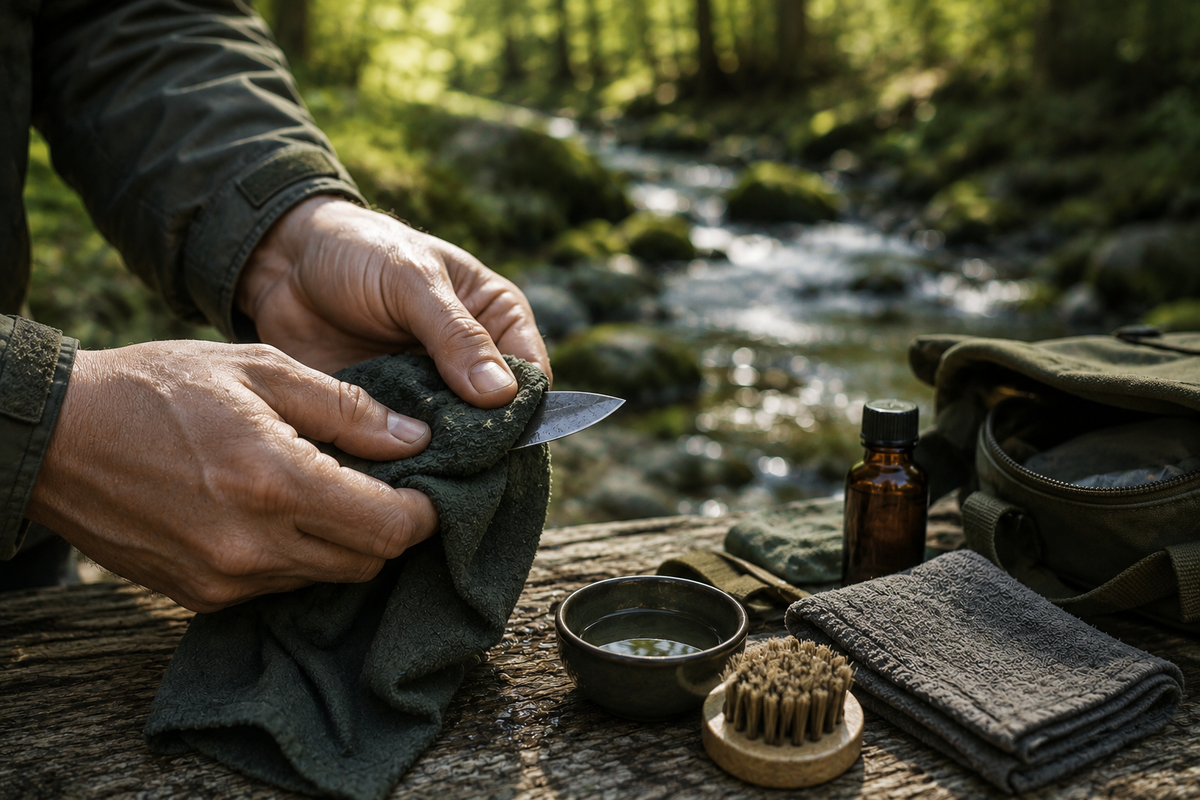
Moisture is the enemy of metal. Wipe the blade with a clean cloth or a microfiber towel before storing it in its sheath.
Check the handle
Inspect the screws and scales. If the handle shows signs of cracking, repair it or contact our team for a replacement part.
Store in the right place
Never store a damp knife in a leather or hermetically sealed sheath. Let the knife breathe in a dry place.
How to maintain based on steel type
Stainless steel
Nitrox® (found on the C.A.C.® and Unboxer®) offers excellent corrosion resistance thanks to its nitrogen-doped alloy containing 16% chromium and 0.35% carbon. However, it remains essential to wipe the blade after cutting acidic foods or exposure to moisture.
Carbon and structural steels
Very high-carbon or very hard steels require increased attention to avoid micro-pitting. A thin layer of oil applied regularly creates a protective barrier.
How to maintain a folding knife
Pivot
The pivot area accumulates dust. If the folding knife blade becomes difficult to deploy, clean this area with a toothbrush and a little soapy water, then dry with compressed air.
Mechanism
On military knives like the C.A.C.®, the locking system requires regular attention. Rinse the mechanism under running water if dirt or debris has entered it.
Light lubrication
Apply a drop of fine oil (such as gun oil or mineral oil) to the mechanism and the pivot axis to maintain fluid action.
How to avoid rust
The Commandeur® dagger, designed with Alenox® steel containing a minimum of 18% chromium, offers extreme resistance to oxidation, but no steel is completely immune in a saline environment. To avoid any oxidation, apply a protective film after each outing and regularly inspect contact points.
| Steel type | Hardness (HRC) | Specific maintenance advice |
|---|---|---|
| Nitrox® | ~55 HRC | Rinse with fresh water after use in saline or humid environments. |
| MOX® | ~58 HRC | Sharpen regularly with a diamond sharpener to maintain the edge. |
| Alenox® | High | Standard cleaning; dry after contact with acidic agents. |
How often should full maintenance be performed?
A quick check should be performed in the field at the end of every day. In-depth maintenance is recommended once a month, or immediately after prolonged exposure to rain, mud, or seawater.
Field usage comparison table
| Knife range | Materials and Steels | Cleaning frequency |
|---|---|---|
| Tactical folding knives (C.A.C.®) | Nitrox® / reinforced polymers | Weekly (inspect axis and system) |
| Bushcraft fixed knives (Maraudeur®) | MOX® / full tang | After every intensive use | Leisure / EDC knives (Unboxer®) | Nitrox® / PA6 | Monthly or as needed based on soil/grime |
Useful products and those to avoid
- To use: Folding diamond sharpener, microfiber cloths, mineral or gun oil, and soft-bristled brushes.
- To avoid: Abrasive products, metal scouring pads that scratch the blade and strip surface treatments (PVD), and bleach.
FAQ
- Question: How to sharpen MOX® steel in the field? Answer: Use our TB-Outdoor diamond sharpener to straighten the edge without removing too much material, as this steel offers a hardness of approximately 58 HRC.
- Question: Which oil should be used for the pivot of a folding knife? Answer: Use a drop of fine mineral oil or gun oil. Avoid vegetable oils, which dry out and jam the mechanism.
- Question: Is the black PVD coating resistant to cleaning? Answer: Yes, the PVD coating resists standard chemical products and protects the metal, but aggressive cleaning can wear it down prematurely.