The appearance of reddish spots on a quality blade is often seen as inevitable by enthusiasts. However, at TB-Outdoor, a Thiers-based manufacturer rooted in metal mastery, we know that rust is not necessarily a sign of poor steel, but the result of a poorly understood physiochemical interaction. Whether your knife is forged from stainless Nitrox steel or a high-carbon alloy, it remains an organic material sensitive to its environment. Why does my knife rust when it's "stainless"? How can I stop corrosion without scratching the steel's polish? This 1467-word technical guide deciphers the mechanisms of oxidation. From surface HRC hardness to cleaning protocols, discover how TB-Outdoor's expertise allows you to restore your blade's luster and ensure lasting protection against the assaults of humidity and time.
Is rust normal, even on a good knife?
The short answer is yes. For a Thiers cutler, rust is a natural reaction. No steel is completely "immortal." The term "stainless" simply means that the steel contains at least 13% chromium, creating a thin, invisible protective layer. If this barrier is broken by impact or attacked by an acid, the iron contained in your TB-Outdoor knife's alloy will eventually oxidize.
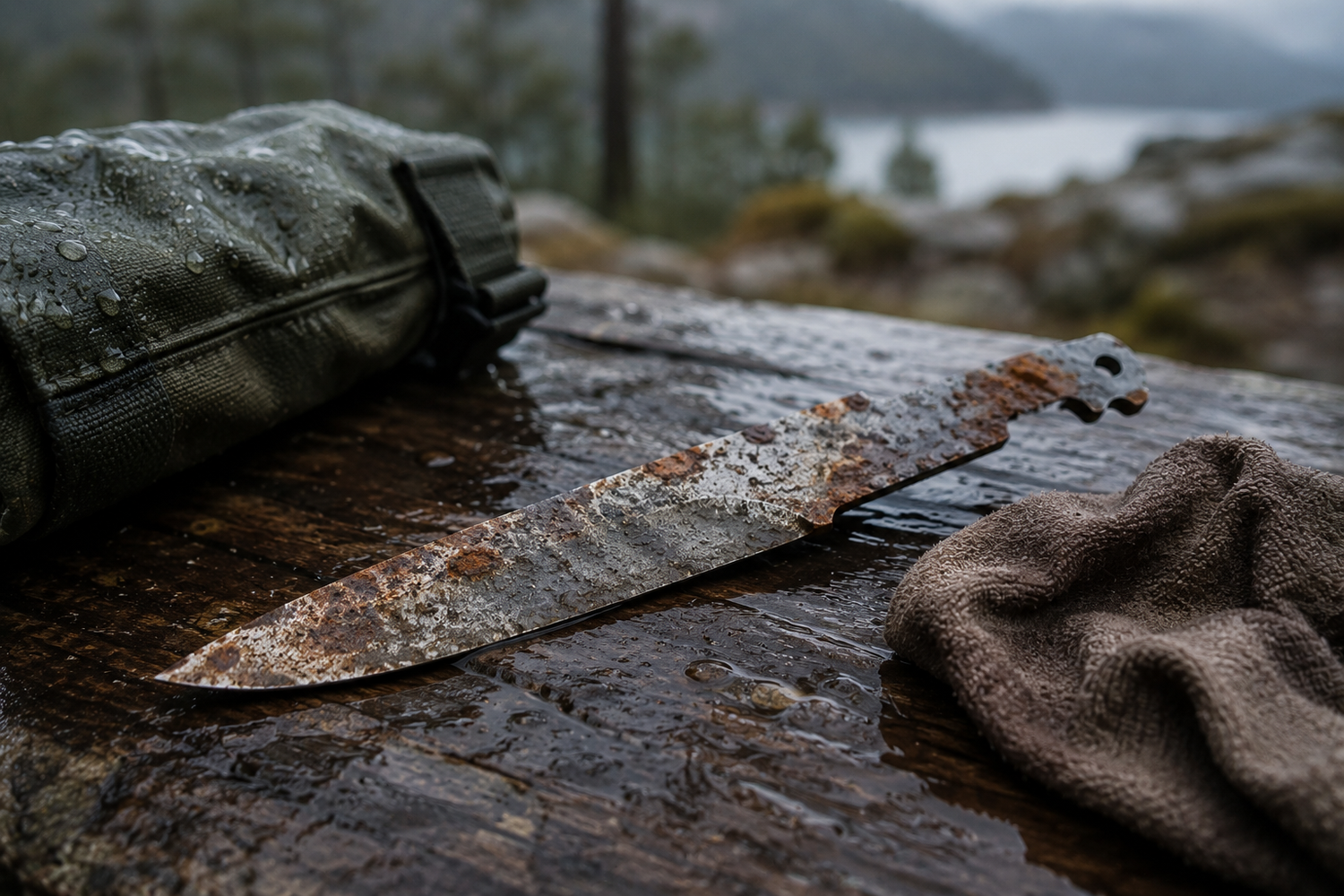
On high-carbon steels, prized for their razor sharpness, rust is even more common. A gray "patina" (stable oxidation) is observed first, but without maintenance, red rust (unstable and destructive) can set in. Understanding that your knife is a "living" tool is the first step to effectively protecting it.
The most common causes of corrosion
Several environmental and usage factors accelerate steel degradation.
Humidity and improper drying
This is the number one enemy in manufacturing. Leaving a knife to air dry in a dish rack promotes condensation and limescale deposits, which trap moisture against the steel.
Inappropriate storage
Storing a knife in a damp leather sheath or a poorly ventilated drawer creates a microclimate conducive to oxidation. Leather, with its tanning products, can even accelerate pitting of the steel if used for long-term storage.
Food or saline residues
Blood, fruit acids (lemon, apple), or sea salt are extremely corrosive. They locally attack the chromium layer of your TB-Outdoor knives, creating what is known as "pitting corrosion."
| Corrosive Agent | Type of Attack | Technical Impact |
|---|---|---|
| Standing Water | Surface Oxidation | Dull and reddish stains |
| Salt / Sea Air | Galvanic Corrosion | Deep, black pitting |
| Acids (Lemon) | Chemical Attack | Alteration of HRC hardness |
| Dishwasher | Thermal + Chemical Shock | Destruction of microscopic edge |
How to remove light rust without damaging the steel?
If the stains are superficial, it is possible to restore your TB-Outdoor knife without industrial polishing.
Gentle cleaning and natural products
Use a paste made of baking soda and a little water. Apply to the stain and rub gently with a cork stopper or a soft cloth. For more stubborn stains on outdoor knives, a specific abrasive eraser (Rust Eraser) is very effective.
What to absolutely avoid
Never rub with the green side of an abrasive sponge or coarse steel wool. You would create permanent micro-scratches on the steel, which would become future rust nests.
How to prevent future corrosion
Prevention is the best tribute you can pay to the work of our Thiers blacksmiths.
Good daily habits
Wash your knife immediately after use with warm soapy water. Dry it instantly with a clean, dry cloth, moving from the spine to the edge to avoid cutting the fabric (or your fingers).
Oil: the hydrophobic shield
For carbon steels or for prolonged storage of a stainless steel knife, apply a thin film of food-grade mineral oil to the blade. This prevents oxygen from coming into contact with the iron.
| Steel Type | Basic Maintenance | Periodic Care |
|---|---|---|
| Nitrox (Stainless) | Immediate manual drying | Oiling before long storage |
| Carbon Steel | Rinse and completely dry | Oil after each use |
| Damascus | Thorough drying | Gentle cleaning with a dry cloth |
When should you really worry?
Not all rust is fatal to the tool. Surface rust (flash rust) is purely aesthetic and easily treated. However, if you notice deep corrosion (the metal appears "pitted" or crumbles), the very structure of the blade is compromised.
Corrosion located on the cutting edge is the most serious. It locally alters the HRC hardness and makes the knife dangerous because the edge can break during cutting. In this case, a complete re-sharpening on a stone is essential to restore healthy steel.
Conclusion: Respect the steel so it respects you
In conclusion, rust is not inevitable, but a reminder of the authentic nature of your knife. Whether you own a high-end culinary piece or a robust outdoor knife, your TB-Outdoor blade deserves constant attention. By adopting simple gestures — manual drying, ventilated storage, and light oiling — you preserve the Thiers excellence of your steel. A well-maintained knife fears neither time nor humidity; it endures through the years, retaining its razor sharpness and mirror polish. Take care of your steel, and it will remain forever the faithful companion of all your culinary or wild adventures.