Faced with the multitude of tools available on the market, distinguishing a precision instrument from a simple decorative piece of metal can be complex. At TB-Outdoor, a Thiers-based manufacturer rooted in excellence for centuries, we know that a good knife doesn't just shine: it must perform over time. Recognizing a quality blade means knowing how to read the steel, evaluating the accuracy of a HRC hardness, and feeling the balance of a mastered forge. Whether you're looking for a companion for your outdoor adventures or an everyday tool, quality lies in design details invisible to the novice. This 1467-word guide gives you the reading keys of our master cutlers. From blade geometry to the noble materials of the handle, discover how TB-Outdoor expertise allows you to identify a serious knife, designed to last for years without ever failing its task.
What we look at first to judge a blade
The evaluation of a knife begins with a careful observation of its fundamental components. A TB-Outdoor tool is the result of a chain of consistent technical decisions.
Steel quality and heat treatment
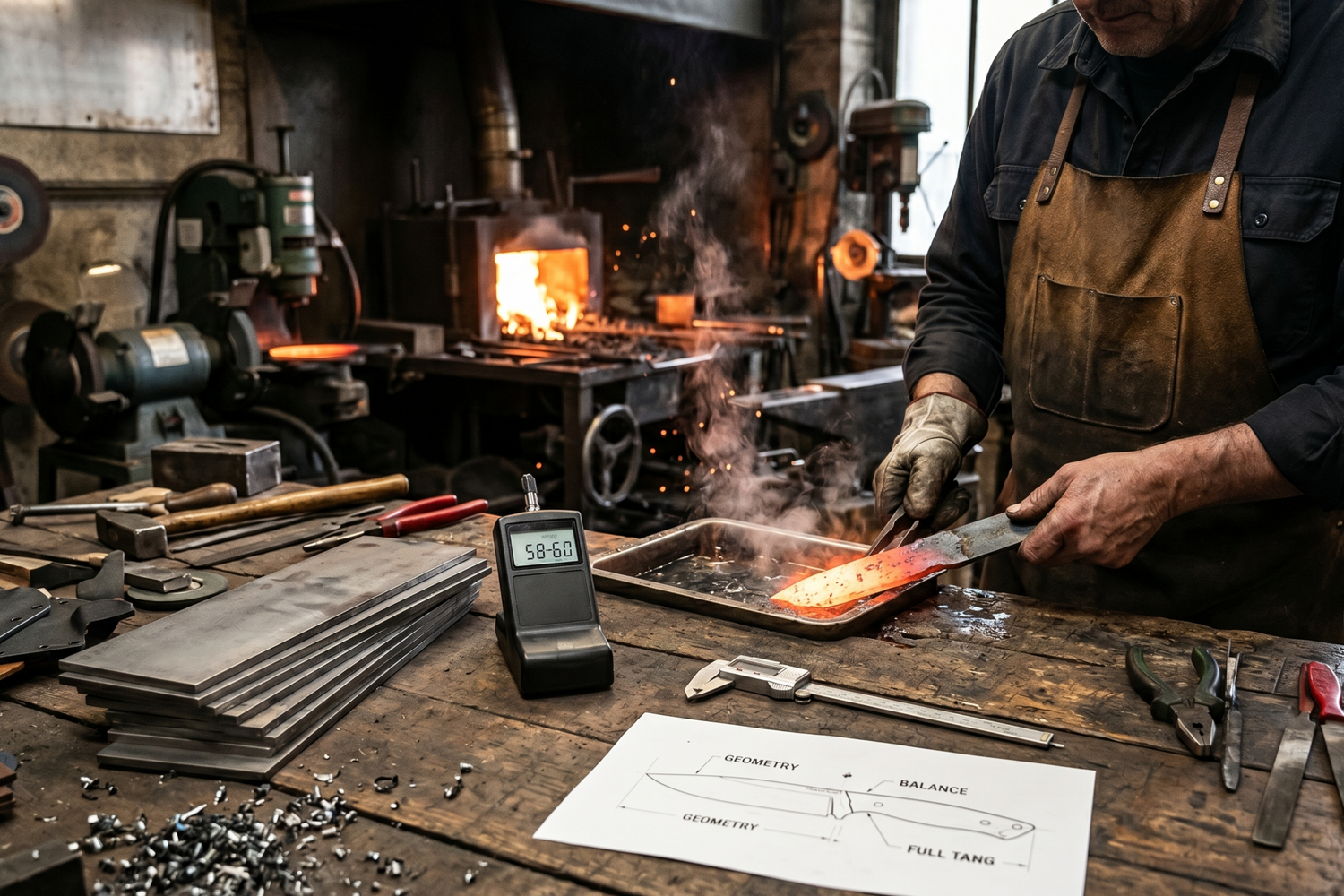
Steel is the soul of the knife. A serious manufacturer always specifies the alloy used (Nitrox stainless steel, carbon steel, etc.). But steel is nothing without controlled HRC hardness. A quality blade offers a compromise between edge retention and ease of sharpening.
Ergonomics and grip
A knife must be an extension of the hand. The handle shapes must avoid "hot spots" (painful friction areas). At TB-Outdoor, we test our handles in real situations to ensure total comfort, whether for fine cutting or heavy-duty work.
Quality of finishes
Run your finger (carefully) over the joints between the blade and the handle. On a serious knife, the adjustments are perfect, with no gaps where dirt could accumulate. Regular polishing and impeccably flush rivets are the hallmarks of high-end artisanal or industrial manufacturing.
| Component | Sign of Quality | Sign of Mediocrity |
|---|---|---|
| Blade | Perfect grind symmetry | Irregular or warped edge |
| Adjustment | No play (fixed or folding blade) | Lateral play or visible gaps |
| Marking | Clear engraving (Steel + Origin) | Vague markings ("Stainless") |
| Edge | Homogeneous razor finish | Visible metal burrs (morfild) |
The unmistakable signs: analyzing a serious knife
Beyond aesthetics, design coherence is the ultimate arbiter. A TB-Outdoor knife is designed for a specific use, and every curve has a function.
Tool balance
Place the knife on your index finger at the bolster (blade/handle junction). A balanced knife should not tip sharply forward or backward. Good balance drastically reduces wrist fatigue during prolonged use.
Perceived solidity and reliable mechanics
For a folding knife, the locking "click" must be firm and clear. For a fixed blade, a full tang construction (the steel extends through the entire handle) is an indicator of absolute robustness. The sheath must also be functional, secure, and made of durable materials (Kydex, quality leather, or polymer).
False criteria that often mislead buyers
Marketing often uses visual codes to mask technical weaknesses.
- Excessive size: A giant knife is rarely practical. Performance lies in the blade's geometry, not its disproportion.
- "Spectacular" design: Aggressive points and unnecessary back saws often weaken the blade's structure. A good Thiers knife prioritizes function over appearance.
- Vague promises: Be wary of terms like "surgical steel" or "military grade" without precise technical specifications (HRC, alloy type).
How to evaluate a knife according to your use?
"Quality" is relative to use. An excellent kitchen knife would make a poor survival knife.
| Use | Priority #1 | Recommended blade type |
|---|---|---|
| EDC (Everyday Carry) | Compactness and weight | Light folding (7-8 cm) |
| Bushcraft | Robustness (Batoning) | Fixed Full Tang (10-12 cm) |
| Survival | Extreme versatility | Thick blade, resilient steel |
| Professional | Edge retention (HRC) | Nitrox steel, pro ergonomics |
Why is the manufacturing origin a criterion of trust?
The history of cutlery in Thiers is not just a matter of tradition; it is a guarantee of controlled industrial processes. By choosing a TB-Outdoor knife, you benefit from rigorous quality control at every stage of forging and heat treatment. The origin also guarantees that the steel meets the announced safety and composition standards. A locally made knife is a tool whose blacksmith, machines, and demanding standards are known.
Usage precautions for testing a new knife:
- Perform the paper sheet test: the cut must be fluid and without snagging.
- Check for the absence of "burr" on the edge by gently passing it over your fingernail (without pressing).
- Handle the grip with gloves to test it in wet conditions.
- Examine the symmetry of the tip: it must be perfectly centered.
Maintenance instructions to preserve quality:
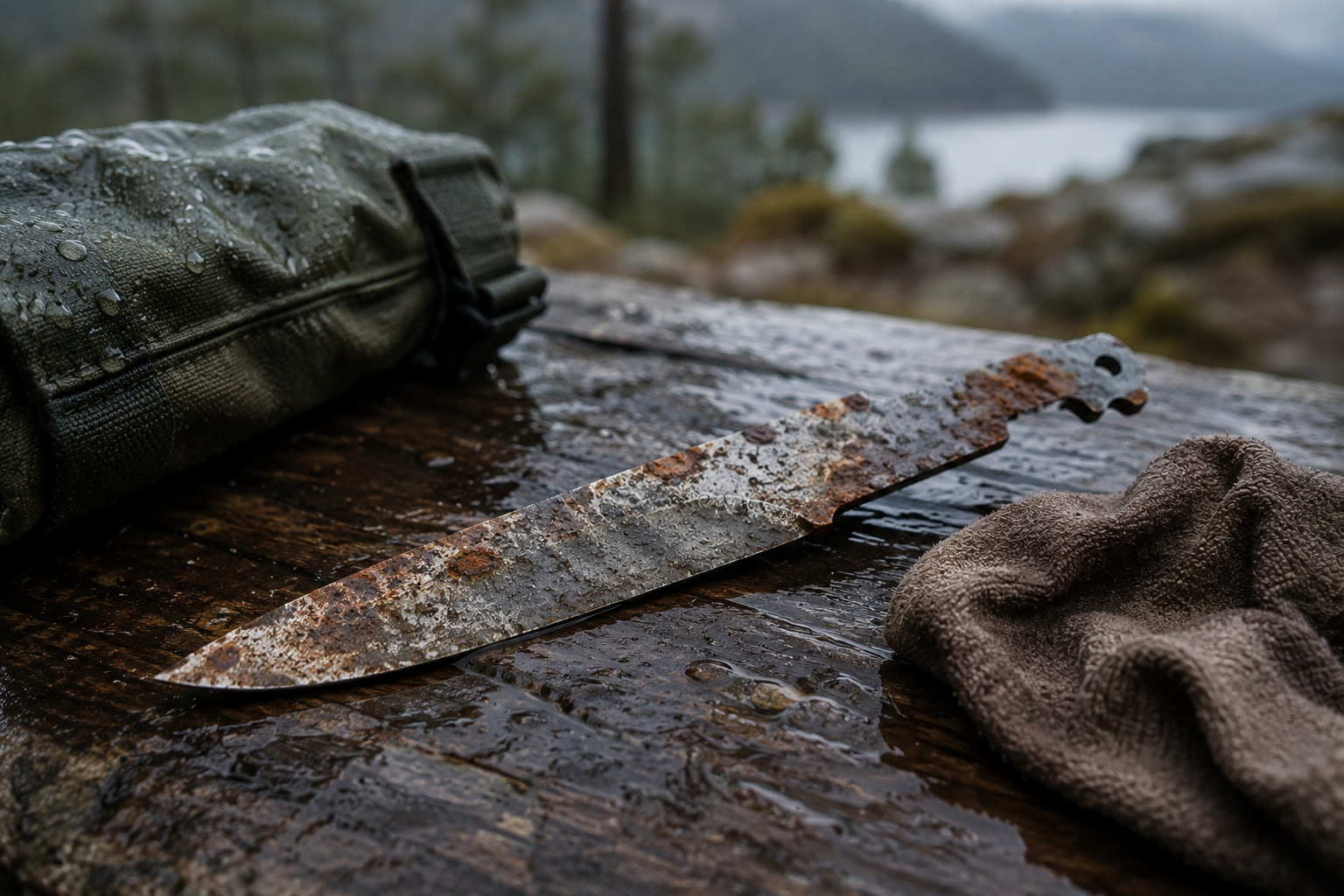
- Systematic manual washing (dishwasher is the enemy of quality).
- Immediate drying with a soft cloth from the base to the tip.
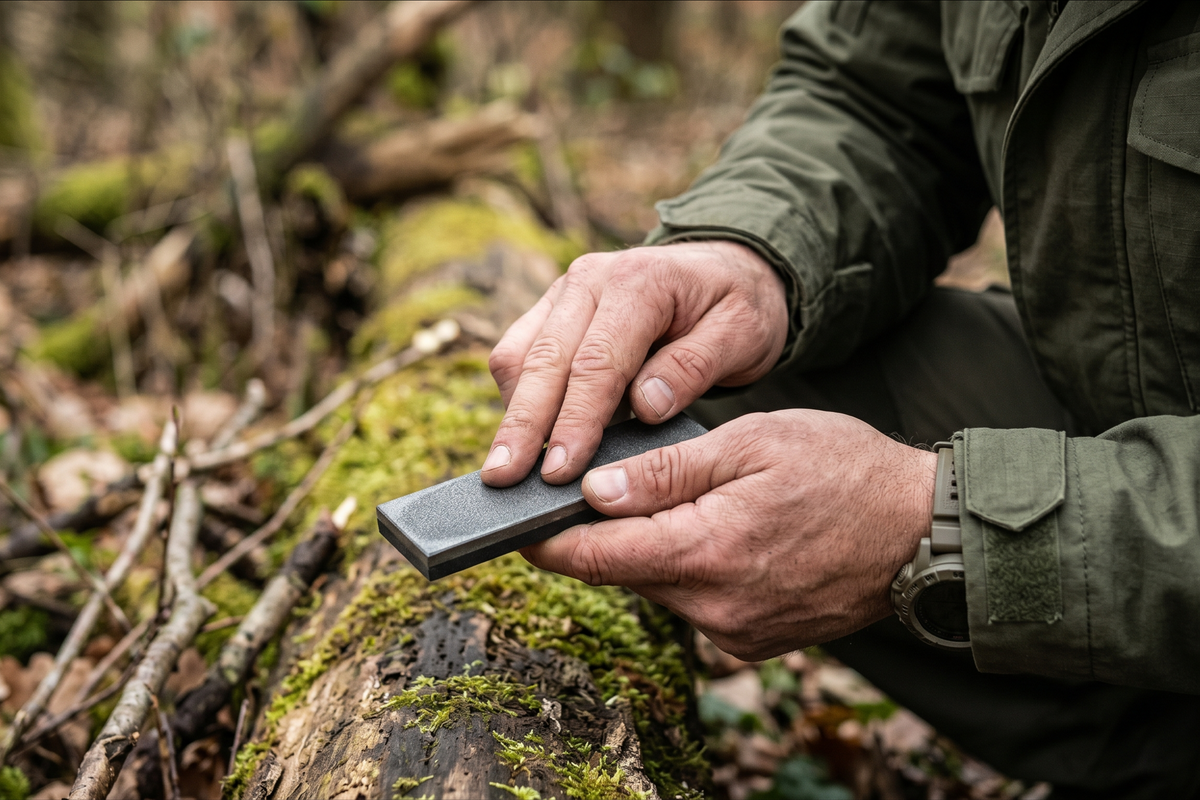
- Regular sharpening with a stone to maintain the original geometry.
- Light oiling for carbon steels or before long-term storage.
Conclusion: The perfect balance between steel and hand
In conclusion, recognizing a good knife means being able to discern the blacksmith's intention behind the object. A TB-Outdoor tool stands out for its consistency: perfectly tempered steel, a shape adapted to its function, and a finish that demonstrates respect for the user. Do not be seduced by aesthetic artifices; seek the solidity of a full tang assembly, the precision of a Thiers mechanism, and the balance of a blade that seems to disappear, leaving only your gesture. A good knife is a lifelong investment, a faithful companion that, if well chosen, will improve with time and use. Trust TB-Outdoor's expertise to equip yourself with an exceptional blade, worthy of the heritage of French cutlery.