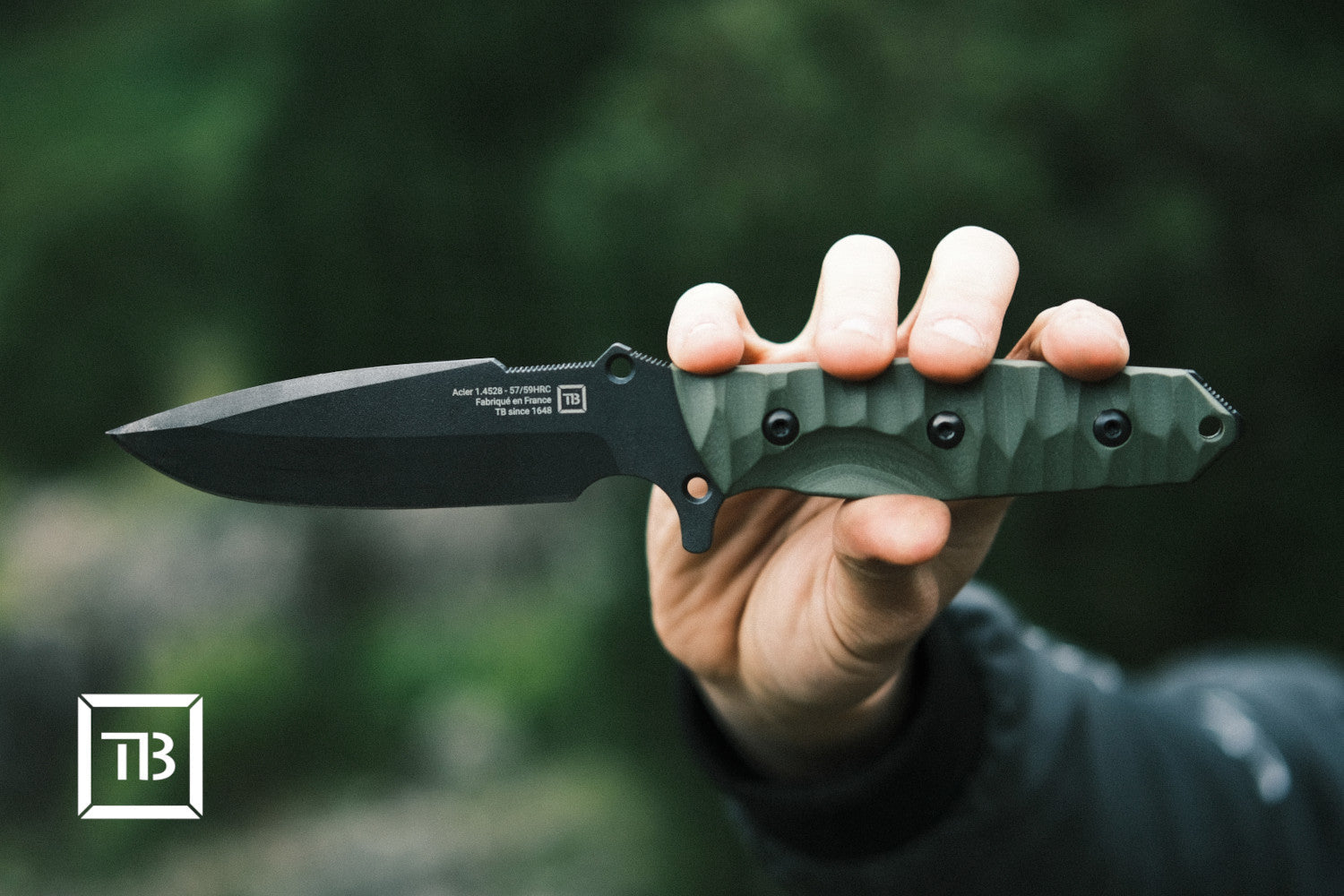
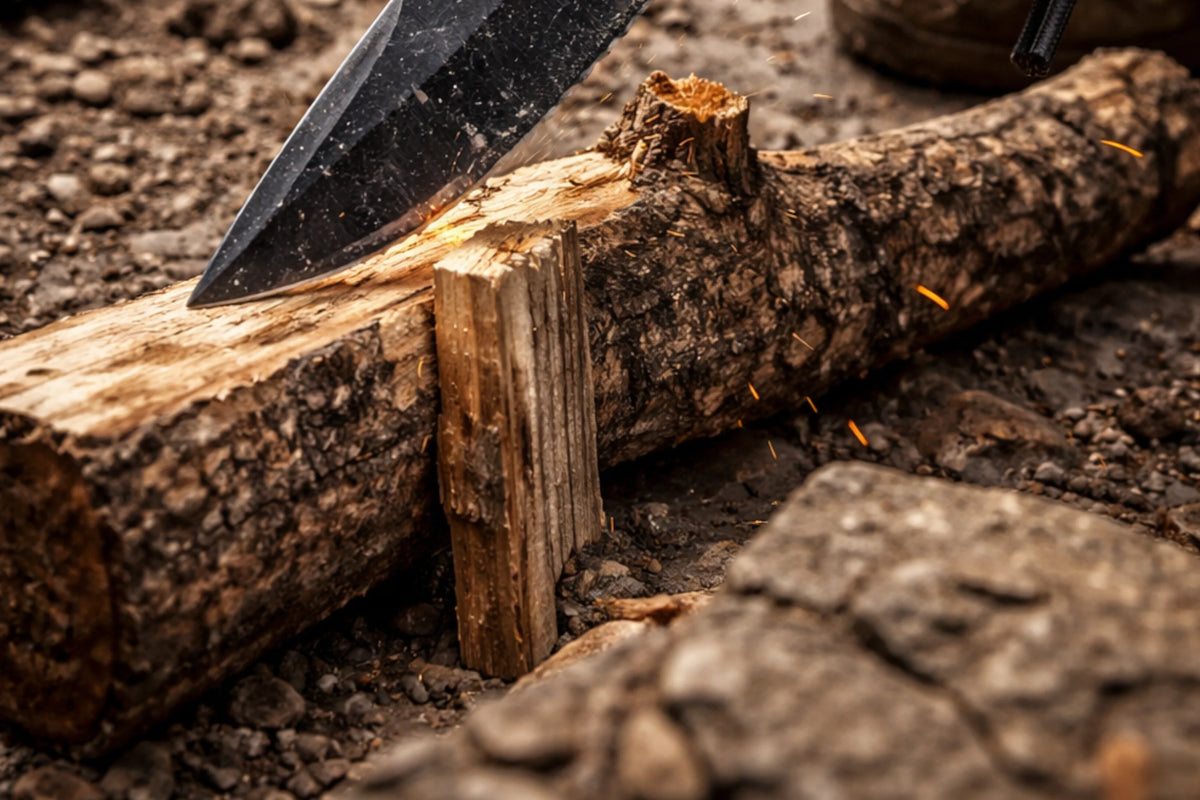
The C.A.C.® is available with two in-house steels developed by TB-Outdoor: Nitrox®, the standard steel in the range, and MOX®, its more premium alternative. Both are excellent stainless steels—but they don't serve the same primary purpose. Here's how to decide.
Nitrox®: Balance for Field Use
Nitrox® is a nitrogen-doped martensitic stainless steel, composed of approximately 16% chromium and 0.35% carbon. Heat-treated to 55 HRC, it is factory-sharpened to 17° per side.
The addition of nitrogen strengthens the passive chromium oxide layer, improving resistance to localized corrosion (pitting)—a major advantage in marine or saline environments. Its moderate hardness of 55 HRC makes it one of the easiest steels to resharpen in the field: a few minutes are enough with a folding diamond sharpener, without special tools.
MOX®: Edge Retention as a Priority
MOX® takes the composition further: chromium beyond 16%, carbon beyond 1%. The result: superior hardness, between 58 and 60 HRC, and excellent corrosion resistance—slightly superior to Nitrox® due to its higher chromium content.
The counterpart of this superior hardness: a more technical sharpening process. A 58-60 HRC steel requires more passes and a more precise motion to achieve optimal sharpness, compared to Nitrox®. However, once sharpened, it retains its edge longer under intensive use.
Comparative Table
| Criterion | Nitrox® | MOX® |
|---|---|---|
| Chromium | 16 % | > 16 % |
| Carbon | 0.35 % | > 1 % |
| Hardness | 55 HRC | 58-60 HRC |
| Corrosion resistance | Very good | Excellent |
| Edge retention | Good | Superior |
| Field sharpenability | Very easy | Moderate |
| Recommended use | Military, versatile outdoor, daily use | Intensive use, repetitive technical cuts |
Which Steel to Choose Based on Your Profile?
- Standard military or operational use—Nitrox® remains the reference choice. It is also the steel selected for all licensed military editions (Marine Nationale MN400, Légion Étrangère): in a context where resharpening must be done quickly and without specialized equipment, ease of maintenance is paramount.
- Outdoor or bushcraft use where you rarely sharpen—MOX® becomes interesting: its better edge retention reduces the frequency of necessary sharpenings.
- Intensive professional use with repetitive cuts (ropes, abrasive materials)—MOX® retains a usable edge longer between two full sharpenings.
- Beginner in blade maintenance—Nitrox® is more forgiving of imperfections in sharpening technique.
A Sharpener Compatible with Both Steels
Good news for those who hesitate: the folding diamond sharpener offered by TB-Outdoor is compatible with both Nitrox® and MOX®. The difference between the two steels lies in the time and sharpening technique required, not in the tool to use.
Frequently Asked Questions
Does MOX® rust less than Nitrox®?
Both are excellent stainless steels. MOX®, with its higher chromium content, offers slightly superior corrosion resistance, but Nitrox® remains largely sufficient for normal outdoor use, including in humid environments.
Can I switch from Nitrox® to MOX® on the same knife model?
The choice of steel is made at the time of order, according to the configurations available for the chosen model. It is not a matter of changing the blade retrospectively, but an option of configuration.
Is MOX® more expensive than Nitrox®?
MOX® is generally offered as a premium option on configurations that include it, consistent with its richer composition in chromium and carbon and its more advanced heat treatment process.