The question comes up in every bushcraft and survival discussion: fixed blade or folding knife? There's no universal answer—only tradeoffs depending on the use. Unlike the article dedicated to Everyday Carry (EDC), this article specifically addresses intensive field use: survival, bushcraft, extended expeditions.
Fixed Blade: Uncompromising Robustness
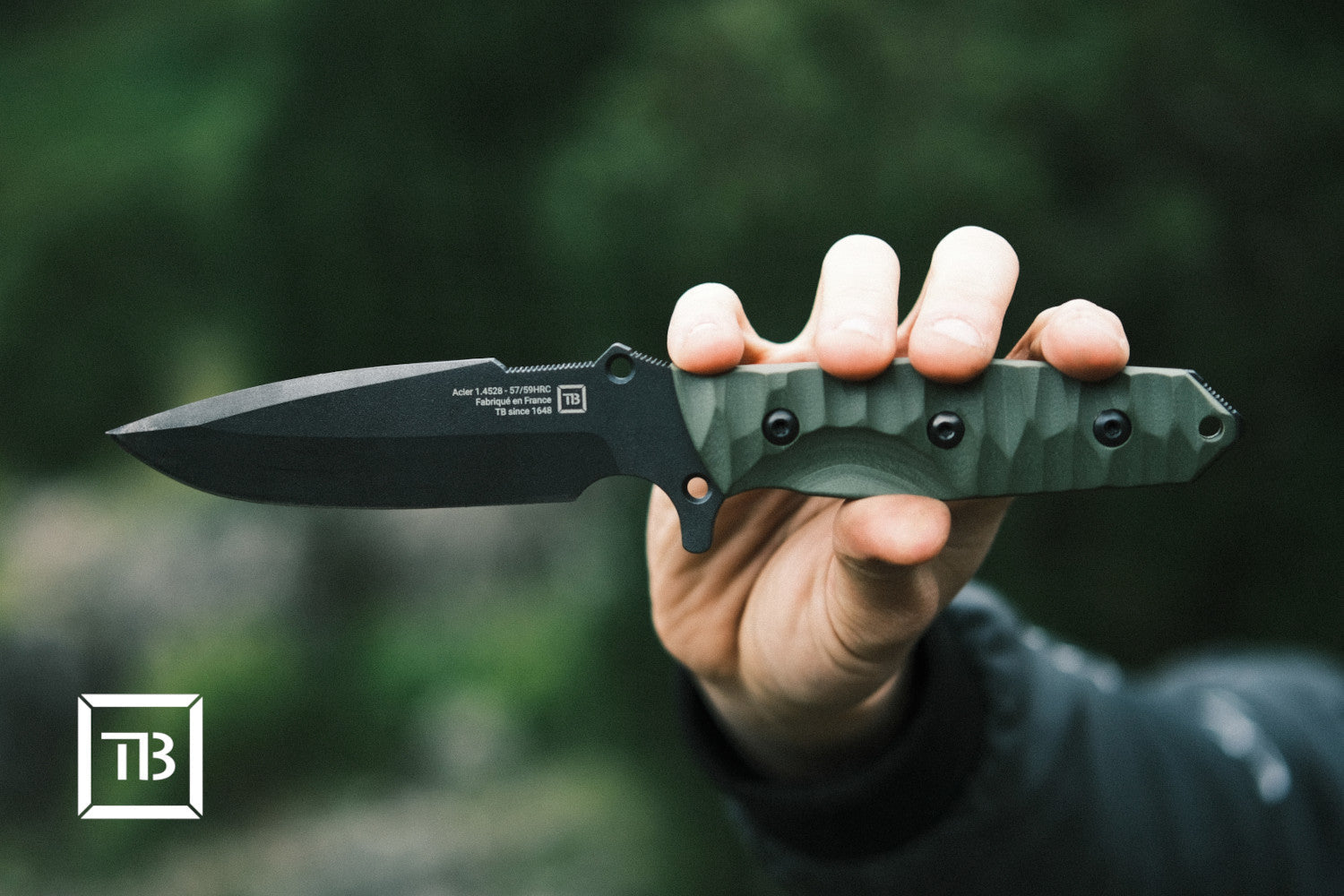
A fixed blade has only one moving part: none. That's its structural advantage. No pivot pin, no locking mechanism, no spring—thus no possible mechanical point of failure, even in the worst conditions (sand, frost, prolonged immersion).
Advantages:
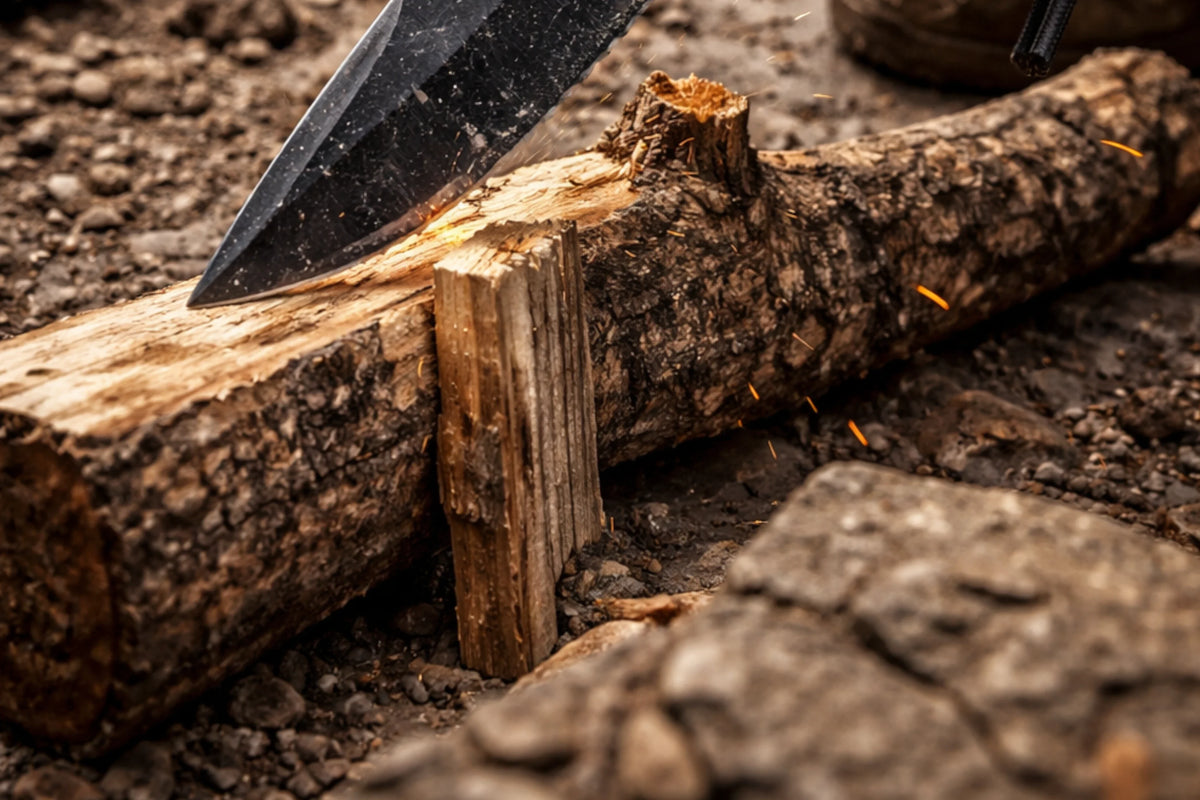
- Maximum resistance to impacts and bending, including for batoning (provided it has a full tang construction, like the Maraudeur®)
- Simpler maintenance—no mechanism to disassemble, adjust, or lubricate
- Better force transmission for intensive cutting and carving tasks
- No risk of accidental closure on fingers
Limitations:
- More cumbersome—requires a sheath, less discreet
- Less practical for urban everyday carry
Folding Knife: Compact Versatility
A folding knife like the C.A.C.® compensates for the bulk of a fixed blade with a modular design that integrates several functions into one tool: strap cutter, glass breaker, corkscrew, depending on the version.
Advantages:
- Compactness—belt or pocket carry, discretion
- Multiple functions integrated into a single tool
- Reliable modern mechanism (pivot lock with play compensation on the C.A.C.®)
Limitations:
- The mechanism remains a point of concern in extreme conditions (fine sand, frost)
- Not recommended for batoning or any use that puts strong bending stress on the blade
- Requires regular maintenance of the mechanism (disassembly, lubrication)
Decision Table by Usage
| Usage | Recommendation | TB-Outdoor Model |
|---|---|---|
| Intensive bushcraft, regular batoning | Fixed blade | Maraudeur® (full tang, designed for batoning) |
| Extended survival in extreme conditions (sand, marine environment) | Fixed blade | Maraudeur® or Vengeur® |
| Precise outdoor cutting, hunting, fishing, camping | Fixed blade | Commandeur® |
| Versatile tactical use, rescue (strap cutter, glass breaker) | Folding knife | C.A.C.® |
| Light hiking, outdoor EDC | Folding knife | C.A.C.® or Bivouac® |
| Complete survival kit | Both, complementary | Maraudeur® (fixed blade) + C.A.C.® (folding) |
Important precision: the Baroudeur®, despite its historical "military field" positioning, is a folding knife—like the Bivouac® and the C.A.C.®—and not a fixed blade. Its specificity is to integrate independent cutlery (spoon, fork) for camp life, not a full tang blade for batoning.
Why not just one knife?
In serious bushcraft or survival use, the logic is not "fixed blade or folder" but often "fixed blade and folder": the folder for everyday carry and precision tasks, the fixed blade for heavy-duty tasks (batoning, wood carving, emergency extrication). This is also the logic that led TB-Outdoor to maintain three standard models in its catalog simultaneously—Bivouac®, Baroudeur®, and C.A.C.®—rather than discontinuing older models in favor of the latest.
Frequently Asked Questions
Can a robust folding knife replace a fixed blade in bushcraft?
For most common tasks, yes. But for batoning and tasks that put significant bending stress on the blade, a fixed blade remains preferable—the risk of accidental closure on a folder is never entirely zero.
Which TB-Outdoor fixed blade is best suited for extreme use?
The Maraudeur®, a full tang dagger initially developed for special forces, is the benchmark fixed blade in the range—its design explicitly allows for batoning without risk of breakage. The Commandeur® and the Vengeur® are other fixed blades in the range, oriented towards precise outdoor cutting and emergency extrication, respectively.
Is the C.A.C.® too fragile for survival use?
No, it is designed and validated for demanding military operational use. It simply has usage limitations inherent to any folding knife, especially for batoning.
→ Discover the Maraudeur®, the TB-Outdoor fixed blade | → Discover the C.A.C.®