The world of tactical knives, bushcraft, and survival has its own language. For both the novice and the expert, mastering this vocabulary is essential to understanding the value of equipment and making the right choice. Knowing what "full tang" means or differentiating carbon steel from stainless steel is not a mere detail. It's the foundation of knowledge.
This article is a comprehensive, thematic glossary. It's not just a simple list, but a structured guide to help you learn the key terms. A valuable reference document to keep.
What are the key points of this glossary?
- The fundamental concepts: Bushcraft, survivalism, and their philosophies.
- The anatomy of the knife: The different types and their characteristics.
- Materials science: All about steels, sleeves and their impact.
- Essential techniques: The vocabulary of fire, water and shelter.
- Equipment terminology: Other essential tools and accessories.
How to master the vocabulary of tactical knives and bushcraft?
Entering the world of adventure knives is like learning a new language. Each term defines a characteristic, performance, or use. This guide is your translator, organized by topic for logical learning.
What are the basic definitions of bushcraft and survivalism?
Let's begin with the two philosophies that guide our practice. Although often linked, they have distinct goals.
- Bushcraft: It's the art of living in harmony with nature by using its resources. The goal is to thrive, not just survive. Bushcraft emphasizes mastering skills to live comfortably with minimal equipment.
- Survivalism: Survival encompasses the techniques for staying alive in a hostile environment. Survivalism is a broader approach to preparing for disasters. The goal is to develop self-sufficiency (stockpiling, skills, equipment).
How to differentiate between the main types of outdoor knives?
The knife is the central tool. Identifying its main families is the first step.
What is a bushcraft or survival knife?
These knives are designed for maximum versatility in the wilderness. Survival knives are often more robust for extreme situations. Bushcraft knives are sometimes lighter, optimized for fine woodworking.
What is a folding knife?
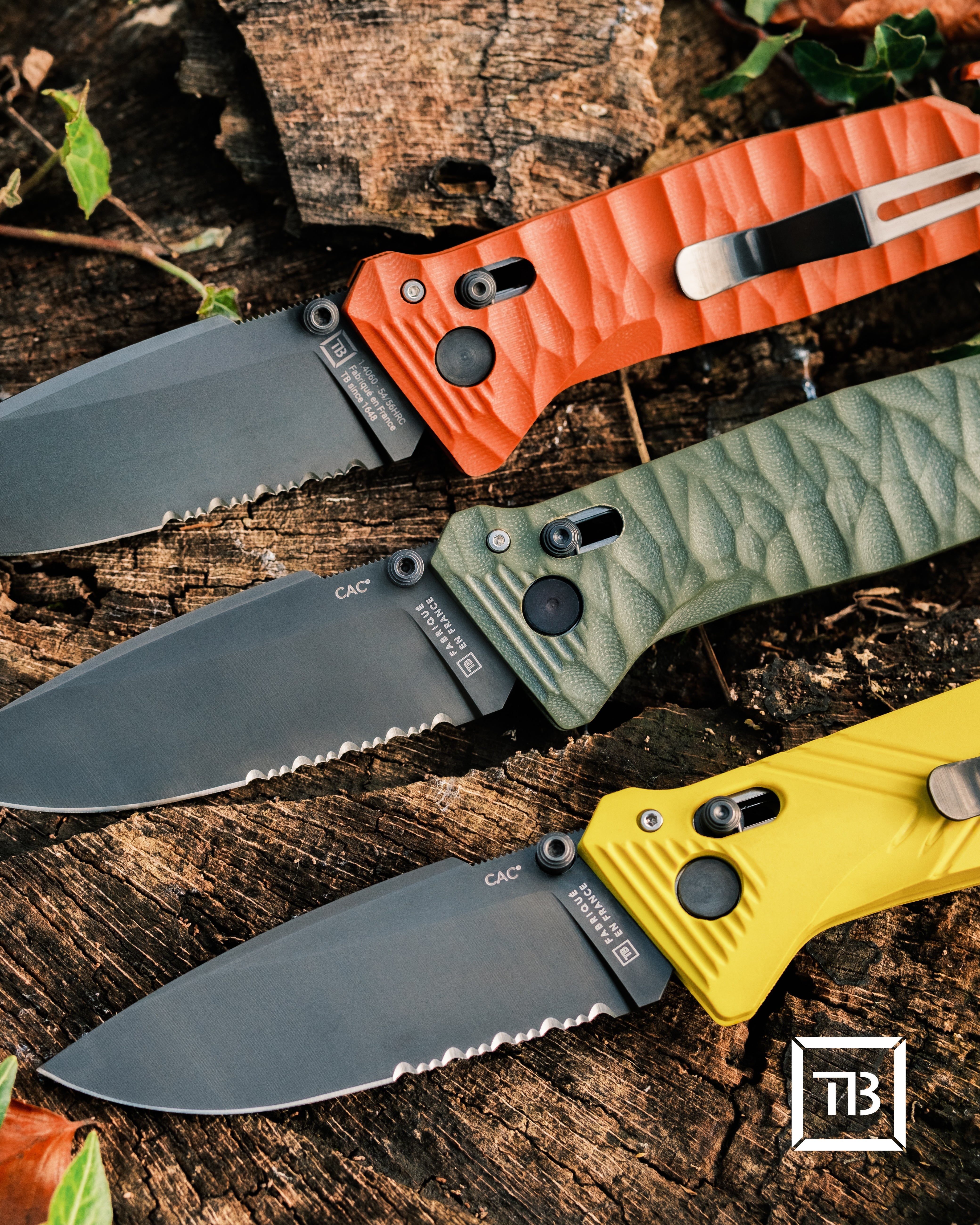
This is a knife whose blade folds into the handle. It's ideal for discreet everyday carry (EDC). The most robust models, like the CAC® , are very sturdy but not recommended for heavy-duty work (batoning). The Bivouac® , with its integrated tools, is another example of a versatile folding knife.
Why choose a fixed-blade knife?
The blade of this knife is fixed to the handle. It's the number one choice for bushcraft and survival. It offers unparalleled strength, reliability, and safety in use, especially if it has a full tang construction.
What are the technical terms related to knife construction?
Geometry and construction determine a knife's performance. Here are the essential terms.
- Full tang: The most important term. The blade steel extends the full length and width of the handle. This is the ultimate guarantee of strength.
- Partial Tang: The tang only extends partially into the handle. Less robust, this construction should be avoided for a survival knife.
- Grinding: This is the geometry of the blade, the way it is sharpened to create the cutting edge.
- Scandi (Scandinavian) grind: A single flat angle from the middle of the blade to the edge. Robust, ideal for wood and easy to sharpen.
- "Drop Point" blade: A very versatile blade profile where the back curves gradually towards the point.
- Back of the blade: The unsharpened upper part. A 90° back (sharp angle) is essential for scraping a firesteel.
How to understand the language of materials: steels and sleeves?
The choice of materials influences the cutting performance, durability, and maintenance of your tool.
- Carbon steel: Not stainless. Advantages: very robust, easy to sharpen, produces excellent sparks. Disadvantage: requires maintenance to prevent rust.
- Stainless Steel (Inox): High chromium content. Advantages: excellent corrosion resistance, low maintenance. Disadvantages: often more difficult to sharpen.
- G10: Fiberglass-based composite material. Very strong, lightweight, water-resistant and offering excellent grip.
- FRN (or PA6 FV): Fiberglass-reinforced nylon. A very strong and lightweight polymer, often used for sleeves.
What is the vocabulary for fire and water techniques?
Mastering the elements requires knowledge of the right tools and techniques.
- Firesteel (fire flint): A ferrocerium rod that produces sparks at 3000°C when scraped with the back of a knife.
- Amadou (Tinder): A very fine and dry material (bark, cotton...) that ignites on contact with a spark.
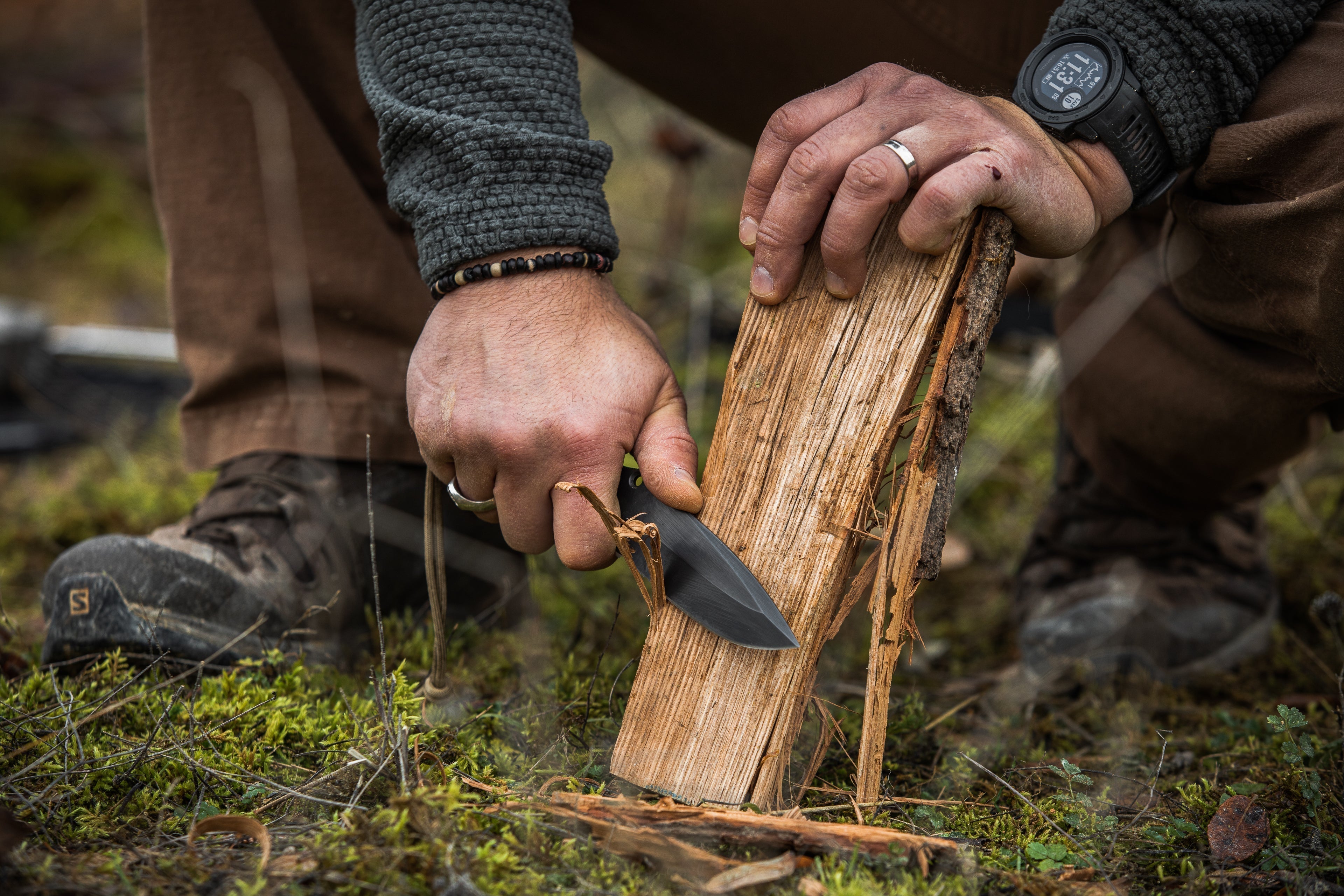
- Batoning: A technique for splitting wood by striking the back of the blade with a log. A strength test for full-tang blades.
- Featherstick (Hedgehog): Technique for creating fine shavings on a stick to facilitate fire lighting.
What other equipment terms are essential to know?
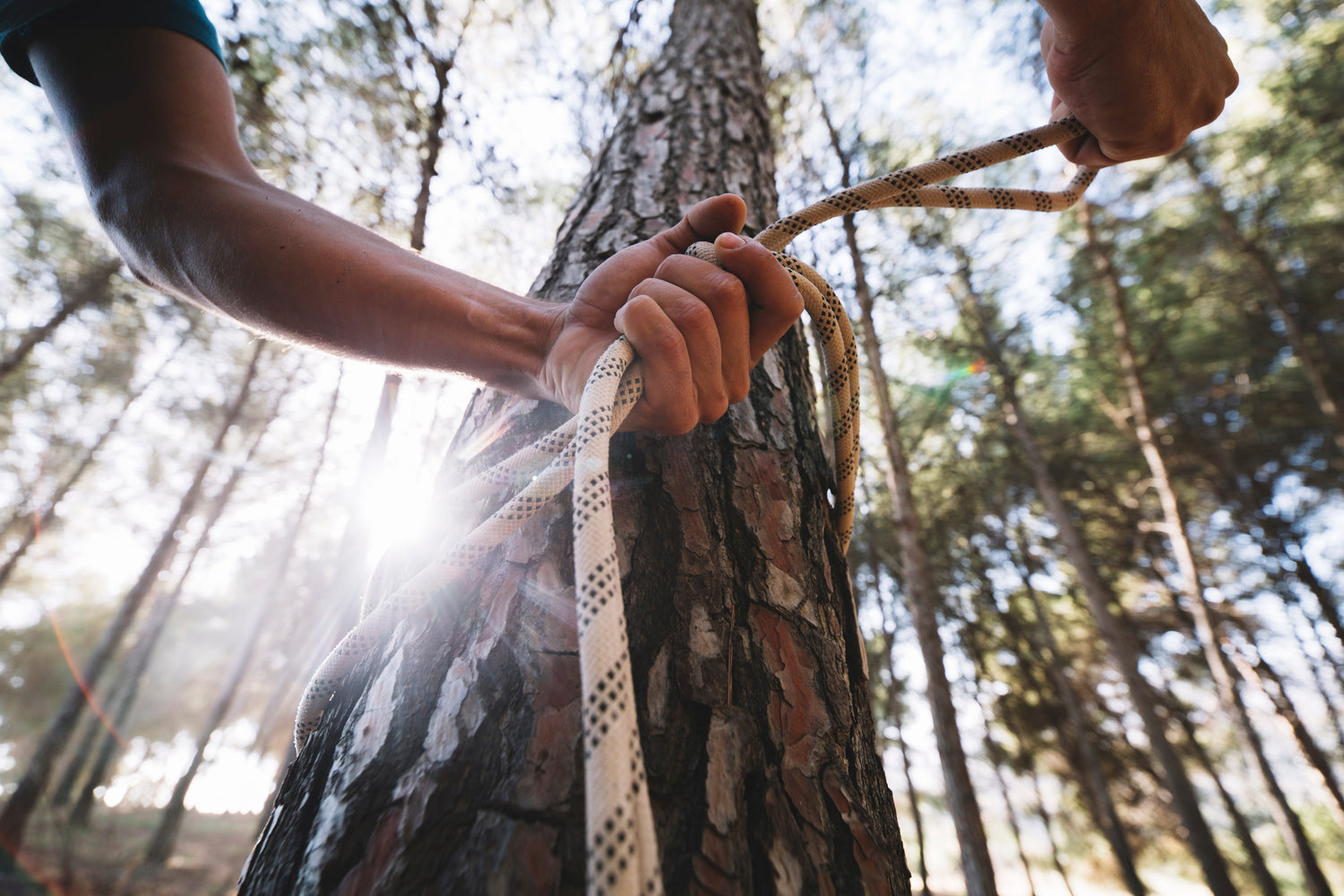
- Paracord: Ultra-strong nylon cord, essential for setting up a shelter or making repairs.
- Tarp: A technical, lightweight and waterproof tarp, used as a minimalist shelter.
- Bug-out bag (BOB): Backpack containing the necessary items to survive 72 hours independently.
- EDC (Every Day Carry): All the items that one carries on oneself on a daily basis (folding knife, lamp...).