Choosing a survival knife is a key step for any adventure enthusiast. Whether for bushcraft, hiking, or preparedness, this tool is a versatile companion. It helps you prepare a meal, build a shelter, or start a fire. However, it's easy to make mistakes when buying one. This guide outlines the most common pitfalls to avoid when choosing the right tool for your needs and ensuring your safety.
What are the key points to consider when choosing a survival knife?
- Fixed blade required: Always choose a knife with a fixed blade for its robustness and reliability.
- Full tang construction: Ensure the blade passes through the entire handle for maximum strength.
- Suitable steel and grind: Choose the steel (carbon, stainless steel...) and the blade profile (Scandi...) according to your use.
- Ergonomic handle: A good grip is essential, even with wet hands or gloves.
- Weight/size balance: A knife must remain robust but easy to handle.
- Sheath and sharpening: Essential for transporting the knife and keeping it operational.
- Knowledge of the law: Carrying knives is highly regulated in France.
What are the 6 mistakes to avoid when choosing your survival knife?
Mistake #1: Why is a folding knife unsuitable for survival?
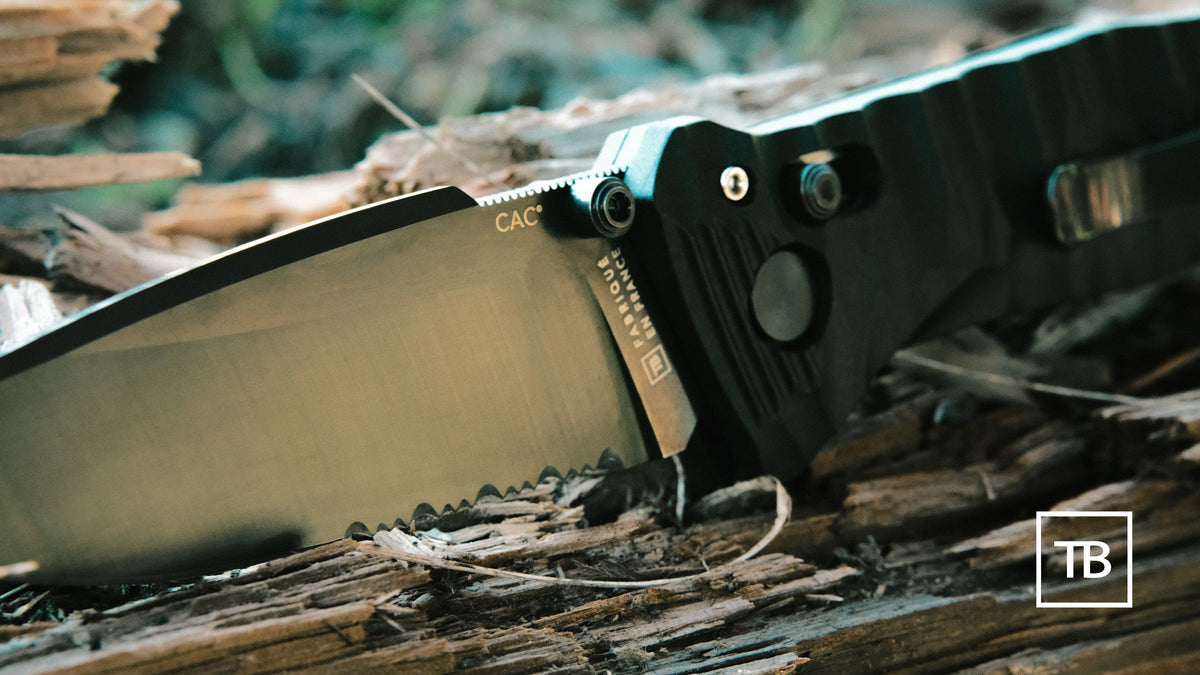
Many are tempted by multi-functional folding knives. They seem like an all-in-one solution. But for demanding survival tasks, their reliability and safety are insufficient. A fixed blade is still the best choice. It's far more robust for heavy-duty work. Consider batoning , the technique of splitting wood by striking the back of the blade. A folding knife, however sturdy, wouldn't withstand it. Its locking mechanism could fail, leaving you without a tool.
Mistake #2: Why is the choice of blade so important?
The type of steel and the blade profile (the grind) determine the performance, durability, and ease of maintenance of your knife. Ignoring these aspects risks ending up with an ineffective tool.
Which steel to choose: carbon, stainless steel or hybrid?
- Carbon steel: Very robust, easy to sharpen, and perfect for creating sparks with a firesteel. Its main drawback is its susceptibility to rust. It requires rigorous maintenance.
- Stainless steel: Highly resistant to corrosion and therefore easy to maintain. However, it can be more difficult to sharpen than carbon steel.
- Tool steel (hybrid): This is often an excellent compromise. A steel like D2 retains its edge for a long time, is very strong and virtually stainless.
Why are the back and grind of the blade crucial?
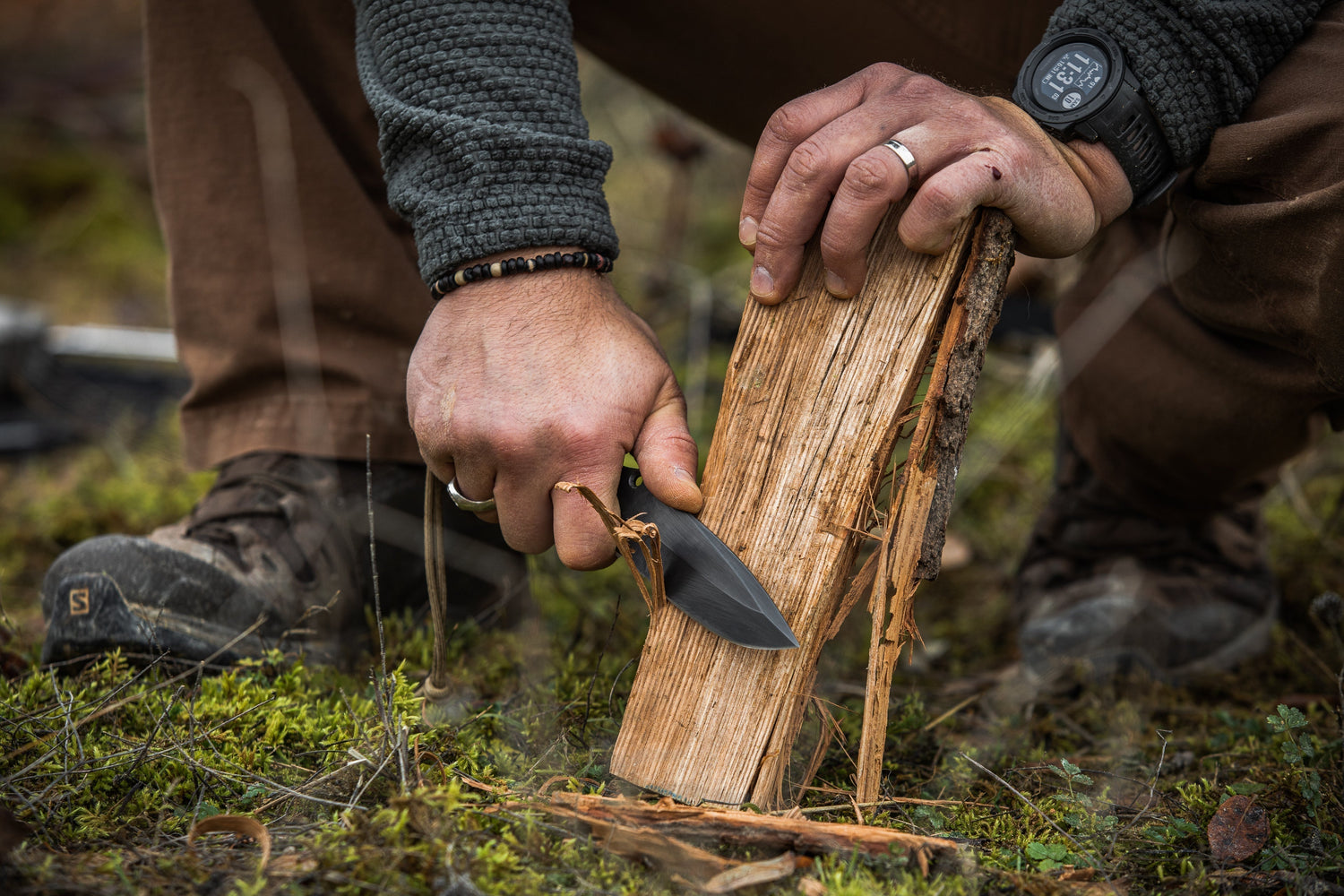
To start a fire with a firesteel, the back of the blade must have a sharp right angle (90°). A rounded back will not produce sparks. Regarding the grind, a Scandinavian (Scandi) profile is often ideal for woodworking. It is robust and very easy to resharpen in the field.
Mistake #3: Why are construction and ergonomics non-negotiable?
The strength and comfort of a knife depend on its construction and handle. Neglecting these aspects renders your tool ineffective, or even dangerous.
What is "full silk" construction?
A survival knife should be "full tang." This means the blade steel runs the entire length and width of the handle. This is the strongest manufacturing method. It eliminates weak points and ensures your knife won't break under stress.
Why is an ergonomic handle vital?
The handle should offer a secure grip, even with wet hands or gloves. A well-rounded handle is more comfortable for extended use. Materials like G10 or PA6 FV are excellent choices. They offer a good grip, are durable, and very resistant.
Mistake #4: How to avoid the pitfalls of practicality?
A good survival knife strikes a balance between robustness and practicality. A tool that is too heavy or bulky quickly becomes a burden. It must be effective without exhausting you.
What is the right balance between weight and height?
A knife that's too large is difficult to handle for delicate tasks. A model that's too light will lack the power for heavy-duty work. Aim for a balance that suits your size and needs. For example, some very robust military knives like the CAC® can weigh up to 195g, which might be heavy for a light hike.
Why are the case and sharpening so important?
A dull knife is useless. Not carrying a sharpener is a major mistake. A small, pocket-sized diamond sharpener is essential. The sheath is equally crucial. It must protect the blade and allow for quick, one-handed draw. Kydex sheaths are excellent for their secure retention.
Mistake #5: Why is ignoring the law on carrying knives a serious mistake?
This is a common mistake that can have serious legal consequences. In France, knives are classified as category D weapons. Carrying a knife, regardless of its size, is prohibited outside your home. The notion of a "blade less than X centimeters long" is a myth. For outdoor activities, the knife must be carried in a bag, in a way that is not directly accessible, and its use must be justified by the activity being undertaken.
Mistake #6: Why is thinking that a knife is enough a myth?
The knife is a cornerstone of your equipment, but it can't do everything. It's part of a larger system. Relying solely on it is setting yourself up for failure. A complete survival kit should also include tools for making a fire, purifying water, building shelter, navigating, and providing first aid.
How to make the right final choice?
By avoiding these mistakes, you'll be ready to choose a reliable and effective survival knife. It will safely accompany you on your adventures. Remember, the best tool is the one you know how to use. Practice with your knife in a controlled environment before venturing into the wilderness.