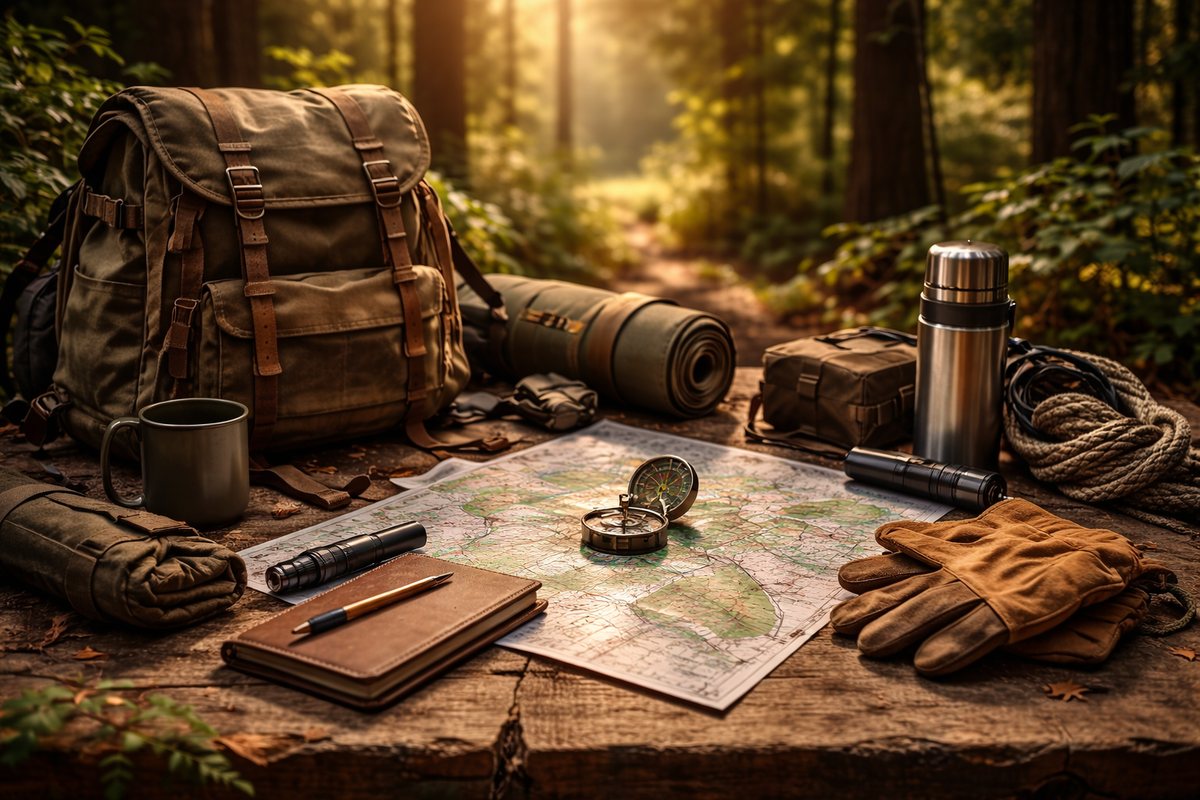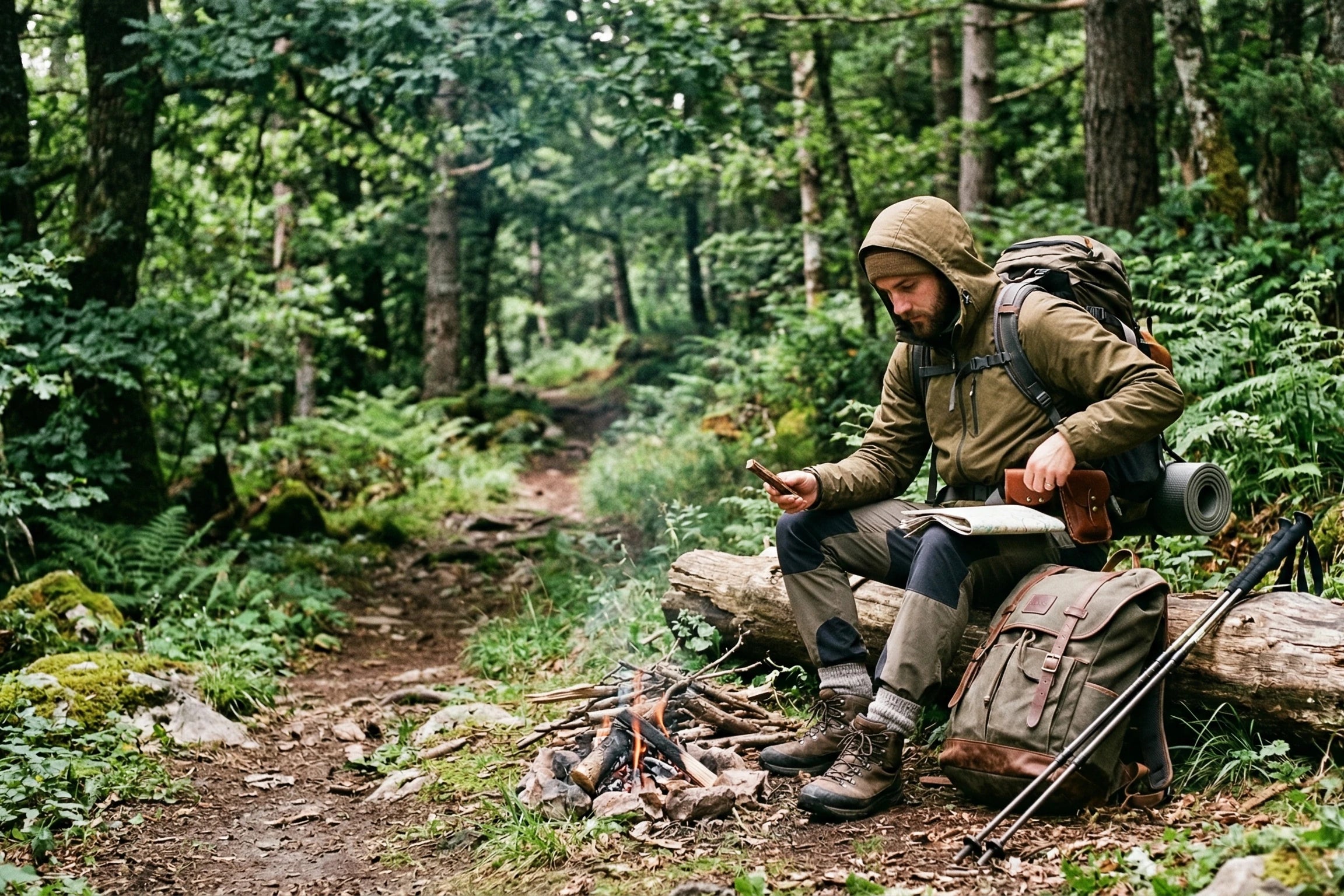
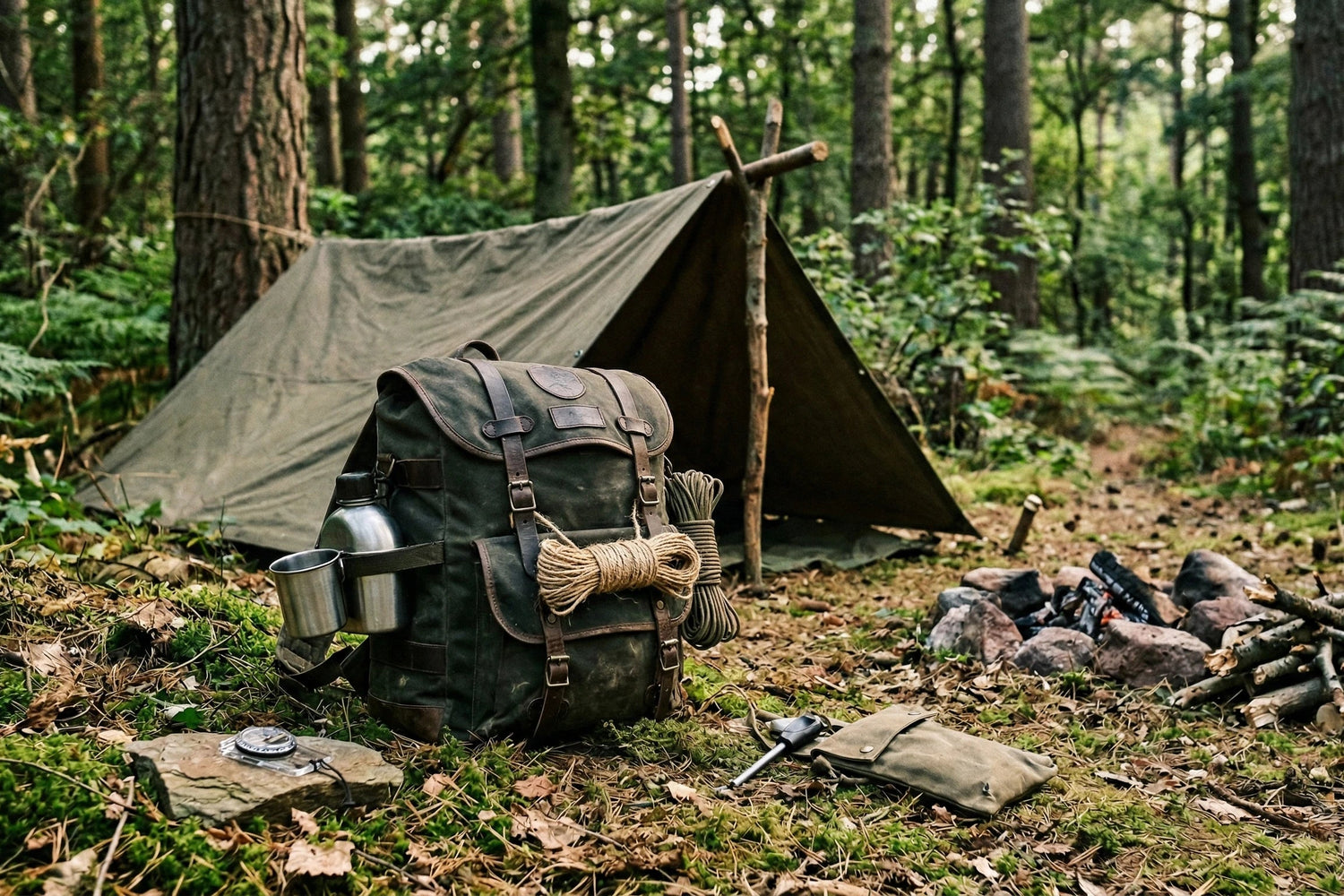
Choosing a cutting tool for adventure is not random but stems from a deep understanding of forging and use in harsh environments. At TB-Outdoor, we forge excellence in Thiers to meet the demands of professionals and outdoor enthusiasts. Whether you're looking for the robustness of a Vengeur® for tactical missions or the versatility of a C.A.C®, each blade tells a story of resilience. This guide dissects essential criteria: from HRC hardness to grind geometry, to turn your purchase into a lasting investment.
- Versatility: A good knife must be able to cut, split, and pierce without failing.
- Steel: The choice between stainless steel for corrosion resistance or carbon steel for sharpness.
- Ergonomics: A handle that prevents fatigue during prolonged use.
- Reliability: Full tang construction for maximum robustness.
What makes a good survival knife?
A true survival knife is not just a camping accessory; it's an extension of the hand capable of ensuring your safety when conditions become critical. At TB-Outdoor, we define this tool by its ability to withstand extreme mechanical stress while maintaining a functional cutting geometry. It's a delicate balance between toughness and hardness.
Missions it must be able to accomplish
The tool must excel in three areas: fire preparation (batoning, producing wood shavings), shelter construction (cutting stakes, notches), and food or care preparation. If your blade breaks during moderate leverage, it fails its primary mission. We design our models so that the tip is sufficiently reinforced to pierce without instantly dulling.
What is truly expected in the field
In the field, theory gives way to the reality of cold, humidity, and fatigue. A good knife must be usable with gloves. The grip should not be aggressive enough to cause blisters, but textured enough not to slip if the hand is wet or bloody. Edge retention is crucial: you don't want to spend an hour sharpening your blade after simply cutting a few hazelnut branches.
The most common definition errors
Survival knives are often confused with combat knives. An aggressive design with teeth on the spine (often ineffective for sawing) often harms the batoning function. Similarly, a knife that is too large becomes a cumbersome burden, while a model that is too small limits striking capabilities. Balance is the key to TB-Outdoor's expertise.
Who is this type of knife suitable for?
Use defines form. A hiker will not have the same needs as an intensive bushcraft practitioner. Identifying your profile is the first step in making a coherent choice.
Hiker
For the hiker, weight is the enemy. A lightweight knife, often folding like the Bivouac, is ideal. It's used for cutting sausage, cordage, or tinkering with a walking stick. Discretion and compactness are paramount.
Bivouacker
The bivouacker sets up for the night. They need a tool capable of preparing kindling. An intermediate model, fixed or robust folding, allows for campsite setup with more comfort than a simple penknife.
Bushcraft enthusiast
Here, the knife is the main tool. We're talking about woodworking, tool creation, and autonomous living. A fixed blade is imperative. The geometry must allow for fine control for carving while being massive enough to split kindling.
Professional / tactical use
Military and law enforcement require absolute reliability under stress. The Maraudeur meets these criteria: high-performance steel, anti-glare coating, and MOLLE-compatible sheath.
Essential criteria for choosing wisely
Let's delve into pure technicality. Here are the pillars upon which the quality of a TB-Outdoor knife rests.
Blade size
A blade of 10 to 15 cm is often the "sweet spot." Below that, you lack leverage; above that, you lose precision for meticulous tasks. Thickness also plays a role: between 3 and 5 mm to ensure structural rigidity without turning the knife into an inefficient hatchet.
Steel type
At TB-Outdoor, we use rigorously selected steels:
- Stainless (N690Co type): Excellent corrosion resistance, ideal for humid or marine environments.
- Carbon Steel: Easier to sharpen in the field, razor-sharp edge, but requires regular oiling to prevent rust.
- HRC Hardness: We generally aim for 57-59 HRC for an ideal compromise between edge retention and ease of maintenance.
| Model | Steel type | HRC Hardness | Blade Length | Weight |
|---|---|---|---|---|
| C.A.C® | Nitrox® | 58-59 | 94 mm | 155 g |
| Vengeur® | Mox | 58 | 138 mm | 170 g |
| Maraudeur | Mox | 58 | 113 mm | 200 g |
The handle and grip
The handle material (G10, Micarta, or high-density polymer) must be rot-proof. The shape should fit the palm. A pronounced guard is essential to prevent fingers from slipping onto the edge during a piercing effort.
Fixed blade or folding knife for survival?
This is the great outdoor debate. Each architecture has its proponents and detractors.
Advantages of a fixed blade knife
Solidity is unmatched. No mechanism to get clogged with sand or resin. If needed, a fixed blade knife can be used brutally (batoning) without the risk of the lock failing on your fingers.
Advantages of a folding knife
Carrying is more discreet and often more legally accepted in peri-urban areas. Modern TB-Outdoor models, like the C.A.C®, feature extremely robust locking mechanisms (Axis lock) that push the boundaries of the genre.
When to choose one or the other
- Fixed: Long expeditions, bushcraft, hostile environments, intensive professional use.
- Folding: EDC (Every Day Carry), light hiking, road rescue, quick meal preparation.
What blade size to choose for outdoor use?
Length directly impacts cutting kinetics and the tool's center of gravity.
Small blade (7-10 cm)
Ideal for small game, foraging, and precision work. It requires little energy to handle but limits cutting capabilities on the fly.
Intermediate blade (11-16 cm)
This is absolute versatility. Capable of splitting a 10 cm diameter log by batoning and remaining maneuverable for peeling fruit. This is the preferred format by survival experts.
Large blade (> 17 cm)
This enters the realm of a camp knife. Useful for clearing (like a small machete) or felling young trees. However, weight becomes a significant fatigue factor during long walks.
The 5 mistakes to avoid before buying
Don't be swayed by aggressive marketing. A knife is a tool, not a movie prop.
- Choosing a knife that is too heavy: After 20 km, every gram counts. A knife that is too heavy often ends up at the bottom of the bag rather than on the belt.
- Confusing aggressive design with effectiveness: "Tanto" points are excellent for piercing sheet metal, but less practical for debarking wood than a "Drop Point" blade.
- Neglecting the steel: Steel that is too soft will not hold up, steel that is too hard will be impossible to re-sharpen without specific equipment in the forest.
- Forgetting maintenance: Even the best stainless steel can rust if you store it wet in a leather sheath.
- Choosing without considering actual use: There's no point in buying a Maraudeur if you're only hiking on marked trails.
Our recommendation according to your profile
Because every adventure is unique, TB-Outdoor has segmented its outdoor range to precisely meet your technical needs.
| Profile | Recommended Model | Major Advantage |
|---|---|---|
| Beginner / Hiker | Bivouac | Lightweight and integrated cutlery kit |
| Bushcraft / Forest | Vengeur® | Raw robustness and fixed blade |
| Compact survival kit | C.A.C® | One-hand opening and strap cutter |
| Intensive use / Pro | Maraudeur | N690Co steel and extreme versatility |
How to maintain your knife for a lifetime?
- Cleaning: Always wipe the blade after use. If it has been in contact with salt, rinse with fresh water imperatively.
- Sharpening: Maintain the factory angle (generally 15-20°). Use a 1000 grit whetstone for routine maintenance.
- Mechanism: For folding knives, a drop of fine oil on the pivot ensures constant fluidity.
- Storage: Do not store a carbon knife in its leather sheath for long periods (leather retains moisture).
FAQ: Your questions about survival
What is the best length for a survival knife?
The consensus is between 12 and 15 cm. This length offers the best balance between weight, maneuverability, and mechanical work capacity (leverage, batoning).
Can you do everything with one knife?
That's the goal of the "one tool option." However, the ideal is to pair a robust fixed blade knife with a small precision folding knife or a multi-tool.
Should a survival knife be full tang?
Yes, for a fixed blade knife, "full tang" construction (where the blade steel extends through the entire handle) is essential to prevent breakage at the guard.
Which steel to prefer?
For versatility, a cobalt-enriched stainless steel like N690Co offers excellent edge retention while being resistant to oxidation.