Fire is not a luxury in a survival situation or when camping in the wilderness; it is an absolute necessity . Knowing how to light, maintain, and extinguish it properly is the first fundamental principle of bushcraft. A well-controlled fire not only provides body heat but also allows you to purify water by boiling and cook your food. However, this skill requires precision and careful preparation. This article will guide you, step by step, in selecting the right materials, preparing a safe fire pit, and implementing effective fire-starting techniques, particularly with the well-known firesteel.
Mastering fire means gaining autonomy and safety during all your outdoor expeditions.
Key points for a successful fire
| Stage | Objective | Bushcrafter's tip |
|---|---|---|
| Importance | Heat, cooking, water purification. | Never take fire for granted. |
| Fuel | Thin and absolutely dry materials. | Use sticking to find wood that is dry throughout. |
| Hearth | Security and insulation. | Choose a mineral soil (sand, pebbles), away from wind and vegetation. |
| Ignition | Speed and efficiency. | The Firesteel is the most reliable tool after the lighter. |
Why is fire essential in a hostile environment?
In the outdoor world, fire is one of the cornerstones of survival, just like water or shelter. It fulfills several vital functions that go beyond simply providing warmth:
- Thermal regulation: It helps prevent hypothermia, especially after a rainy day or at altitude.
- Hygiene and food: Heat allows us to cook food (improving digestion, destroying bacteria) and to boil water (making it drinkable).
- Protection: Smoke and light can keep wild animals away.
- Warning: A fire gives off smoke that can be seen from afar in case help is needed.
- Moral: Fire provides a feeling of security and psychological comfort, essential in difficult situations.
Mastering this skill is a mark of self-reliance for any bushcraft enthusiast.
What materials should be chosen and how should they be prepared?
The most common mistake is neglecting fuel preparation. A good fire depends 90% on the quality and dryness of your materials.
What are the recommended basic fuels?
For the initial ignition, you will need what is called tinder or firelighter. These are materials that ignite very easily with the slightest spark:
- Thin, dead twigs (about the size of a matchstick).
- Dry wood shavings .
- Birch bark (particularly effective, as it contains flammable oils, even when wet).
- Dried conifer sap (resin).
- Cotton balls or swabs soaked in petroleum jelly (very effective homemade preparation).
Avoid any material that smells damp or that is in direct contact with the ground.
How to find dry wood in rainy weather (sticking)?
Even in torrential rain, the heartwood of a dead branch or small trunk often retains a protective dryness. The technique of sticking is then essential:
- Select a dead but not rotten branch.
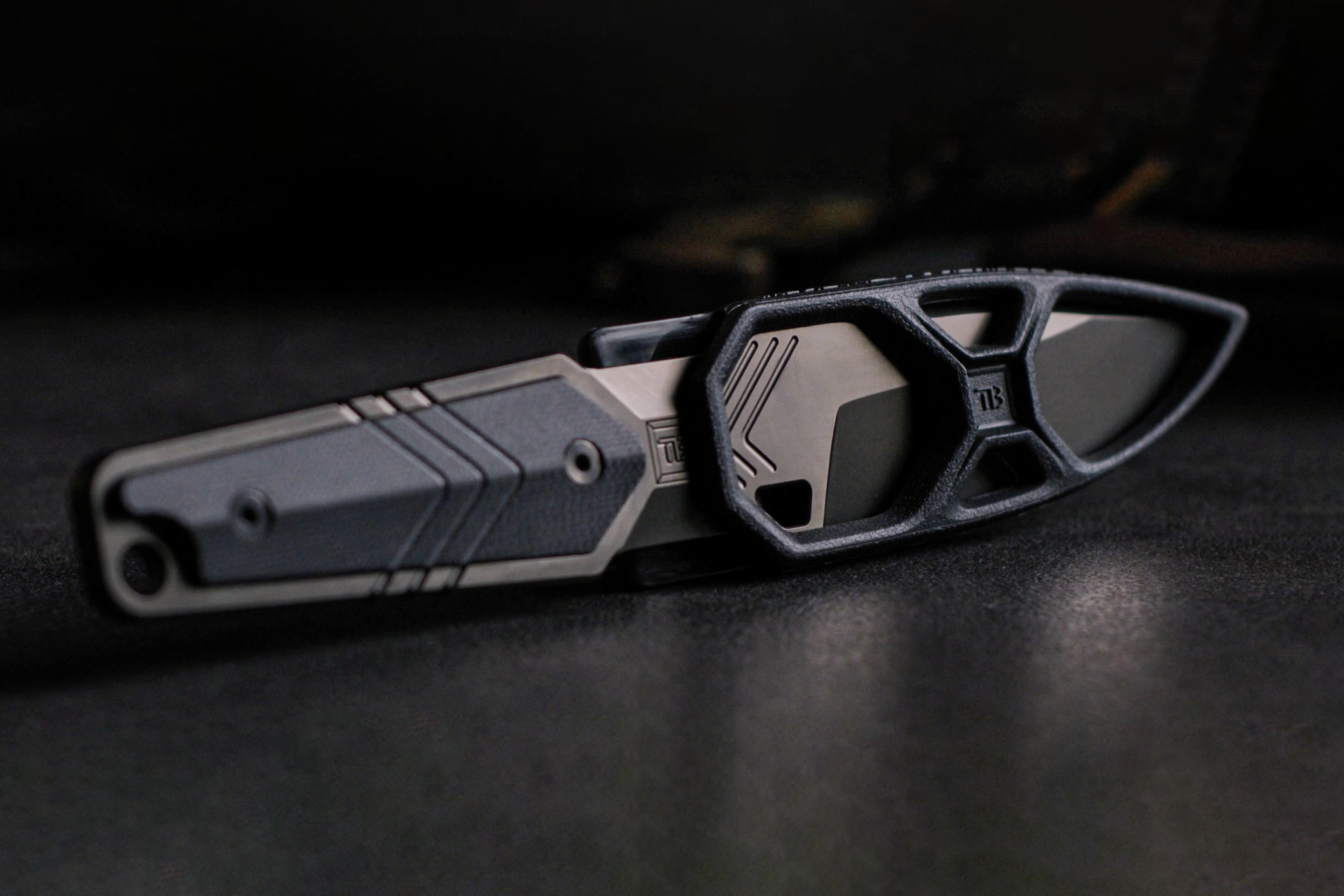
- Use a fixed-blade knife (like those from TB Outdoor, designed for this purpose) and strike the back of the blade with another piece of wood (the stick) to split the log or branch in two.
- The wood exposed in the center will be dry. Cut this heartwood into thin twigs or chips for your fireplace.
[Image of a bushcrafter using the stick-sticking technique]
Legend: The robustness of a knife is tested by the batoning technique, essential to access the dry wood inside.
How to prepare and secure the home?
Safety is the number one priority. An uncontrolled fire can quickly become a disaster.
Where should the fire be placed to prevent it from spreading?
Choose a location that minimizes environmental impact and the risk of fire:
- The ground: Opt for a mineral terrain (rocks, sand, packed earth) or an open area.
- The safety zone: Completely clear an area of at least 1.5 to 2 meters around the fire of all vegetation, leaves or dry grass.
- Insulation: If the ground is not ideal, build a ring of stones to contain the fire. This also protects against flying embers.
- Wind: Position your fire pit in a sheltered spot (behind a rock, a tree stump) to facilitate ignition and prevent sparks from flying.
Golden rule: Always check local regulations. Some areas strictly prohibit open fires.
What are the techniques for lighting a fire without a lighter?
Using a lighter or matches is simple, but a bushcrafter must master emergency methods that do not rely on gas or chemicals.
How to use a firesteel?
The firesteel is the most reliable and widely used tool in tactical and outdoor equipment. It works even when wet and offers thousands of uses. It produces sparks at very high temperatures (up to 3000°C).
- Positioning: Place the ferrocerium rod (the firestone) just in front of your pile of tinder (initial fuel).
- Angle: Hold the stem at an angle of approximately 45 degrees above the tinder.
- Scraping: Use the sharp edge of a knife (the back of the blade, if it is sharpened to a 90-degree angle) or the scraper provided. Scrape the stem with firm pressure, pulling the scraper towards you and keeping the stem still.
- Projection: The objective is to project a shower of sparks directly and in a concentrated manner onto the tinder to cause immediate ignition.
Pro tip: A quality knife with a well-crafted back edge is a major asset for effectively scraping a firesteel.
What is a featherstick and what is it used for?
The featherstick (literally "feather stick" or "hedgehog") is a wood preparation technique that increases the efficiency of kindling. It creates a stick covered with thin loops of wood:
- Increased surface area: These fine loops significantly increase the surface area in contact with the flame or spark.
- Ventilation: They allow better ventilation of the wood, essential for combustion to start.
- Transition: The featherstick serves as a bridge between the tinder (which ignites very quickly) and the thicker twigs.
The key is to use a very sharp knife and make thin, light cuts without ever completely detaching the chip from the stick.
What are the other ignition methods?
Although they require more practice, it is important to be aware of these alternatives:
- The magnifying glass: In bright sunlight, concentrate the sun's rays with a magnifying glass or lens (often found on a compass) on a specific point of tinder.
- Fire bow: The most demanding method. It uses friction to create heat and embers from wood dust. This is an exercise that requires suitable wood and impeccable technique.
How to extinguish a fire properly and safely?
A responsible bushcrafter leaves behind a clean and safe area. Extinguishing a fire is just as important as lighting one.
- Flooding: Pour large quantities of water onto the embers and ashes. Stir everything to ensure the water penetrates thoroughly.
- Test: Touch the ashes with the back of your hand. If they are hot, add water. The fire should be completely cool to the touch.
- Restore: Scatter the cold ashes. Put the stones back in their place. The goal is to leave the hearth in a state as close as possible to how you found it.
Never walk away from a fire until it is completely extinguished and cold.
Frequently Asked Questions (FAQ)
What is the best material for tinder?
Birch bark is often considered the best, as it contains natural oils that make it highly flammable, even when slightly damp. Cotton soaked in petroleum jelly is also remarkably effective and easy to carry.
Can I use the firesteel on the back of any knife?
No. To produce an optimal spark, the back of the blade must have a sharp edge, a 90-degree angle, and should not be rounded. Quality bushcraft and tactical knives (like the TB Outdoor range) are specifically designed with a sharp edge on the back of the blade for this purpose. A rounded back will simply slip.
What is the difference between a survival fire and a campfire?
A survival fire is generally small, intended for cooking and maintaining body heat. It is designed to be efficient and discreet. A campfire is larger, intended for conviviality and warmth for a group. In survival situations, the priority is maximum efficiency with a minimum of fuel.
Glossary of fire and bushcraft
- Amadou: A very fine, dry material used to capture the first spark and transform it into a flame.
- Batoning: A technique that involves splitting wood with a knife and a stick, in order to access the dry wood inside.
- Ferrocerium: Metallic alloy of firesteel which produces extremely hot sparks by friction.
- Featherstick: A wooden stick on which very fine, undetached shavings are created, increasing the ignition surface.