When November and December arrive, the damp and cold transform every foray into the forest into a real challenge. For bushcraft enthusiasts, this period tests the limits of their skills and equipment. Surviving independently means not just enduring, but thriving by using the resources nature provides. Mastering specific techniques then becomes crucial to ensuring safety and comfort. It's not about fighting the elements, but about working with them. Good preparation and the right techniques can transform a potentially hostile experience into a controlled and rewarding adventure.
What are the key points to remember?
- Mastering fire: Knowing how to find dry wood and light it despite the ambient humidity.
- Shelter construction: Building an isolated and waterproof shelter to protect oneself from wind and precipitation.
- Water management: Locate a source and purify it for safe hydration.
- Cutting tool: Use and maintain a sturdy knife, essential for winter tasks.
- Safety and equipment: Anticipate risks with first aid knowledge and appropriate equipment.
How to light a fire in a humid environment?
Fire is the heart of your campsite. It provides warmth, dries clothes, and purifies water. But when everything is damp, lighting a fire becomes a real skill. Good preparation is the key to success.
Which materials should be prioritized?
To start a fire, you need a fuel that ignites instantly. Look for very thin, dead twigs still clinging to the lower branches of trees. They are often drier than those on the ground. Birch bark is an exceptional natural fire starter because it contains oils that burn even when damp.
Why use the batoning technique?
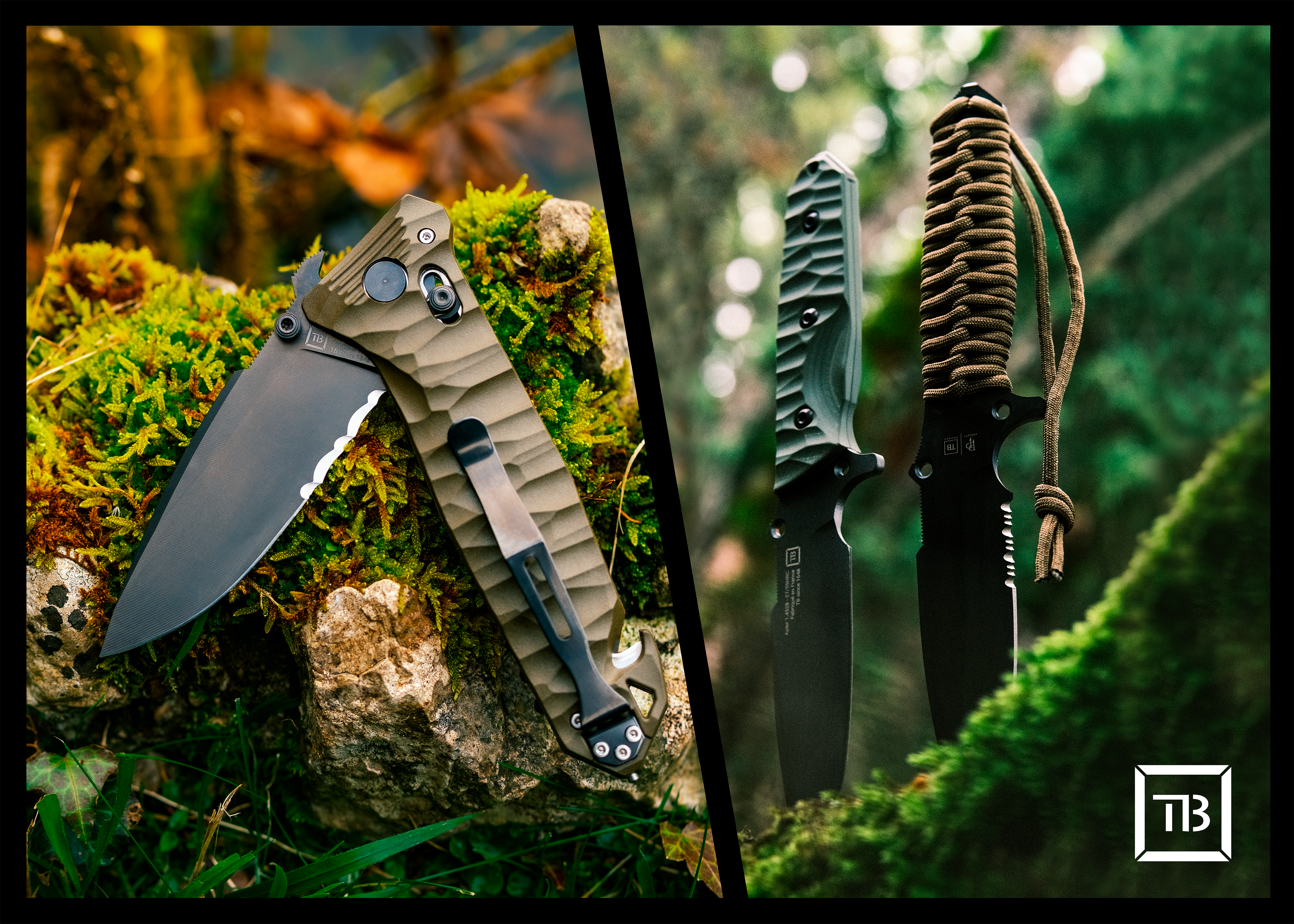
Wood found in the forest is often waterlogged on the surface. The heartwood, however, remains dry. Batoning allows access to this. This technique involves splitting a log lengthwise. To do this, the knife blade is placed on the cut end of the log, and the back of the blade is struck with another piece of wood. This operation requires a fixed-blade, full-tang knife, where the blade and handle are a single piece of steel. A tool like the Maraudeur® is designed to withstand these intense impacts without fail.
How to use a firesteel effectively?
The firesteel is the most reliable tool. It produces sparks at over 3,000°C and works in all weather conditions, even wet. To use it, find a sheltered spot, away from the wind. Place the stem of the firesteel just in front of your small pile of dry kindling. Angle it at a 45-degree angle and scrape firmly with the scraper or the unsharpened back of your blade. Sparks will fly and ignite your kindling.
How to build an effective shelter against the cold?
Your shelter is your first line of defense against hypothermia. It must insulate you from ground moisture, rain, and icy winds, while remaining sufficiently ventilated to prevent condensation.
What are the criteria for a good shelter?
The size should be just right to shelter you and your gear. A space that's too large will be harder to heat with your body heat alone. Waterproofing is non-negotiable. Ventilation, often overlooked, is nevertheless vital for wicking away the moisture you exhale.
How to ensure good insulation?
Start with the structure. A tripod of sturdy branches, held together with paracord, forms a stable base. For the roof and walls, pile up a thick layer of dead leaves and twigs. The thicker the layer, the better the insulation. The ground is just as important. Create a "mattress" of twigs and leaves at least 20 cm thick to protect you from the cold and dampness of the ground. For a quick and reliable solution, atarp remains a versatile and completely waterproof option.
How to purify water to stay hydrated?
One can survive for several weeks without food, but only two or three days without water. Hydration is essential, even in winter. Water found in a stream or pond should always be considered unsafe to drink.
What are some simple purification methods?
The safest and oldest method is boiling. Bring the water to a rolling boil for at least ten minutes to eliminate all harmful microorganisms. Another modern and effective solution is a filtered water bottle. It allows you to drink directly from a freshwater source while removing bacteria, protozoa, and microplastics. It's easy to use: fill the bottle, screw on the filter, and drink. It's an extra layer of protection to keep in your bag.
What is the role of the cutting tool and how do you maintain it?
The knife is an extension of your hand in the forest. It's used for everything: preparing firewood, building shelters, cutting food. Its reliability is therefore paramount, especially in the demanding conditions of winter.
Why choose a robust fixed blade?
Winter tasks are tough. Batoning, cutting frozen wood, or making notches require great strength. A fixed-blade "full tang" knife is inherently stronger than any folding model. Its one-piece construction allows it to withstand shocks and twisting without risk of breakage.
How to properly sharpen your blade?
A sharp knife is a safer knife. A sharp blade cuts effortlessly, significantly reducing the risk of slippage and injury. For versatile bushcraft use, a sharpening angle between 20 and 25 degrees offers an excellent balance between sharpness and edge retention.
How to protect your knife from corrosion?
Humidity is the enemy of carbon steels, renowned for their strength and ease of sharpening. To prevent rust, a simple routine is essential. After each use, clean the blade with a little water and dry it immediately and thoroughly. Then apply a thin coat of protective oil (mineral or vegetable oil) before storing it in its sheath.
How important are safety and equipment?
The best survival technique is prevention. Good preparation includes knowing life-saving techniques and wearing clothing appropriate for the weather conditions.
What first aid procedures should you know?
A cut or loss of consciousness can quickly become critical in an isolated environment. Knowing the basics is essential:
- In case of bleeding: Apply direct and firm pressure to the wound with a clean cloth. Lay the victim down to prevent fainting and maintain pressure.
- In case of loss of consciousness (if the victim is breathing): Loosen their clothing, gently roll them onto their side in the recovery position (PLS) to open the airway, and alert emergency services.
What equipment is essential?
Your feet are your primary means of transport. Waterproof and breathable hiking boots are essential. Remember to pack spare wool socks. A compact first-aid kit should always be in your pack. At a minimum, it should contain plasters, sterile compresses, bandages, and an antiseptic. Finally, a survival blanket weighs next to nothing but can save your life in case of hypothermia by retaining up to 90% of your body heat.
Frequently Asked Questions
What is the best wood for a fire in damp weather?
Standing dead wood is ideal because it's not in contact with damp soil. Birch is particularly prized for its bark, which is flammable even when wet. Using the sticking technique, you can access the dry heartwood of any branch.
Is a tarp sufficient as shelter in very cold weather?
A tarp offers excellent protection against rain, snow, and wind, but it doesn't provide thermal insulation. To cope with extreme cold, it must be combined with other elements: a good location (sheltered from the wind), an insulated ground layer using branches or a sleeping mat, and potentially a heat reflector near the fire.
Can I drink water from melted snow without purifying it?
No, it is strongly advised against drinking untreated melted snow water. Snow can contain bacteria, air pollutants, and microorganisms. It is essential to boil it for at least 10 minutes or filter it using a suitable water bottle.
Is a folding knife sufficient for winter bushcraft?
For light tasks, a sturdy folding knife can do the job. However, for heavy-duty work like batoning, essential in winter for obtaining dry wood, a fixed-blade 'Full Tang' knife is indispensable. Its robustness guarantees safety and efficiency.