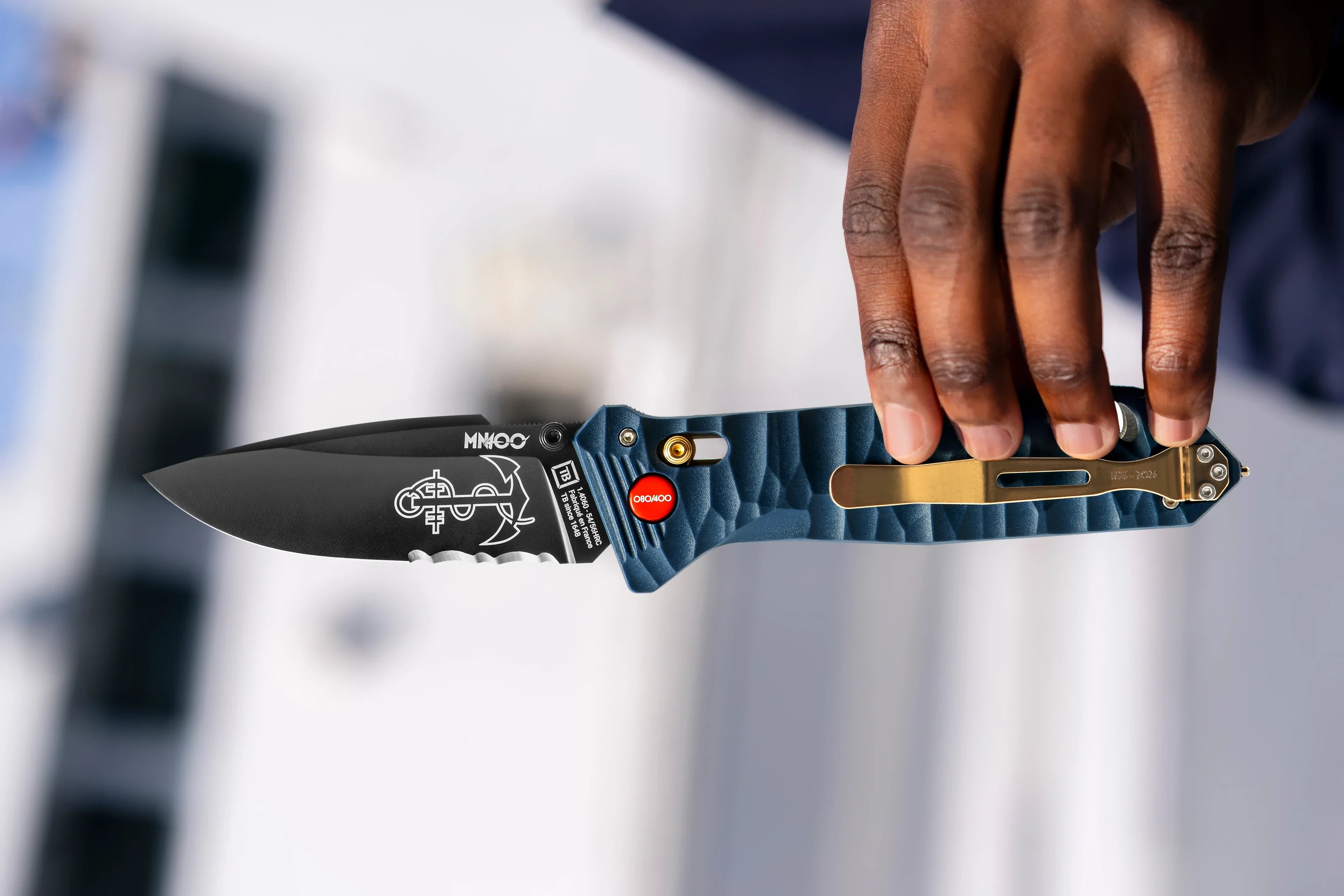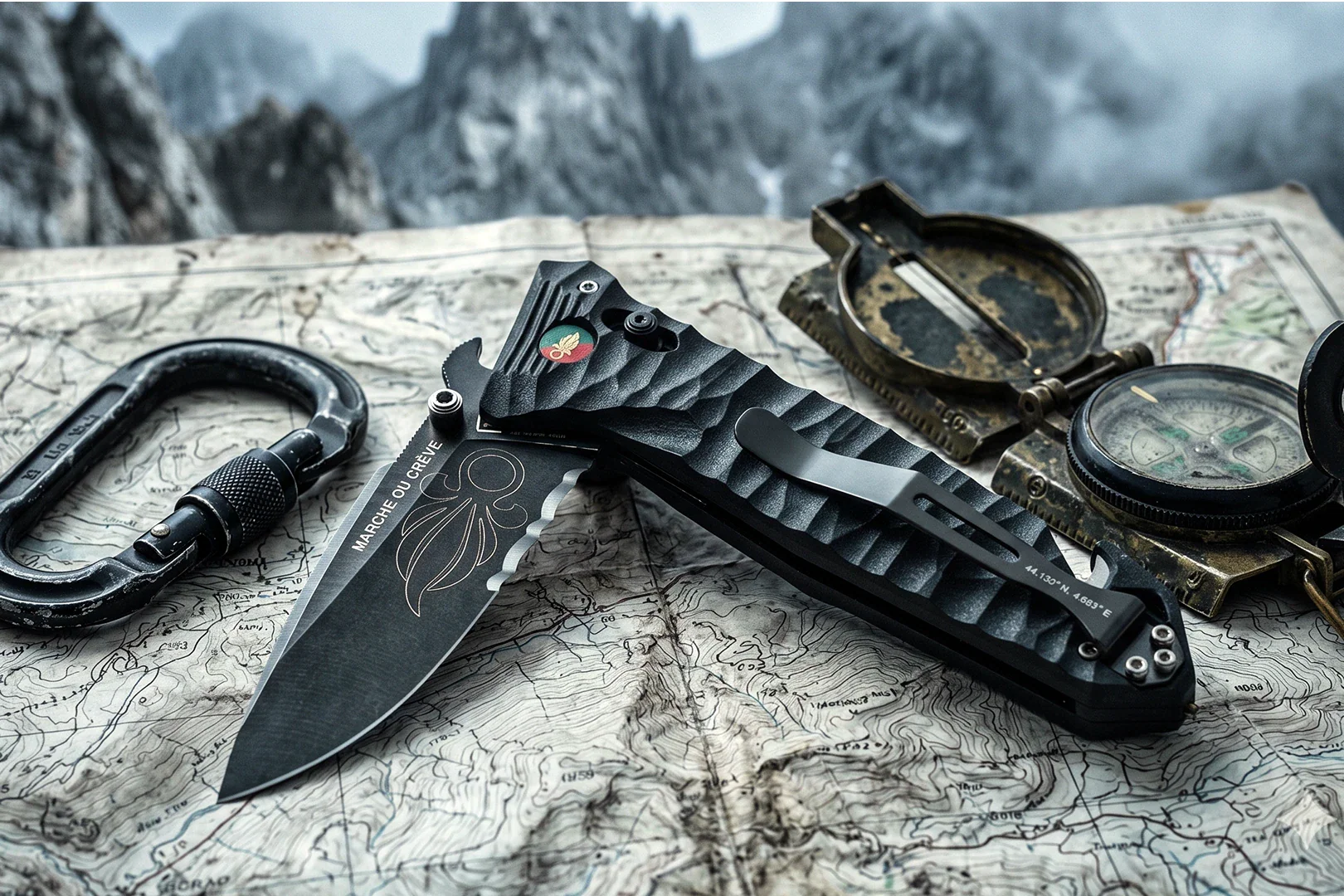
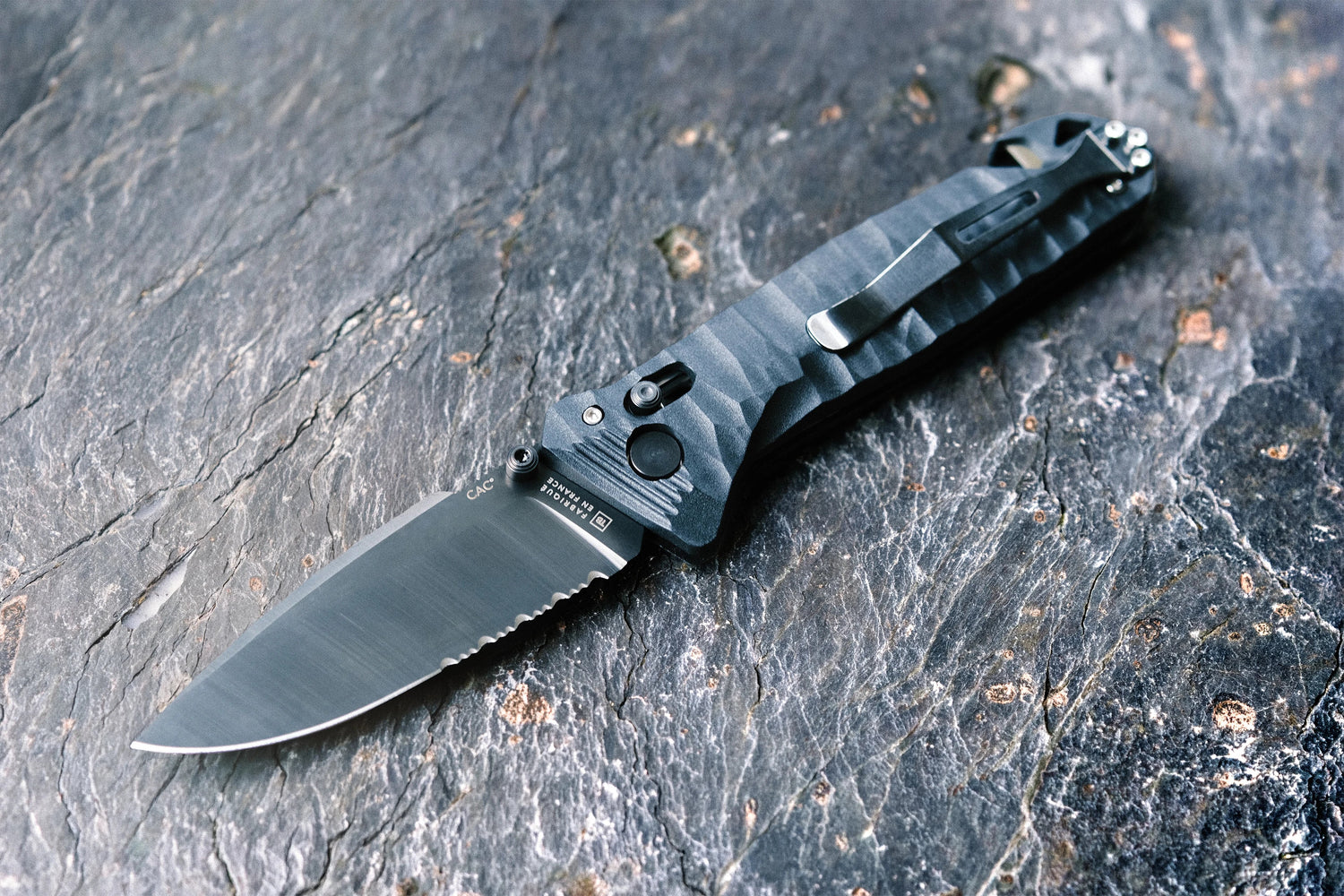
The C.A.C. (Combat Assistance Campagne) uses two distinct types of screws on its handle, each with a different function and disassembly method. Confusing the two is the most common cause of damage during maintenance or handle plate replacement.
The two types of C.A.C. screws
Black screws
The black screws provide the fastening that must be released first during disassembly. They can be unscrewed without any particular precaution and without risk to the assembly.
Stainless steel screws
The stainless steel screws secure the handle scales (handle plates) to the knife's structure. They are Teflon-coated, which creates intentionally high friction to ensure their long-term hold and prevent spontaneous loosening under intensive use (field, military constraints). They are not designed for frequent disassembly.
Disassembly procedure for changing handle scales
- Unscrew the black screws located on the opposite side. This step releases the mechanical tension of the assembly and must always be performed before touching the stainless steel screws.
- Unscrew the stainless steel screws. Unlike the black screws, they must be handled with small, intermittent movements: a slight rotational movement, a pause, then resume. This procedure preserves the Teflon and the thread.
Mistake not to make
Unscrewing a stainless steel screw in a continuous rotational movement, as one would do for a black screw. Teflon is not designed to absorb continuous rotation under friction: this action prematurely wears out the coating and can damage the thread, making it difficult to properly retighten the screws afterward.
Why this design difference
On a knife designed for field and military use, the fastening of the handle scales cannot rely on a simple classic mechanical tightening, which is susceptible to loosening due to vibration or repeated shocks. The Teflon treatment of the stainless steel screws addresses this constraint by imposing intentionally higher friction than on a standard screw — at the cost of more delicate handling during maintenance operations.