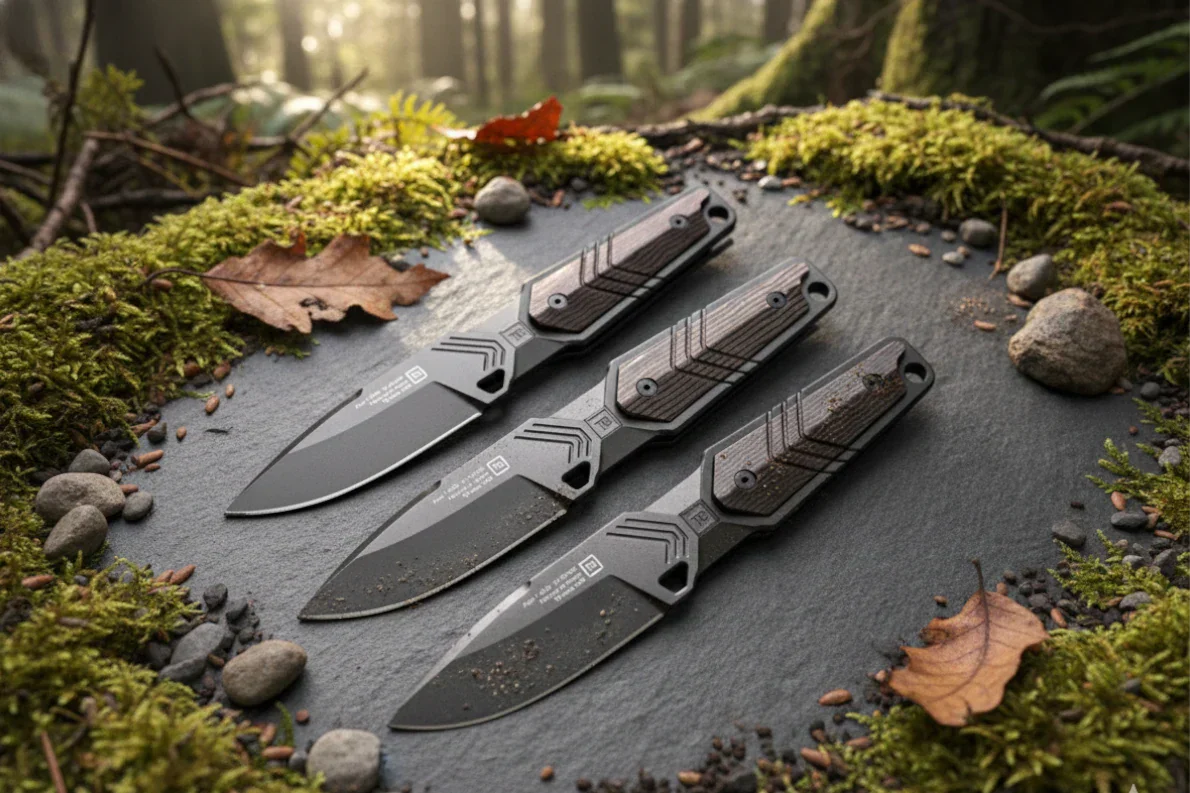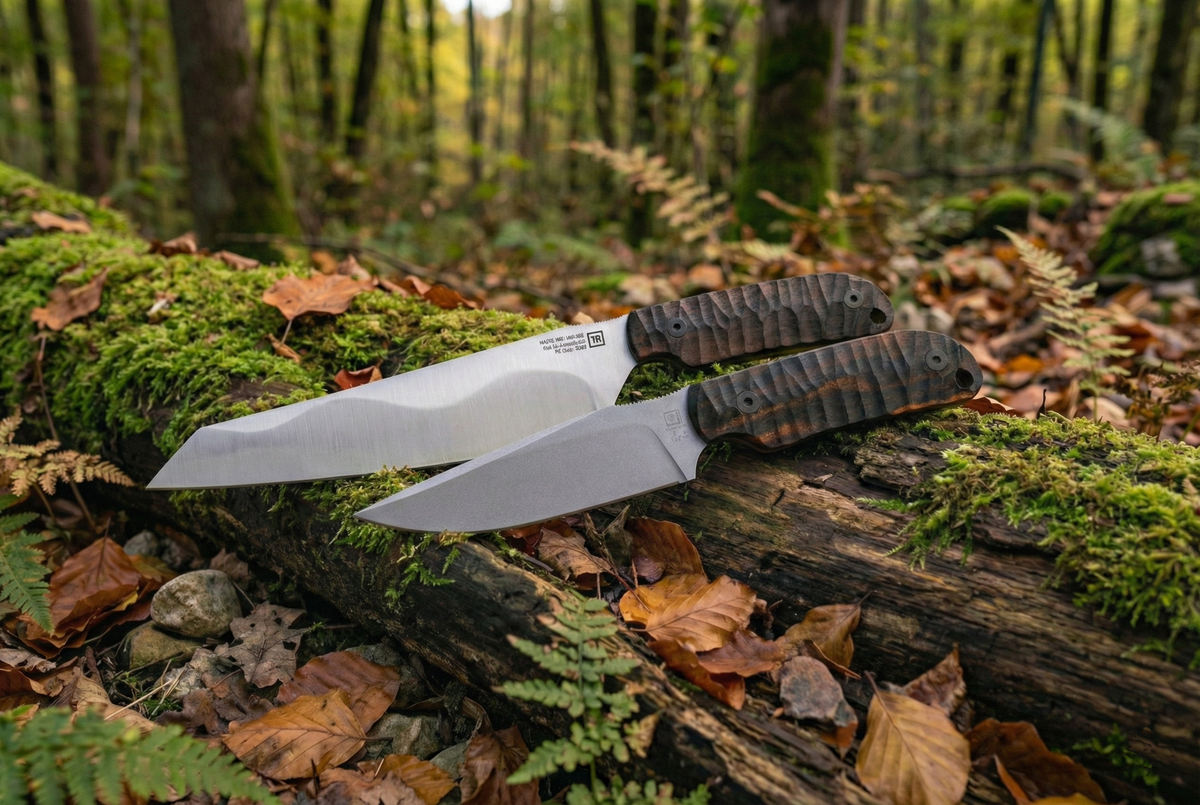
While carbon steel has been lauded for its sharpness and ability to produce sparks, there's another form of carbon that's revolutionizing outdoor gear, but this time, it's found in the handle. Forget wood that warps in the humidity or basic plastic that slips. Today, we're talking about carbon fiber. Long reserved for aerospace and supercars, this material is now making its way onto the handles of high-end survival knives. Is it just for looks, or does it offer a real advantage in the field?
Key takeaways:
- A High-Tech composition: A composite material made from very fine fibers and woven carbon atoms, bonded by a high-performance resin.
- Absolute lightness: A density of less than 2 g/cm³ which allows the equipment to be considerably lightened without sacrificing its structural strength.
- Dimensional stability: Unlike wood, this material is indifferent to humidity and extreme climatic variations.
- Unique aesthetics: Shimmering reflections and possibilities for inclusions (Brass/Copper) for an incomparable tactical design.
What is carbon fiber in cutlery?
Here, we are talking about a composite material. It is made from very fine fibers and carbon atoms, often woven together and bonded with a resin (such as high-performance epoxy). This mixture creates a structure that offers exceptional mechanical strength while maintaining a very low density.
Is lightness compatible with sturdiness?
This is the clincher. Whether hiking or in a survival situation, every gram counts. Carbon fiber has a density of less than 2 g/cm³, which allows the knife to be significantly lighter without sacrificing its structural strength. This makes it possible to shift the knife's center of gravity or simply to be unobtrusive in your pocket or on your belt until you need it.
Why do we talk about unwavering stability?
Wood is noble, but it's "alive": it can swell in the rain or crack during sudden temperature changes. Carbon fiber, on the other hand, offers perfect dimensional stability. It's unaffected by extreme weather conditions (extreme cold or intense heat) and is unaffected by humidity. For a knife intended to remain in a survival kit or bug-out bag for months, this ensures you'll find a tool in perfect condition, with no play in the handle or deformation.
Frequently Asked Questions (FAQ)
Does carbon offer an aesthetic advantage?
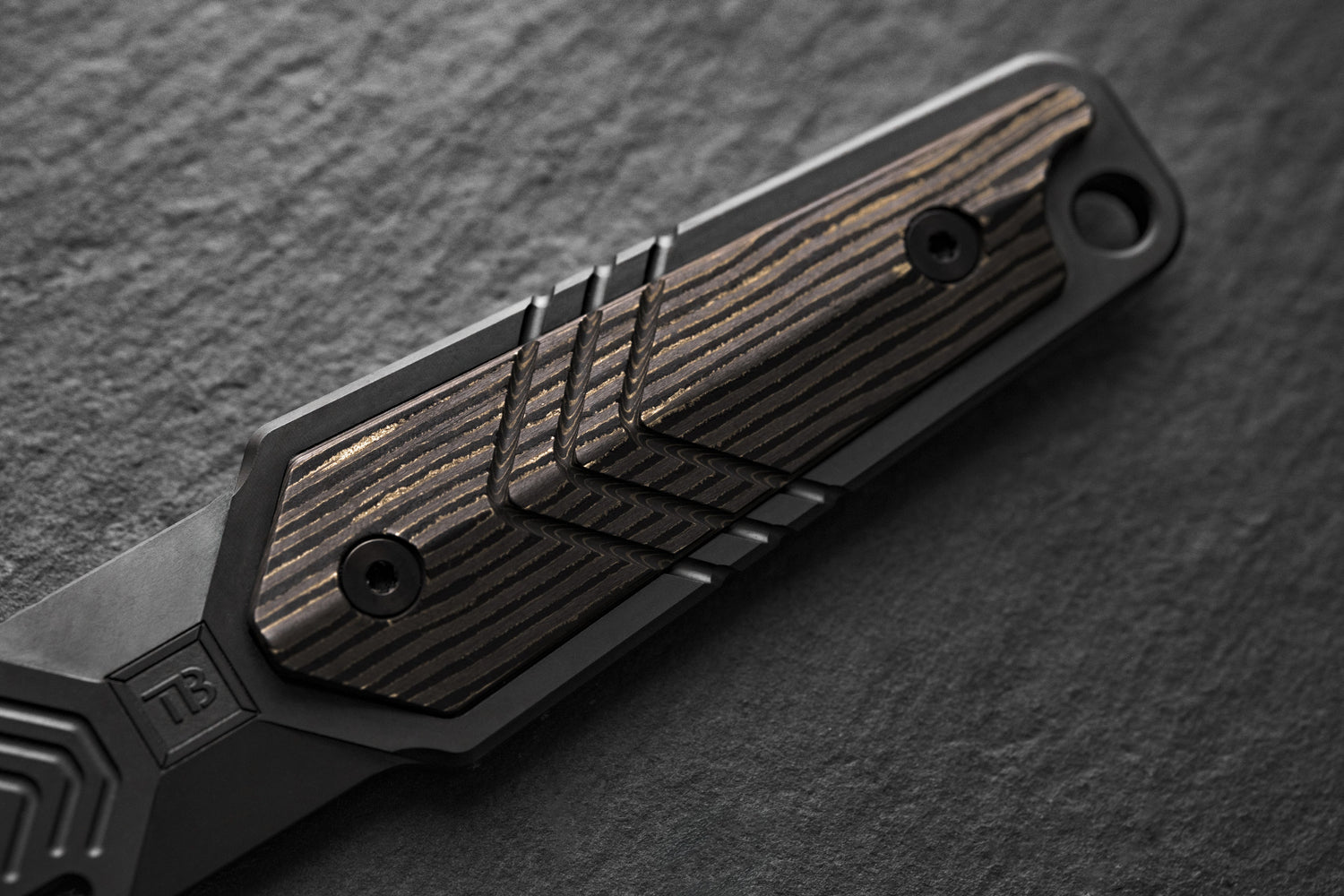
Beyond performance, carbon fiber offers a unique style. Unlike uniform materials, the woven fibers create shimmering reflections that change with the light. Some manufacturers, like TB Outdoor with their Impact 127 model, even incorporate brass (Gold) or copper (Copper) inclusions into the resin, making each handle visually unique thanks to the deep patterns that run through the entire thickness of the material.
What are some concrete examples from the field?
The use of carbon fiber is found in technical and robust models. The Impact 127 Carbon (TB Outdoor) exemplifies this philosophy: designed as a universal backup knife, its carbon fiber scales guarantee optimal lightness. The Maraudeur also offers this option, providing a comfortable volume and maximum grip while lightening this full-tang knife built for heavy-duty work.
Conclusion: Modernity or Tradition?
Choosing a carbon fiber handle means opting for pure performance. It's the choice of those who want technical, durable, and ultra-light equipment. While wood tells a story and develops a patina, carbon is designed to last forever without shifting an inch.