Most cutlery brands, even renowned ones, outsource part of their production – cutting to one, heat treatment to another, assembly to a third. TB-Outdoor does not operate this way. Since 1998, the entire manufacturing process – from the raw steel coil to the packaged knife – takes place in a single location in Thiers, via the group's industrial subsidiary: Générale de Découpage (GDD). Here's what this means, step by step.
GDD: Tarrerias Bonjean's Industrial Arm
Générale de Découpage is managed by Stéphane Guillaumont, who joined the family business in the late 1980s. In the 2000s, GDD obtained the EPV – Entreprise du Patrimoine Vivant (Living Heritage Company) label, a recognition from the French State reserved for companies whose artisanal and industrial expertise is deemed excellent. This is a rare distinction in French cutlery, testifying to a level of technical mastery validated by an external assessment.
In 2007, Tarrerias Bonjean became the first French cutlery company certified ISO 9001 version 2000, formalizing a quality management system across the entire production process.
Manufacturing Steps, from Coil to Knife
1. Cutting
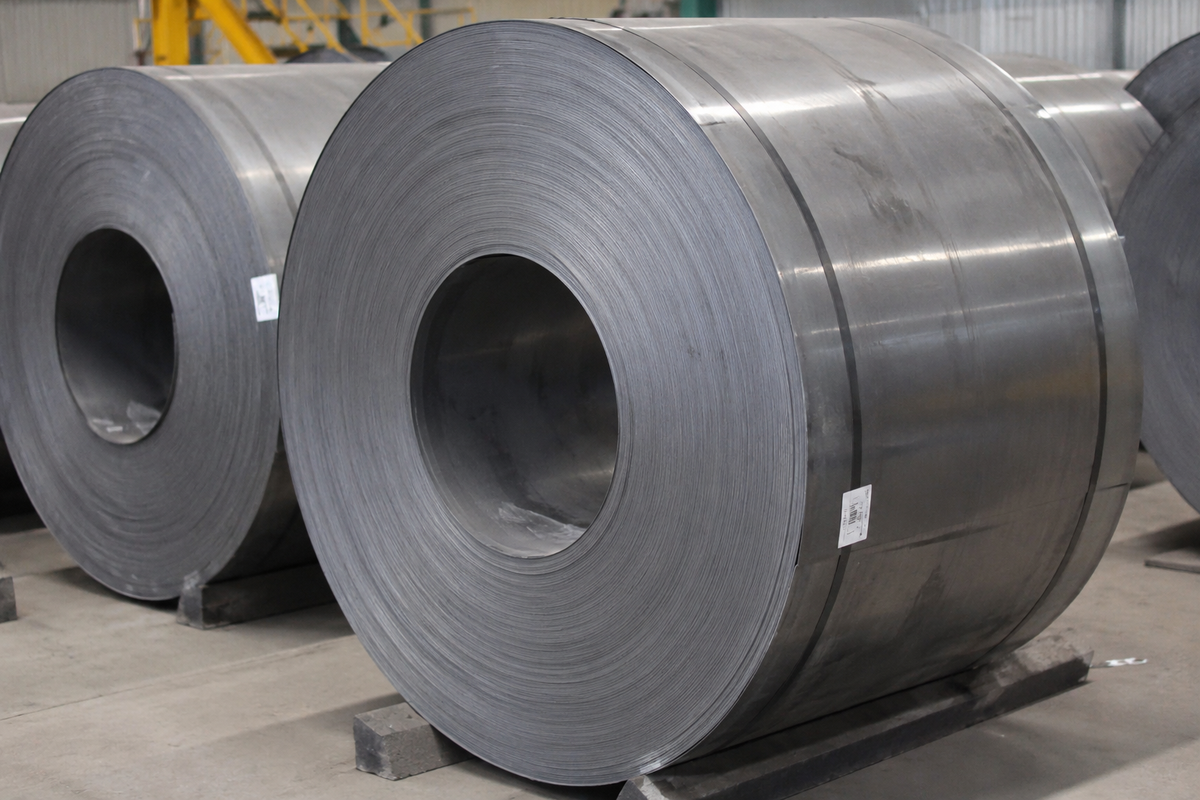
It all starts with a coil of raw steel. The blades are cut to their basic shape using precision cutting processes, which already determine the general geometry of the future blade.
2. Stamping
Stamping gives the blade its final profile – thickness, back shape, start of the bevel. This is a mechanical step that requires precise calibration of the tools to ensure perfect consistency from one blade to another.
3. Heat Treatment
This step determines the final mechanical properties of the steel. Heating, quenching, and tempering at precise temperatures and durations transform the crystalline structure of the steel to achieve the desired hardness – 55 HRC for Nitrox®, more for MOX®. Improperly controlled heat treatment can ruin an otherwise excellent steel: this is a step where workshop experience is as important as the equipment.
4. Grinding
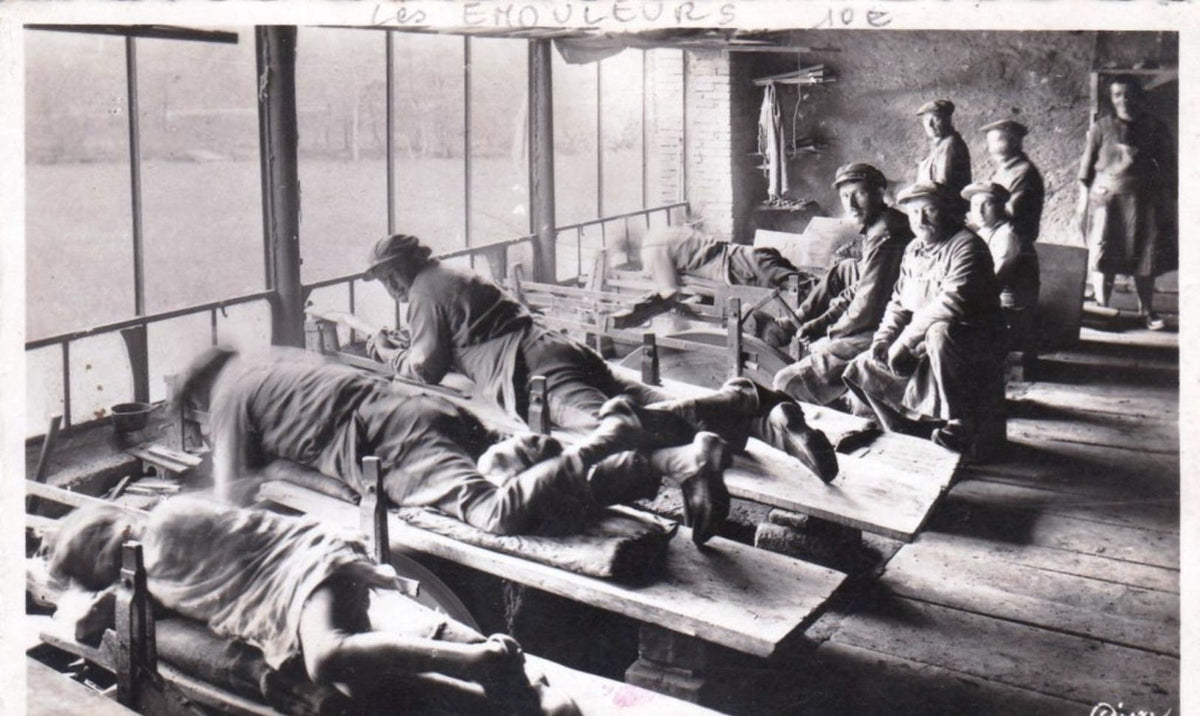
Grinding is the beveling of the blade – the operation that gives the tool its potential sharpness. Historically, it's the most emblematic gesture of Thiers cutlery: until the early 20th century, master grinders performed this operation by hand, lying on planks, rubbing the blade on large stone grinding wheels driven by the motive power of the Durolle river. Today, precision grinding technologies have taken over, but the principle remains identical: to give the blade a regular and optimal bevel geometry.
5. Sharpening
Final sharpening gives the blade its factory edge, at the angle specified according to the model – 17° per side for the C.A.C.®, for example.
6. Assembly
Assembly of the mechanism for folding knives (pivot, spring, locking system), attachment of handle scales, installation of integrated accessories (glass breaker, strap cutter, belt clip).
7. Quality Control
Each knife is checked before shipment: mechanism play, blade alignment, finish quality. This step, combined with the ISO 9001 quality system, guarantees the consistency of one knife to another – a particularly critical issue for a supplier to the French army, where reproducibility takes precedence over a unique piece.
Why complete vertical integration is rare
Mastering all these steps under one roof requires an investment in equipment and skills that most cutlers – even artisanal ones – cannot justify. Many outsource heat treatment or cutting to focus on assembly and finishing. TB-Outdoor made the opposite choice in 1998: to maintain control of each step to guarantee traceability and consistent quality, two non-negotiable requirements for a supplier to the national defense.
This integration was accompanied by a physical growth of the industrial facility: relocation in 2016 to a new 1,300 m² office and 4,700 m² storage site in La Monnerie-le-Montel, followed by an extension in 2022 with a new warehouse equipped with solar panels.
Frequently Asked Questions
What is the EPV (Entreprise du Patrimoine Vivant) label?
It is a distinction awarded by the French State to companies whose excellence in artisanal and industrial know-how is recognized.
Are all TB-Outdoor knives manufactured in Thiers?
Yes. The entire process, from steel cutting to final packaging, is carried out in the group's workshops in Auvergne (Puy-de-Dôme).
Can we visit the GDD workshops?
The workshops are not open to the public for free visits, but TB-Outdoor is present at several professional and general public trade fairs each year. Consult the trade fairs page for upcoming dates.
What is the difference between historical artisanal grinding and current grinding?
The principle remains the same – to give the blade its bevel geometry – but manual execution on a stone grinding wheel driven by the river has been replaced by precision grinding equipment, which is more consistent and faster, without losing the demand for finish that characterizes Thiers cutlery.
→ Discover the complete history of Tarrerias Bonjean | → View all knives made in Thiers