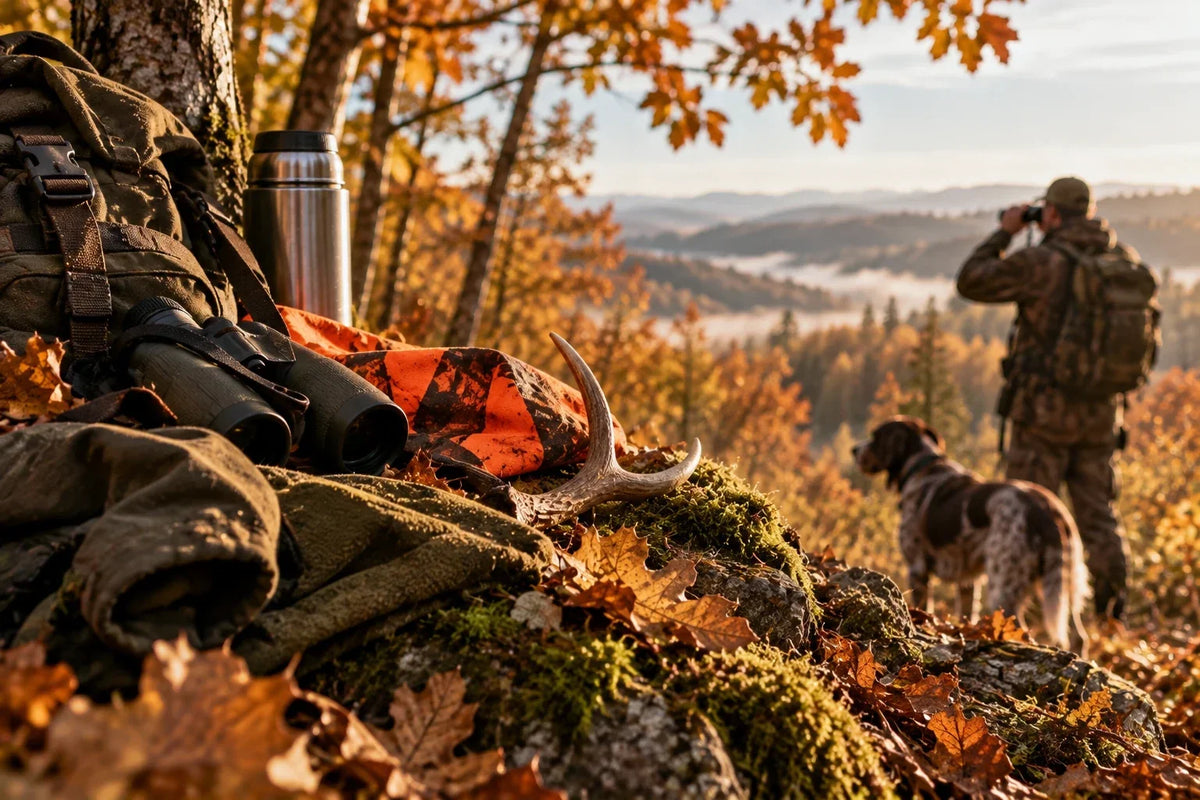
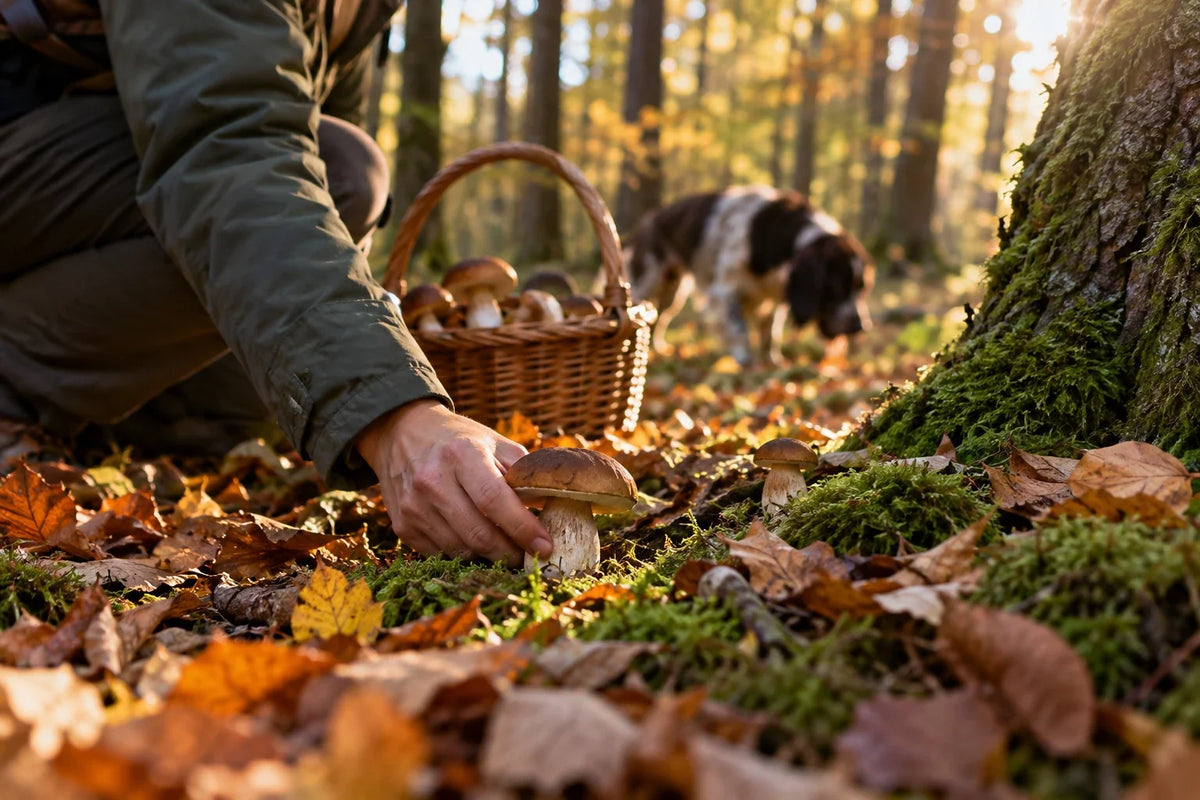
October marks the peak of the foraging season in the forest. Unlike dedicated mushroom knives—with their integrated brushes and specialized curved blades—TB-Outdoor does not offer a model specifically for this purpose. However, several knives in the range are very well-suited for a foraging trip, provided you choose based on the right criteria.
What you need for a foraging trip, in practical terms
Mushroom foraging does not require a tactical tool or a massive survival knife. Three criteria take priority:
- A short, precise blade — to cut the stem flush with the ground without damaging the mycelium, a task that requires precision more than force.
- Reduced weight and good portability — a knife that you carry for several hours of walking in the forest, often in a pocket rather than a belt sheath.
- A secure grip even with wet hands — the autumn forest is systematically damp (dew, rain, undergrowth).
Suitable TB-Outdoor models
Bivouac® — robust simplicity
At €27, the Bivouac® is the most versatile knife in the range for a light forest trip. Compact, folding, and no-frills — it gets the job done without cluttering your bag.
Unboxer® — the most discreet
Extremely slim and lightweight, the Unboxer® (€55 to €65) slips into a pocket unnoticed — a real asset for a trip where you carry little gear.
C.A.C.® — for those who want one knife for everything
If you are looking for a single knife that covers foraging as well as hiking or occasional bushcraft, the C.A.C.® (from €89) remains relevant — it is a bit more imposing, but much more versatile.
Good to know before you leave
Regulations on carrying knives in the forest
A useful reminder: in France, carrying a knife with a blade longer than 80 mm is regulated and requires a legitimate reason (leisure activity, foraging in this case). A Bivouac® or an Unboxer®, with their modest dimensions, naturally fit within this leisure use framework.
Best practices for foraging
- Cut the mushroom flush with the ground rather than pulling it out, to preserve the mycelium.
- Clean them roughly on the spot rather than at home, to leave earthy residue and parasites in the forest.
- Rinse and dry the knife upon returning — damp soil accelerates corrosion if left in contact with the blade for several days.
Frequently asked questions
Does TB-Outdoor offer a mushroom knife with an integrated brush?
No, it is not a product in our current range. Compact models like the Bivouac® or the Unboxer® remain good general-purpose alternatives.
Is a tactical knife like the C.A.C.® overkill for foraging mushrooms?
Not overkill, but not optimal either — its versatility is a plus if you intend to use it for other outdoor activities on the same trip.
Do you need a fixed-blade knife for foraging?
No, a compact folding knife is more than enough for this light and occasional cutting action.