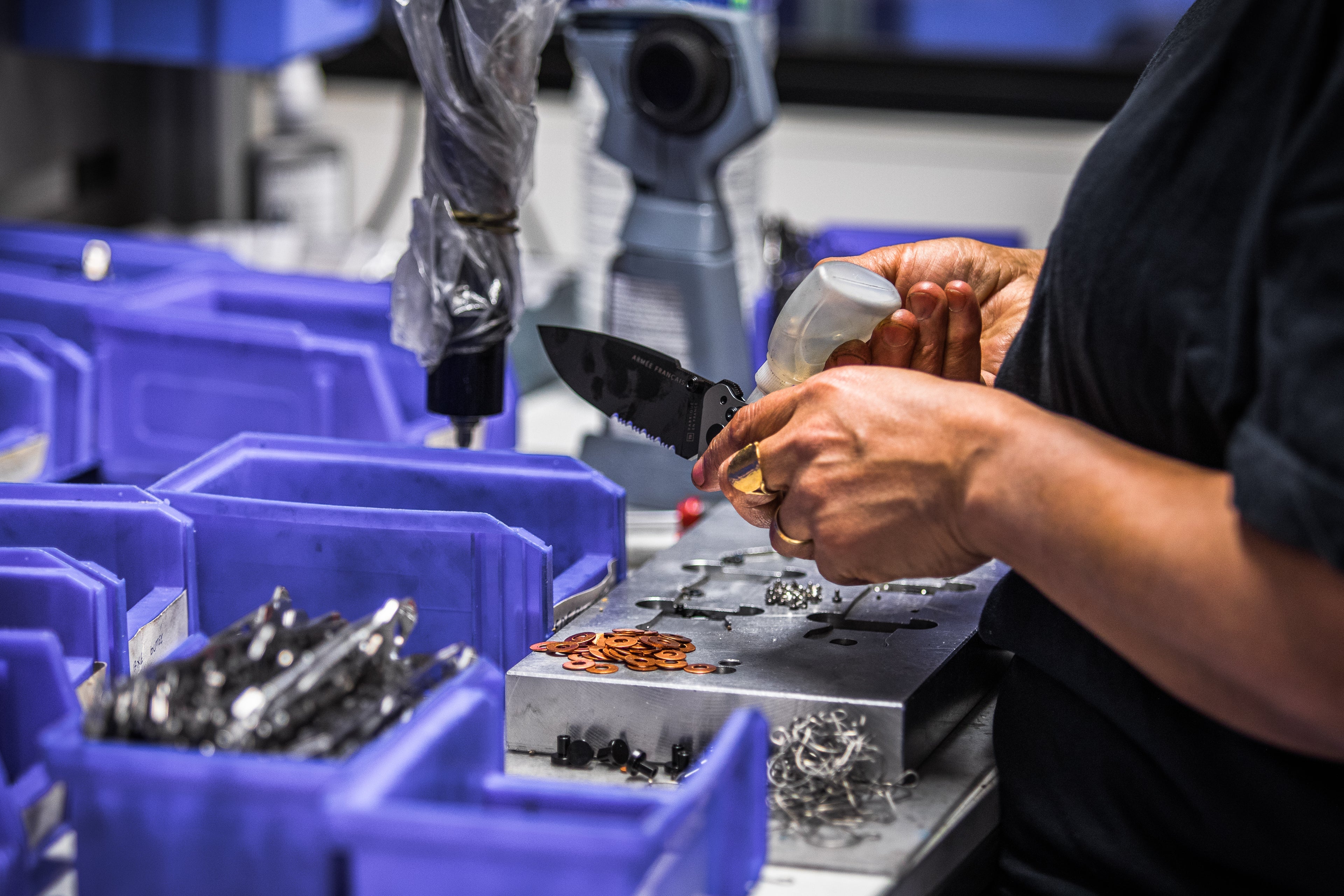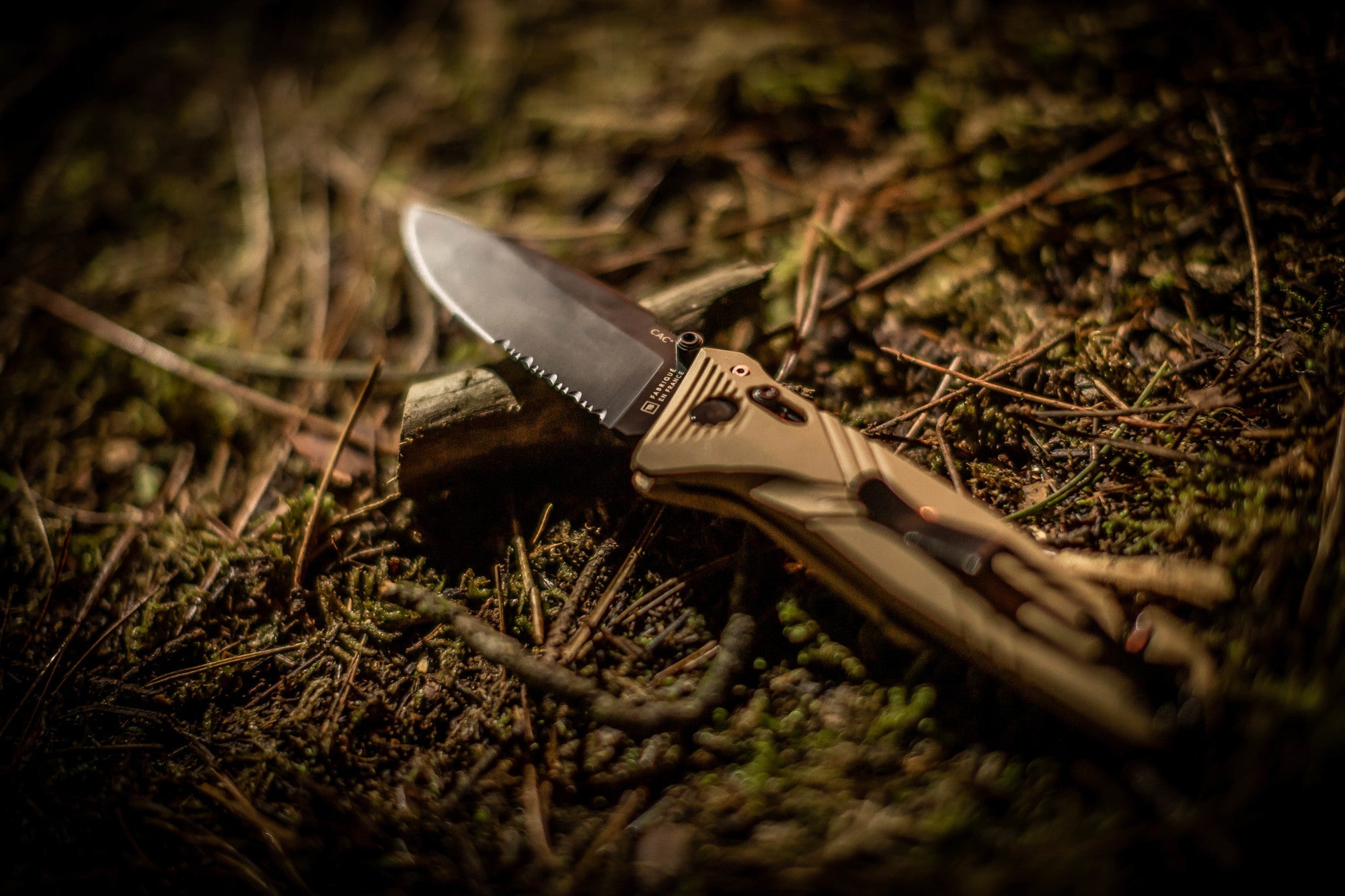
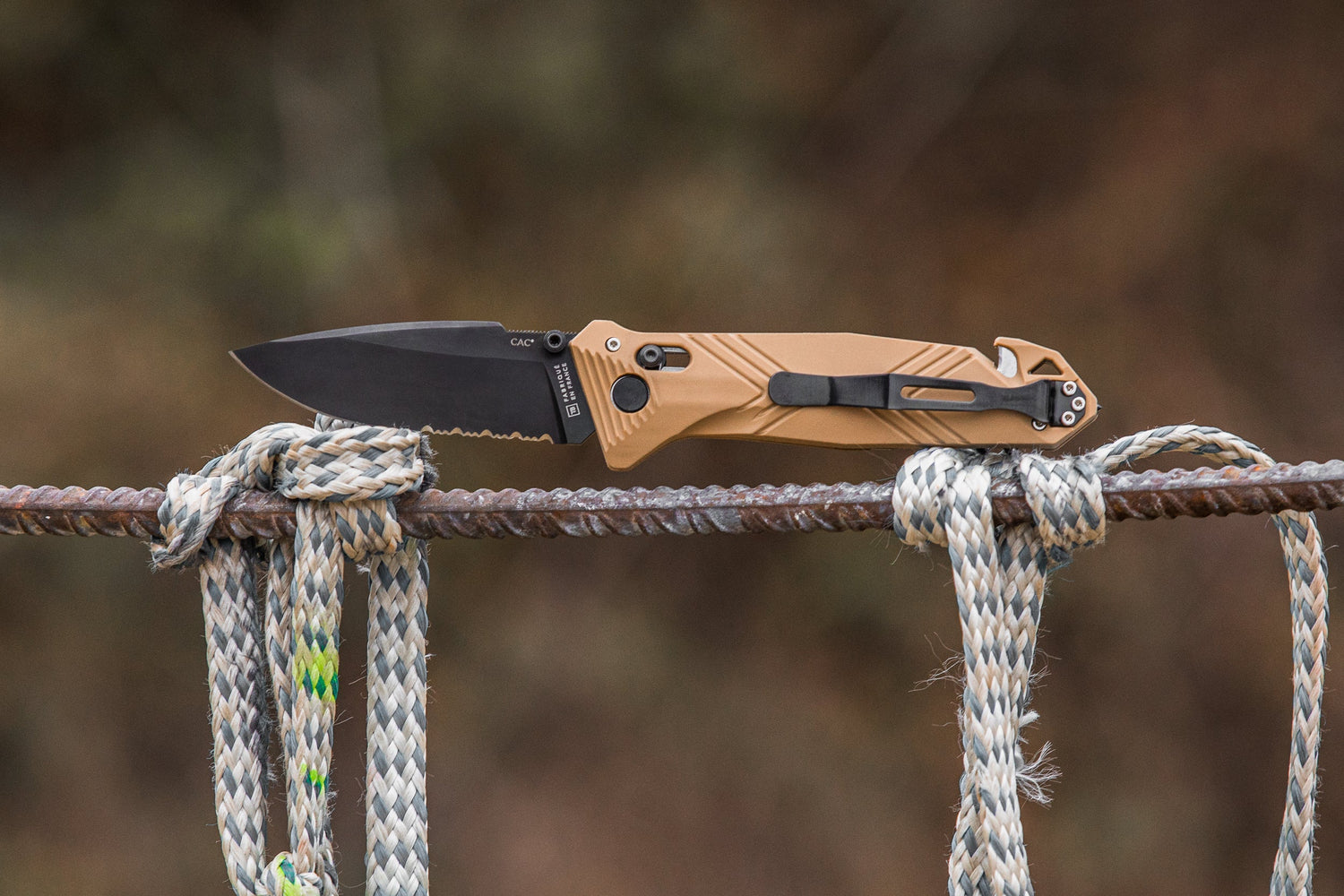
When the French army chooses a knife, it doesn't choose a steel out of habit or convention. It imposes precise technical requirements: corrosion resistance in marine environments, hardness retention in extreme conditions, ease of sharpening in the field, and long-term mechanical reliability. Nitrox® steel — used by TB-Outdoor for all its military knives since the first issuances in 1996 — consistently meets these requirements. Here's why.
What is Nitrox® steel?
Nitrox® is a martensitic stainless steel doped with nitrogen. It is not a standard steel enhanced by surface treatment: nitrogen is incorporated directly into the chemical composition of the alloy, which modifies its intrinsic properties.
Indicative chemical composition of Nitrox®:
- Chromium (Cr): 16% — ensures corrosion resistance (the "stainless" threshold is 10.5%, so Nitrox® is well above this)
- Carbon (C): 0.35% — a moderate level, which allows for a good compromise between hardness and ease of sharpening
- Nitrogen (N): specific addition — this is the differentiating element that improves resistance to localized corrosion (pitting, crevice) and hardness without increasing brittleness
Result after heat treatment: a hardness of 55 HRC (± 1), sharpened in the factory to an angle of 17° per side.
Why nitrogen doping changes everything
In conventional stainless steels, corrosion resistance is provided by the chromium oxide layer that forms on the surface. But this layer can be weakened by concentrated chemical attacks — marine salt, acidic perspiration, cleaning products — which create localized attacks, called "pitting," particularly difficult to stop once initiated.
Nitrogen modifies this mechanism in two ways:
- It strengthens the passive layer by partially substituting carbon in the crystalline structure, making the chromium oxide layer denser and more chemically stable.
- It improves resistance to pitting (crevice corrosion), which is the most dangerous type of corrosion for a tool exposed to spray, sweat, and temperature variations.
For a military knife intended for maritime operations — French Navy, HALO/HAHO parachute commandos over coastal areas, marine riflemen — this property is critical. Steel that pits in salt can see its mechanical resistance silently and brutally compromised at the worst moment.
HRC 55: the right compromise for a military knife
The hardness of a steel is measured on the Rockwell C scale (HRC). High hardness means better edge retention, but also a blade that is more fragile to impacts and harder to sharpen in the field. Too low a hardness results in a blade that is easy to sharpen but dulls quickly.
The HRC 55 of Nitrox® is a deliberately central position:
- Hard enough to maintain its edge in intensive use (cutting ropes, vegetation, packaging materials, cables)
- Tough enough to withstand torsional stresses and impacts without shattering or deforming
- Very easy to sharpen — with a folding diamond sharpener, a legionnaire or a sailor can restore the edge of the C.A.C.® in a few minutes, without specific tools
For reference: a high-end Japanese kitchen knife is around 61-64 HRC — excellent edge, but brittle and difficult to sharpen without adapted equipment. A generic survival knife can go down to 50-52 HRC — easy to sharpen, but loses its edge quickly. HRC 55 is exactly where a versatile military tool should be.
Behavior of Nitrox® in military use conditions
Marine and saline environment
This is the most aggressive environment for steel. Seawater contains approximately 35 grams of salt per liter, with a slightly alkaline pH and a chloride content that attacks the passive layers of conventional stainless steels. In these conditions, Nitrox® maintains its structural integrity much better than a steel with a lower chromium content. TB-Outdoor's recommendation remains to apply a film of clear oil to metal parts after prolonged exposure — but Nitrox®'s tolerance to salt is significantly higher than that of standard 420 steel.
Cold and humid environment
Alternating thermal stresses (freeze/thaw, immersion in icy water/dry air) weaken high-hardness steels through microcracking. At 55 HRC, Nitrox® retains sufficient ductility to absorb these cycles without initiating cracks. The geometry of the C.A.C.® — calibrated blade thickness and bevel height — also contributes to this resistance.
Dusty and sandy environment
Fine sand is a formidable abrasive for folding knife mechanisms. The C.A.C.®'s mobile axle locking mechanism with play compensation addresses this with a design that limits mechanical play and allows for easy adjustment if necessary. Nitrox® steel itself is highly resistant to abrasion thanks to its hardness.
Nitrox® vs other common steels: positioning
| Steel | Chrome % | Carbon % | Typical Hardness | Corrosion Resistance | Field Sharpenability |
|---|---|---|---|---|---|
| Nitrox® (TB-Outdoor) | 16 % | 0.35 % | 55 HRC | Very good | Very easy |
| 420HC (common low-end knife steel) | 12-14 % | 0.45 % | 52-55 HRC | Correct | Easy |
| 440C (standard premium stainless steel) | 16-18 % | 1.0-1.2 % | 57-60 HRC | Good | Moderate |
| D2 (semi-stainless tool steel) | 11-12 % | 1.4-1.6 % | 60-62 HRC | Low | Difficult |
| MOX® (TB-Outdoor alternative) | >16 % | >1 % | 58-60 HRC | Excellent | Moderate |
Note: MOX® is an alternative offered by TB-Outdoor for users who want higher hardness (better edge retention) at the cost of reduced field sharpenability. The choice between Nitrox® and MOX® depends on the priority use.
How to maintain a Nitrox® blade?
Maintaining Nitrox® is deliberately simple:
- After salt exposure: rinse with fresh water, dry, apply a thin layer of clear oil to metal parts.
- Regular sharpening: maintain the 17° angle per side with a folding diamond sharpener (available from TB-Outdoor, €15). Never use an electric grinder — the heat generated destroys the blade's heat treatment.
- For the serrated part: use the same sharpener, but only on the side opposite the serrations (flat side of the tooth).
- Lubrication: a drop of clear oil on the blade's pivot point, regularly, keeps the mechanism fluid and protects against internal oxidation.
Alternatives offered by TB-Outdoor
TB-Outdoor offers the C.A.C.® with several steel options depending on needs:
- Nitrox® — standard steel for the entire range. Optimal performance/ease of maintenance ratio for versatile military or outdoor use.
- MOX® — stainless steel with higher carbon content. Superior hardness, better edge retention on repetitive technical cuts, but requires more technical sharpening.
- Damascus — layered steel, for connoisseurs of exceptional cutlery. Balanced performance, unique aesthetics.
For licensed military editions (French Navy MN400, Foreign Legion), Nitrox® steel is chosen — a consistent choice with operational use, which remains the benchmark for these knives.
Frequently asked questions about Nitrox®
Is Nitrox® steel really stainless?
With 16% chromium, it largely meets the "stainless" criterion (threshold at 10.5%). Under normal use conditions, even in a humid environment, it does not rust. In extreme conditions (prolonged immersion in salt water, contact with strong acids), oil protection is recommended.
Can Nitrox® be sharpened with common tools?
Yes. Its hardness of 55 HRC is compatible with all standard sharpeners: whetstone, diamond rod, ceramic sharpener. This is one of the specific advantages of Nitrox® compared to harder steels like D2 or CPM-S90V.
Is nitrogen harmful in steel?
No. Nitrogen is a natural element (78% of the atmosphere), stable in the crystalline structure of steel, with no risk to the user. It does not release anything during normal use or sharpening.
What is the lifespan of a Nitrox® blade?
A properly maintained Nitrox® blade is designed to last decades. The C.A.C.® mechanism is designed for maintainability: screws are standardized, spare parts are available, play compensation is adjustable. TB-Outdoor offers a specific C.A.C.® maintenance kit for €21.